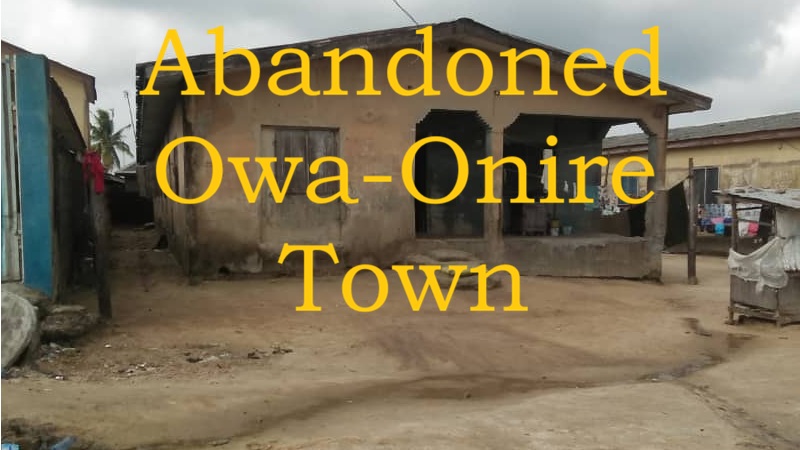

TD OWA-ONIRE, KWARA STATE — A once-inhabited community in Kwara South has become a stark symbol of Nigeria’s worsening rural insecurity, with repeated kidnappings and armed attacks forcing residents to abandon their ancestral homes.
When a security team comprising about 100 personnel from the police Drone Unit, Mobile Police Force (MOPOL) and Anti-Kidnapping Squad entered Owa-Onire in June 2026, officers reportedly found almost the entire community deserted.
According to an account published by Oyin Ajirotutu Zubair, the team encountered empty compounds, closed markets, a locked mosque and a quiet church, with only one resident reportedly remaining.
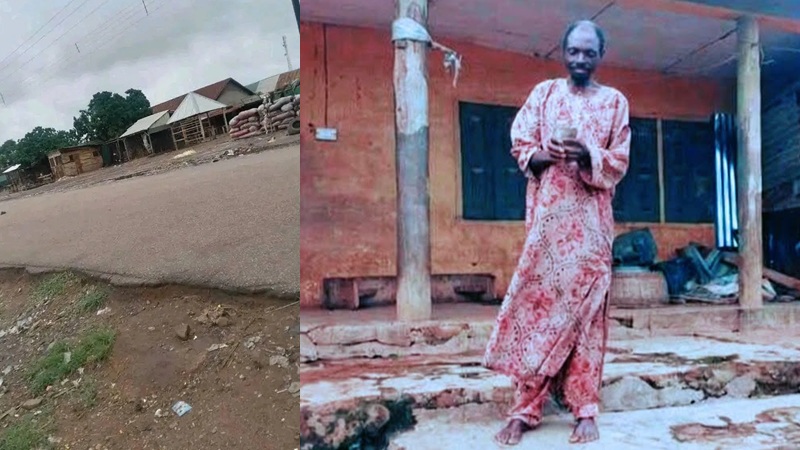
The resident, identified as Lekan, is a prince of Owa-Onire who stayed behind after most inhabitants fled following repeated attacks by suspected bandits.
The account described him as the town’s self-appointed “landlord,” surrounded by abandoned houses and public buildings in a community where ordinary social and economic life had largely disappeared.
Owa-Onire Community Emptied by Fear
Owa-Onire’s depopulation was not attributed to a single attack, but to a prolonged pattern of violence, kidnapping and insecurity that gradually eroded residents’ confidence in their safety.

According to the published account, armed groups repeatedly invaded the area, while kidnapping became a recurring threat to families, farmers and community leaders.
The town’s traditional ruler was reportedly abducted and held in the forest for months before a ransom was paid, further deepening residents’ fears about their personal security.
Following these incidents, families reportedly locked their homes and relocated to safer communities, including Okeonigbin, while others sought refuge in locations not publicly identified.
The result has been the abandonment of homes, farms and communal facilities that once supported the town’s agricultural and social activities.
Lekan reportedly survives by farming, with Okeonigbin serving as the nearest market where he can obtain food and other necessities.
During the security team’s visit, the team leader reportedly gave him ₦10,000 to purchase food supplies, highlighting the difficulties of surviving in an almost completely deserted settlement.

Lekan also told the visitors that he had heard people entering the community the previous night, although he could not identify them or establish what they might have taken.
Owa-Onire Is Not an Isolated Case
The displacement in Owa-Onire forms part of a wider security crisis affecting communities across Ifelodun and other local government areas in southern Kwara State.
Reports have identified Owa-Onire, Oro-Ago, Omugo, Ahun, Oke-Oyan, Owa-Kajola and Olayinka among communities affected by repeated attacks and population displacement.
In April 2026, Channels Television reported that residents of Omugo in Ifelodun Local Government Area said persistent attacks had left their community deserted.
Community representatives said eight worshippers had been abducted during an attack on a church on March 22, 2026, and called for sustained security operations and the deployment of police personnel.
A certain report said at least 2,000 residents of Oro-Ago, Oyate and Ahun had reportedly fled following repeated attacks, killings and abductions.

Residents and community leaders have warned that displacement is disrupting farming, education, religious activities, local markets and access to essential services.
When entire communities leave, the consequences extend beyond abandoned buildings, affecting livelihoods, food production, local revenue and the ability of families to maintain their ancestral connections.
More Than 30 Monarchs Reportedly Flee Their Palaces
The insecurity has also affected traditional institutions, with reports in April 2026 indicating that more than 30 traditional rulers in southern Kwara had left their palaces for safer urban centres.
According to reports, the affected monarchs reportedly relocated to places including Ilorin, Offa, Osogbo and Lagos after sustained kidnappings, killings and attacks threatened their safety.
Some rulers had reportedly been away from their communities for months, while others had remained absent for nearly a year.
The absence of traditional rulers has weakened local leadership and complicated community coordination, particularly in areas where residents depend on monarchs for mediation, information sharing and emergency response.
The reported flight of Owa-Onire monarch and other traditional rulers reflects a broader concern: when traditional rulers themselves become targets, residents may lose an important layer of community leadership and local security coordination.
Kidnappings and Attacks on Traditional Rulers
Reports published in June 2026 said the number of traditional rulers abducted, attacked or killed across Kwara and other parts of the South-West had reached 11 in the period covered by those reports.
One prominent case involved Oba Salman Olatunji Aweda, the traditional ruler of Olayinka, who reportedly died in captivity after being abducted.
Other monarchs, such as the Oba of Owa-Onire, have reportedly survived abductions, while some have been killed during attacks on their palaces or communities.
These incidents have intensified calls for stronger protection of traditional rulers and for security agencies to improve surveillance, intelligence gathering and rapid-response capacity.
The claim that more than 30 Yoruba monarchs fled their palaces should be understood as a reported figure concerning southern Kwara, rather than evidence that every affected ruler across the wider South-West has relocated.
Government and Security Agencies Face Pressure
The scale of displacement has increased pressure on the Federal Government, the Kwara State Government and security agencies to strengthen protection for vulnerable rural communities.
In June 2026, Governor AbdulRahman AbdulRazaq met the Minister of State for Defence to discuss the state’s security situation and seek increased military support for vulnerable areas.

The state government also said it had established security strategy committees and supported the deployment of forest guards to improve surveillance in vulnerable communities such as Owa-Onire and forest corridors.
These measures form part of the government’s stated response, but community reports of deserted settlements demonstrate the continuing challenges facing residents in parts of Kwara South.
The immediate task is not simply to conduct patrols, but to establish reliable security arrangements that allow displaced families to return without facing renewed attacks.
Such efforts would require sustained security presence, credible intelligence from local communities, rapid response to distress calls and coordinated action against armed groups operating around forest corridors.
Authorities would also need to support displaced households and restore access to essential services before abandoned settlements can recover their populations and economic activities.
The Human Cost of Abandonment
For Lekan, the consequences of insecurity are visible in the empty houses, silent religious buildings and abandoned community spaces surrounding his farm.
His reported decision to remain in Owa-Onire does not mean the community is safe; rather, it illustrates the isolation facing residents who have not left.
The account of his encounter with security personnel highlights the basic challenges of obtaining food, accessing markets and living without neighbours or functioning community services.
For displaced families, leaving home also means losing access to farmland, livelihoods, family property and the social networks that sustain rural communities.
Children may face interruptions to education, while farmers risk losing planting and harvesting seasons, potentially worsening food insecurity and household poverty.
The longer displacement continues, the more difficult it may become for residents to rebuild their lives and restore the social institutions that once held their communities together.

What Happens Next with Owa-Onire?
Security operations across Kwara South need to translate into lasting protection for residents, rather than temporary visits that leave communities vulnerable after patrols depart.
Authorities should publish clear assessments of affected settlements, identify displaced populations and coordinate safe-return plans with community leaders and humanitarian agencies.
Police and other security formations should also investigate reported kidnappings, protect threatened traditional rulers and strengthen early-warning mechanisms across vulnerable villages.
At the same time, displaced residents need practical assistance, including food support, access to healthcare, education and safe routes to farms and markets.
Any return programme should be voluntary and based on credible security assessments, with sustained monitoring to prevent residents from being exposed to renewed attacks.
The experience of Owa-Onire demonstrates that restoring a community requires more than reopening roads or entering abandoned buildings; it requires making everyday life safe again.
Conclusion
The reported abandonment of Owa-Onire, alongside displacement in other parts of Kwara South, illustrates the human and economic consequences of prolonged insecurity in rural Nigeria.
The reports of more than 30 traditional rulers leaving their palaces further underline the pressure that kidnappings and armed attacks have placed on local leadership and community life.
For Lekan and the families who fled, the central issue is whether authorities can establish conditions that make returning home a realistic and safe choice.
Until residents can farm, worship, trade, educate their children and sleep without fear, the recovery of these communities will remain incomplete.
This Dawn News will continue to monitor developments in Kwara South and report verified updates on security operations, displaced communities and government interventions.