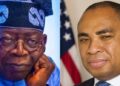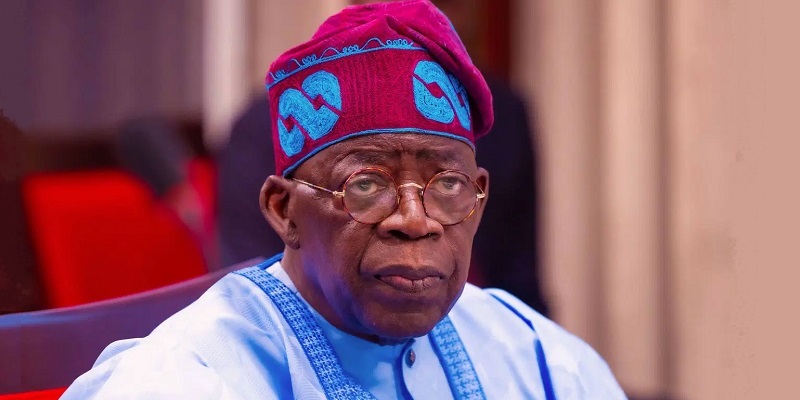
TD Fresh fiery debate has erupted over President Bola Ahmed Tinubu’s educational records after the Independent National Electoral Commission (INEC) published the personal particulars of presidential candidates for the 2027 election.
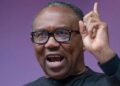
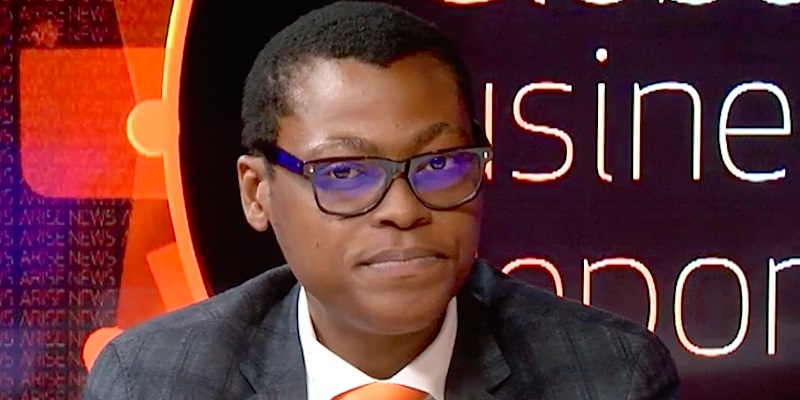
The controversy intensified after Arise Television co-host Oseni Rufai (@ruffydfire) compared the educational information submitted by President Tinubu and Nigeria Democratic Congress (NDC) presidential candidate Peter Obi.
Rufai Highlights Differences in INEC Forms
According to Rufai, the documents published by INEC show detailed educational records for Peter Obi, including:
- St. Augustine’s Primary School, Anambra (1973)
- Christ the King College (1978)
- University of Nigeria, Nsukka (1984)
- By contrast, Rufai noted that President Tinubu’s published form lists:
- Primary School – Blank
- Secondary School – Blank
- Higher Institution – B.Sc (1979)
The comparison quickly gained traction on social media, with many users questioning why Tinubu’s primary and secondary school fields were left blank while his university qualification was listed.

How INEC Verifies Candidates’ Documents
Under Nigeria’s Electoral Act, candidates submit Form EC9 and supporting documents to INEC.
INEC’s role is primarily administrative.

The Commission receives and publishes the documents for public inspection but does not ordinarily conduct a forensic verification of every certificate before publication.
Instead, the law allows members of the public or interested parties to challenge a candidate’s qualifications in court within the stipulated period.
Nigerian courts ultimately determine whether false information was submitted or whether a candidate is constitutionally qualified.
As a result, the publication of a document by INEC should not be interpreted as certification of its authenticity.
Social Media Reactions
The publication generated widespread reactions online.

X user @prettycachy questioned how someone could become President without publicly available primary or secondary school certificates.
Meanwhile, the poster also referred to long-standing controversies over Tinubu’s birth records, university credentials and the 1993 U.S. civil forfeiture case.
The poster wrote:
“How can Nigeria have someone as our President with
⊗ No proper birth certificate
⊗ No primary school certificate
⊗ No secondary school certificate
⊗ Questionable University certificate
⊗ Forfeited $460,000 from proceed of drugs to the US Government.

“How can you get employed into the Nigeria Public Service without the above documents?
“How can Nigeria blessed with people of high intellectuals elect such a person like TINUBU?
“How can the Yoruba nation blessed with Professors and great academicians gave us such a person with questionable character like TINUBU?
“Aren’t we ashamed as a country?”
Another user, @ijigwenagu, argued that the central issue was not whether Tinubu attended primary or secondary school, but whether his identity and educational history had been consistently disclosed.
The user urged INEC to investigate any alleged discrepancies to avoid creating a precedent for future public office holders.
Old Form Resurfaces
Alongside the newly published INEC form, social media users circulated what they described as an older official form containing more detailed educational history.
The older document lists schools including St. Paul’s Aroloya Primary School, Government College Ibadan, Richard J. Daley College and Chicago State University.
The re-emergence of the document has fuelled renewed questions over why the information appearing in the latest INEC publication differs from details previously associated with Tinubu.

Chicago State University Debate Resurfaces
The controversy has also revived debate over Tinubu’s admission into Chicago State University.
One viral exchange involved an X user asking Grok whether a Nigerian could have gained admission to the University of Chicago during the 1960s or 1970s without primary or secondary education.
Grok responded that, by that period, standard undergraduate admission generally required completion of secondary education or an accepted equivalent qualification.
It stated that an applicant without primary or secondary schooling or equivalent credentials would ordinarily not have met admission requirements.
However, that response is a general statement about historical admission practices.
It does not establish what documents any specific individual submitted decades ago.
The 1993 U.S. Forfeiture Case
Critics also referenced a 1993 U.S. civil forfeiture case involving approximately $460,000 linked to bank accounts associated with Tinubu.
That matter resulted in a civil forfeiture, not a criminal conviction.
Tinubu was never convicted in the United States of drug trafficking or any narcotics-related offence.
The issue was raised during litigation over the 2023 presidential election.
Nigerian courts, including the Supreme Court, ultimately upheld Tinubu’s election and found that the forfeiture did not disqualify him under the Constitution.
Key Issues Driving the Debate
The renewed controversy centres on several issues:
- Blank primary and secondary education fields on Tinubu’s latest INEC form.
- Differences between the latest form and an older document circulating online.
- Questions over the educational credentials used for university admission.
- Continued public debate over the Chicago State University records.
- Renewed discussion of the 1993 U.S. civil forfeiture case.
No court has ruled that the blank entries on the latest INEC form amount to proof that President Tinubu lacked primary or secondary education.
Likewise, allegations of identity fraud remain allegations unless established through competent legal proceedings.
The issue is expected to remain a subject of political debate as Nigeria’s 2027 presidential election approaches.
Analysis of INEC Verification Processes
Under Nigeria’s Electoral Act, presidential candidates submit their personal particulars, including Form EC9 and supporting documents, to the Independent National Electoral Commission (INEC).
INEC then publishes these documents to allow public scrutiny and objections before the election.
Key points about INEC’s role:
- INEC primarily receives and publishes documents submitted by candidates.
- INEC does not routinely conduct a forensic verification of every certificate or claim before publication.
- If a person believes a candidate submitted false information, they may challenge it in court within the period provided by law.
Nigerian courts—not INEC—ultimately determine disputes over alleged false declarations, forged certificates, or constitutional qualification.
Therefore, blank fields on an INEC form do not automatically mean a person lacked those qualifications.
They indicate the information as submitted on that particular form.
Questions about inconsistencies or omissions generally become matters for judicial determination if challenged.
The 1990s U.S. Forfeiture Case
The U.S. forfeiture matter involving Bola Tinubu has been widely discussed and is a matter of public record.
What happened?
In 1993, U.S. authorities sought the civil forfeiture of funds held in bank accounts linked to Bola Tinubu.
Approximately $460,000 was forfeited to the U.S. government.
The case was a civil asset forfeiture proceeding, not a criminal prosecution.
Important Legal Distinctions
Tinubu was never convicted in the United States of drug trafficking or any drug-related criminal offence.
Civil forfeiture has a lower legal standard than criminal conviction.
The settlement resulted in the forfeiture of the funds without a criminal judgment against him.
Nigerian Legal Treatment
The issue has repeatedly resurfaced during election cycles.
The Presidential Election Petition Court (2023) and later the Supreme Court considered arguments relating to the U.S. forfeiture and ultimately upheld Tinubu’s election, finding that the forfeiture did not disqualify him under the Nigerian Constitution.
Concise Summary of Key Allegations Against Tinubu
Critics have repeatedly raised several allegations regarding President Bola Tinubu:
- Incomplete educational records
- Blank primary and secondary school entries on some INEC forms.
- Questions over which earlier qualifications supported admission to university.
- Identity discrepancies
- Allegations concerning names, age, and historical records.
- Tinubu has denied wrongdoing.
- Chicago State University controversy
- Questions over certificates and academic records.
Chicago State University confirmed that Bola Tinubu attended and graduated, although disputes continued over documentation and record inconsistencies.
1993 U.S. civil forfeiture
Approximately $460,000 was forfeited in a civil case connected to accounts investigated by U.S. authorities.
No criminal conviction resulted.
Birth and early-life documentation
Critics argue that publicly available records are incomplete or inconsistent.
Tinubu maintains he is constitutionally qualified.
Context on the University Admission Claim
The social media post citing Grok reflects the general historical position that U.S. universities in the late 1960s and 1970s ordinarily required applicants to have completed secondary education or an equivalent qualification.
However, that observation alone does not establish what documents any particular individual submitted decades ago.
Whether President Tinubu met the admission requirements depends on the records held by the relevant institutions and any evidence produced in legal proceedings.
Overall, many of the issues highlighted in the social media posts remain subjects of political debate.
Some have been litigated, while others continue to be allegations rather than findings established by a court.