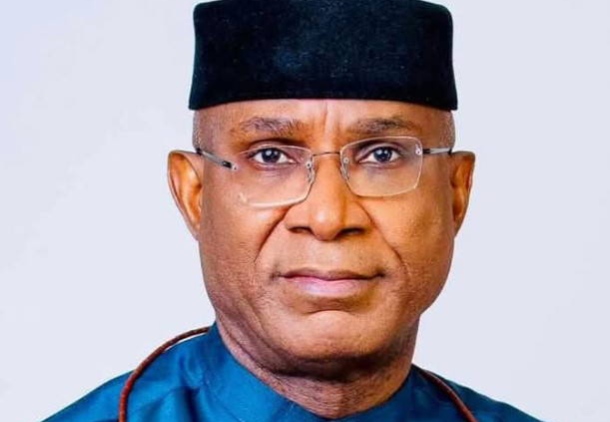
TDSenator Ovie Omo‑Agege, former Deputy President of the Nigerian Senate (2019–2023), has formally resigned from the All Progressives Congress (APC), ending a turbulent chapter in his political career.

His resignation letter, dated May 22, 2026, was addressed to the APC Ward Chairman in Orogun Ward 2, Ughelli North LGA, Delta State, and acknowledged by the local party leadership.
Primary Loss Sparks Exit
The move comes just days after Omo‑Agege suffered a heavy defeat in the APC senatorial primary for Delta Central.
Official results declared incumbent Senator Ede Dafinone the overwhelming winner, securing more than 116,000 votes compared to Omo‑Agege’s 3,600.
Although Omo‑Agege disputed the outcome and claimed victory based on his own collation, the party’s official process recognized Dafinone.
The scale of the loss dealt a major blow to Omo‑Agege’s influence in Delta politics, fueling speculation about his future.
Letter of Resignation
In his resignation letter, Omo‑Agege stated that his political objectives and those of his constituents were “better served outside the APC.”
He thanked the party for the opportunity to serve as Deputy Senate President but requested that his name be removed from all membership records.
“I will not remain a sitting duck in a party where I cannot advance the interests of Delta Central, Delta State and Nigeria,” he wrote.
He pledged to continue pursuing development and representation outside the APC.
Context and Internal Tensions
Omo‑Agege’s departure follows years of factional disputes within the Delta APC.
He had previously faced accusations of anti‑party activities, particularly during the 2023 governorship election.
He ran as the APC candidate then but was accused of undermining party unity.
Factional battles intensified after Governor Sheriff Oborevwori—formerly of the PDP—moved into the APC, reshaping internal dynamics.
Omo‑Agege, who had often clashed with Oborevwori, found himself increasingly isolated.
Rumors and Speculation
Social media had long speculated about Omo‑Agege’s exit.
Unverified Facebook posts in March 2026 claimed he was “set to dump” the APC, linking the move to discomfort with figures like former Governor Ifeanyi Okowa and dissatisfaction after the primary loss.
Omo‑Agege had previously denied similar rumors, including in 2025, when he insisted he remained committed to the APC despite factional threats of expulsion.
His formal resignation now confirms what had been speculation for months.
Past Pattern of Struggles
This is not the first time Omo‑Agege has faced expulsion threats.
In 2023, Delta APC factions accused him of anti‑party acts, though those disputes were later contested.
His political career has been marked by resilience but also repeated clashes with party structures.
Observers note that his resignation fits a broader pattern in Nigerian politics, where post‑primary realignments are common.
Politicians often defect to platforms that offer better prospects ahead of general elections.
What Next?
While Omo‑Agege has not yet announced his next political platform, speculation is rife that he may align with another party ahead of the 2027 elections.
His influence in Delta Central, though diminished, remains significant, and his supporters may follow him into a new political home.
For now, his resignation underscores the volatility of party politics in Nigeria, where internal primaries often reshape careers and alliances.
Omo‑Agege’s Political Outlook
Senator Ovie Omo‑Agege’s resignation from the APC marks a turning point in Delta politics.
From Deputy Senate President to embattled party member, his trajectory reflects the high stakes of Nigeria’s political contests.
Pundits are watching to see whether he seeks a comeback through another platform or retreats from frontline politics.
In the meantime, his exit from the APC is a reminder that in Nigeria’s political landscape, defeat in primaries often signals the beginning of new alignments.