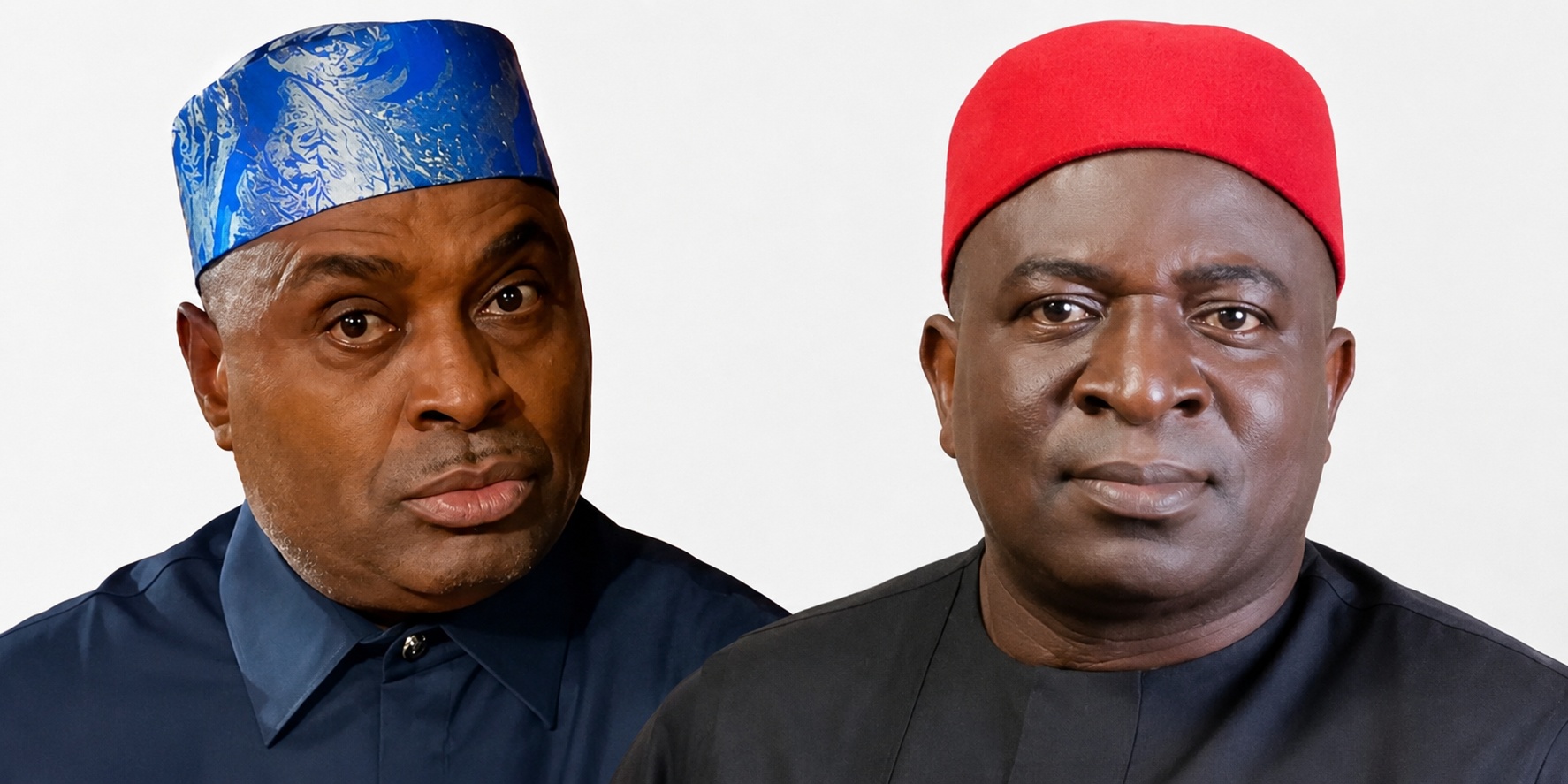
TDAn aspirant of the House of Representatives under the Nigeria Democratic Congress (NDC), Barrister Obunike Ohaegbu, has publicly challenged the latest political stance of actor-turned-politician, Kenneth Okonkwo, following his recent criticism of former Vice President Atiku Abubakar.

Ohaegbu questioned his recent criticism of Alhaji Abubakar over the choice of a vice-presidential running mate and his sudden emphasis on South-East political interests.
In a statement released on Tuesday, Ohaegbu maintained that Okonkwo was never officially working for Atiku’s political structure, a position he said he had already expressed during recent interviews with Symphoni TV and Ugwumba TV.
According to Ohaegbu, his position was informed by the conduct of Atiku’s established media team.
He noted that prominent aides such as Paul Ibe and Frank Shaibu have not made a habit of attacking former Labour Party presidential candidate Peter Obi.
He argued that Okonkwo, by contrast, appeared to have made criticism of Obi a central feature of his recent political engagements.
The statement also referenced recent public discussions surrounding the deteriorating relationship between Okonkwo and Obi.
Ohaegbu cited a trending video by political commentator Kachi Ononuju.
Ononuju revealed that Peter Obi’s refusal to continue paying what he described as an unsustainable house rent was responsible for the fallout between the two men.
However, Ohaegbu stressed that he declined to comment on the development .
Focusing on Okonkwo’s latest position, Ohaegbu questioned what he described as an apparent attempt by the former Obi ally to portray himself as a defender of South-East interests after months of publicly criticizing the region’s most influential political figure.
He argued that if Okonkwo had genuinely been part of Atiku’s inner political circle, he would likely have been aware of discussions surrounding the selection of a vice-presidential candidate before any public announcement was made.
He said: “A genuine spokesperson or close political ally does not learn about the selection of a vice-presidential candidate from television or social media like every other Nigerian.
Such decisions are usually preceded by consultations, discussions, and internal considerations in which key political actors are involved.
“If Kenneth Okonkwo was truly part of the Atiku political structure, he would have been aware of the considerations that informed the choice of a running mate long before it became public knowledge.”
Ohaegbu further noted that the political landscape had changed significantly following the withdrawal of Peter Obi and several South-East political figures from the coalition project.
Against that backdrop, he questioned who exactly Okonkwo expected Atiku to select from the South-East as a running mate.
“Unless he expected to be named the vice-presidential candidate himself, it is difficult to understand who exactly from the South-East he expected Atiku Abubakar to choose after Mr. Peter Obi and virtually the entire ADC leadership structure in the South-East exited the coalition project on 4 May 2026”, Ohaegbu stressed.
The public affairs analyst said the timing and nature of Okonkwo’s recent interventions had raised legitimate political questions.
He suggested that his actions increasingly appeared aimed at maintaining political relevance rather than advancing support for a particular candidate or political cause.
Ohaegbu emphasized that he was not making direct accusations against Okonkwo.
He, however, reiterated a controversial suggestion he had previously made regarding political discourse in Nigeria.
He called on television stations and relevant regulatory authorities to consider random drug testing for political commentators, spokespersons and guests appearing on live political programmes.
According to him, such a measure would not be targeted at any individual but would serve as a safeguard to promote responsible and coherent public debate.
Ohaegbu concluded by urging political actors to focus on substantive issues affecting Nigerians, rather than engaging in personal attacks.
He insisted that the country deserves a more constructive and policy-driven political conversation ahead of future electoral contests.
The statement adds to the growing public debate surrounding Kenneth Okonkwo’s recent political realignments.
It also challenges his increasingly vocal criticism of former allies within Nigeria’s opposition political space.