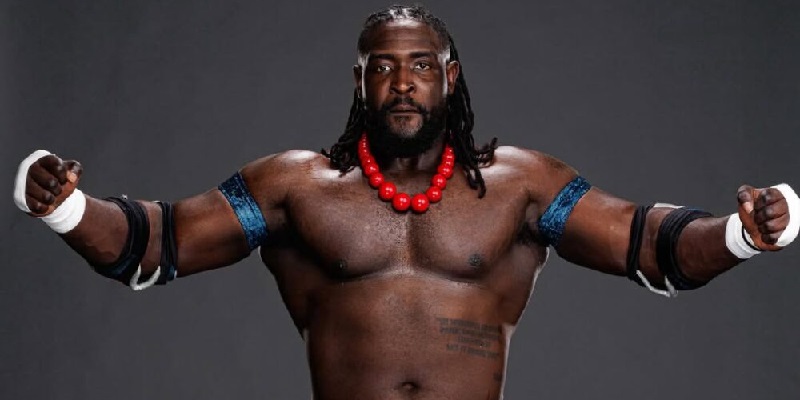
TDIn the ever-evolving spectacle of World Wrestling Entertainment, where charisma meets brute strength and storytelling fuses with athleticism, a new force is emerging from West Africa with undeniable momentum.
Oba Femi, born Isaac Odugbesan, is rapidly being touted as “the next big thing” in global wrestling—a moniker not lightly given in an industry built on legacy and fierce competition.
At just 28, the Lagos-born athlete represents a fresh archetype in professional wrestling: powerful yet calculated, imposing yet articulate, and distinctly African in identity at a time when WWE is expanding its global footprint.
His journey from the bustling streets of Lagos to the bright lights of international wrestling arenas is not just a personal triumph—it is a narrative that resonates with ambition, discipline, and cultural pride.
From Lagos to the Global Stage
Growing up in Lagos, one of Africa’s most dynamic and demanding urban environments, Oba Femi developed resilience early.
The city’s intensity—its fast pace, competitive energy, and daily unpredictability—became an informal training ground.

According to Femi, those formative years shaped not only his physical toughness but also his mental endurance.
Unlike many WWE stars who emerge through traditional North American wrestling circuits, Femi’s path was unconventional.
Before stepping into the squared circle, he built a foundation in athletics, excelling in disciplines that demanded explosive strength and coordination.
This athletic pedigree would later become a cornerstone of his wrestling style—one that blends raw power with surprising agility.
Breaking Into WWE
Femi’s entry into WWE marked a significant turning point, both for his career and for African representation in global wrestling.
WWE, long dominated by American and European talent, has increasingly sought to diversify its roster. In Oba Femi, the organization appears to have found not just a wrestler, but a marketable global figure.

His performances have quickly drawn attention.
Standing tall with an imposing physique and commanding ring presence, Femi embodies the kind of larger-than-life persona that WWE audiences gravitate toward.
Yet, beyond the theatrics, analysts point to his technical growth and adaptability as indicators of long-term success.
Industry insiders suggest that WWE sees in Femi the potential to become a headline act—someone capable of carrying major storylines and drawing international audiences.
The “next big thing” label reflects not just hype, but a calculated assessment of his trajectory.
A Distinct Wrestling Identity
What sets Oba Femi apart is not merely his strength, but his identity. In an era where wrestling personas can sometimes feel manufactured, Femi’s authenticity stands out.

He embraces his Nigerian roots unapologetically, incorporating elements of his heritage into his character and presentation.
This authenticity resonates with a global audience increasingly interested in diverse narratives.
For African fans, in particular, Femi represents visibility in a space where representation has historically been limited.
His rise signals a broader shift—one where African athletes are not just participants, but central figures in global entertainment industries.
The Making of a Star
The path to wrestling stardom is rarely linear, and Femi’s ascent is no exception.
Behind the scenes, it involves grueling training schedules, constant travel, and the pressure to perform consistently in front of live audiences and millions of viewers worldwide.
WWE’s development system is notoriously demanding, designed to refine talent into polished performers.
Femi’s ability to adapt quickly within this system has impressed coaches and executives alike.
His learning curve—often a decisive factor in a wrestler’s longevity—appears steep in the best possible way.
Moreover, his presence outside the ring is equally compelling. In interviews, Femi projects confidence without arrogance, ambition without pretension.
He speaks openly about his journey, often emphasizing how his upbringing in Nigeria instilled the discipline required to compete at the highest level.
Global Impact and Cultural Significance
Oba Femi’s rise comes at a time when WWE is actively expanding into new markets.
Africa, with its vast population and growing appetite for sports entertainment, represents a significant opportunity.
Femi’s success could serve as a gateway, inspiring future talent from the continent and strengthening WWE’s connection with African audiences.
There is also a broader cultural dimension. In global sports and entertainment, representation matters—not just symbolically, but economically and structurally.
Athletes like Femi challenge existing narratives, proving that world-class talent can emerge from anywhere.
For young Nigerians and Africans watching his journey, the message is clear: the global stage is accessible, even from origins that may seem distant from mainstream pathways.
Challenges Ahead
Despite the optimism surrounding his career, the road ahead is far from guaranteed.
WWE is an intensely competitive environment, where only a fraction of talent achieves sustained stardom.
Injuries, creative decisions, and audience reception all play critical roles in determining a wrestler’s trajectory.
For Femi, maintaining momentum will require continuous evolution—both in-ring and in character development.
The “next big thing” label, while flattering, also brings heightened expectations. Delivering on that promise is the true test.
A Star in the Making
As Oba Femi continues to carve out his place in WWE, one thing is increasingly evident: his story is bigger than wrestling.
It is about representation, perseverance, and the globalization of opportunity.
From Lagos to the world stage, his journey encapsulates the spirit of modern sports entertainment—where talent, identity, and narrative converge.
Whether he ultimately becomes a defining figure in WWE history remains to be seen, but the trajectory is unmistakable.
For now, Oba Femi stands not just as a rising star, but as a symbol of what is possible when ambition meets opportunity on a global scale.