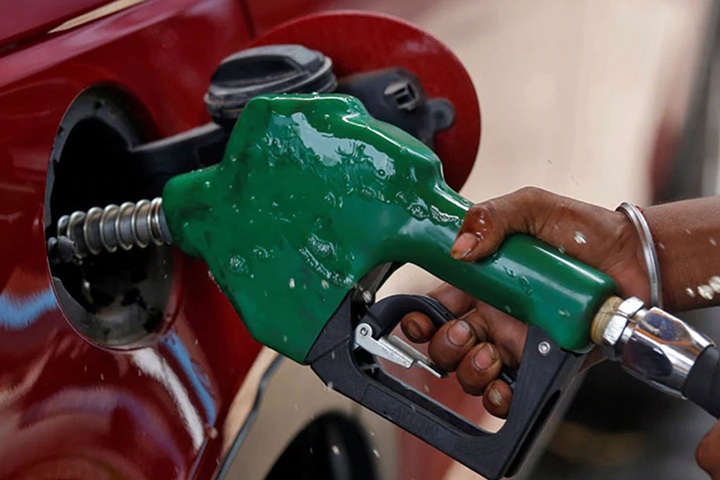
TD The Nigeria Labour Congress (NLC) has called on the Federal Government to urgently intervene as the price of petrol rises to about ₦1,430 per litre in major urban centres.

The union warns that higher transportation costs are worsening economic hardship across the country.
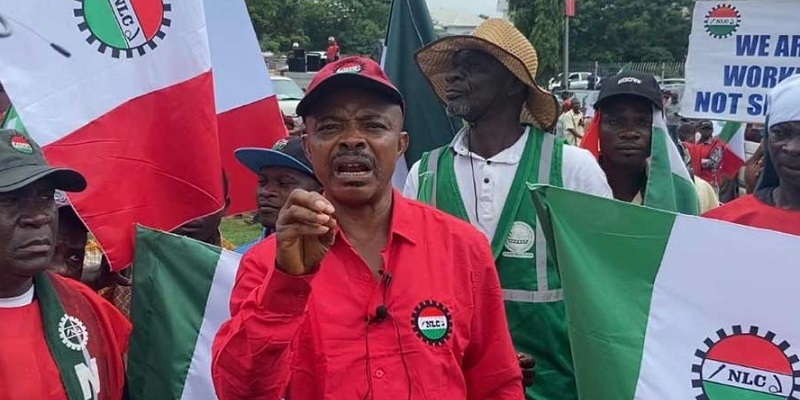
The demand was contained in a statement titled “Save the Situation Now”, dated September 16, 2026, and signed by NLC President, Comrade Joe Ajaero.
The NLC said petrol prices were even higher in less accessible areas, arguing that the development was inflicting serious pressure on workers’ wages and household incomes.
The union’s statement has also been reported by multiple Nigerian media outlets, including Channels Television, Punch and Vanguard.
NLC warns of wider economic impact
According to Ajaero, rising transportation costs have consequences beyond the price of commuting, as businesses and service providers pass higher logistics costs through to consumers.
He said increases in transportation costs affect the prices of food, school fees, rents, tariffs and other essential goods and services.
The NLC president warned that the latest increases were deepening poverty and putting additional pressure on Nigerians’ quality of life.
The union said the situation was particularly concerning because Nigeria is an oil-producing country with domestic refining capacity.
Union demands immediate wage awards
As part of its proposed measures, the NLC urged the Federal Government to immediately provide reasonable wage awards to workers to cushion the effect of the rising petrol price.
The labour centre also called for sufficient crude oil to be made available to local refineries in naira, arguing that this would help reduce exposure to international market pressures.
It further demanded an expansion of Nigeria’s national petroleum storage capacity as part of measures to strengthen energy security and improve the country’s ability to respond to future supply emergencies.
The NLC said the proposed measures could also contribute to job creation and economic activity.
NLC says subsidy should not be ruled out
Ajaero also challenged the government’s position on intervention in the downstream petroleum market.
He argued that there was nothing inherently wrong with subsidising citizens’ needs during an emergency:
“There is nothing wrong with government subsidising the needs of citizens, especially in emergency situations like this.”
The NLC president argued that oil-producing countries could adopt measures to protect their populations when international energy shocks cause severe domestic hardship.
Nigeria removed its petrol subsidy in 2023, leaving pump prices more directly exposed to crude oil prices, foreign exchange movements and other market factors.
Ajaero points to higher crude oil earnings
The NLC also argued that the government has additional fiscal space because international crude prices are currently above the benchmark used in the country’s budget.
According to Ajaero, crude oil was selling $35 to $40 per barrel above the budgeted figure.
This, he said, translated into trillions of naira in additional monthly revenue.
He described the additional earnings as a potential windfall that could be used to provide relief to citizens.
The claim about the precise amount of additional monthly revenue is the NLC’s estimate and was not independently established in the union’s statement.
Labour questions crude imports by local refineries
The NLC also raised concerns over reports that some domestic refineries are importing crude oil despite Nigeria’s growing refining capacity.
Ajaero described this as unreasonable and argued that it undermines the rationale for developing domestic refining infrastructure:
“On a long-term basis, we are equally concerned that local refineries are importing crude.
“This is unreasonable and unacceptable and defeats the logic and purpose of local capacity.”
The issue comes as Nigeria’s private refining sector expands.
The Dangote Petroleum Refinery, which has a nameplate capacity of 700,000 barrels per day, has increased its purchases of Nigerian crude.
However, it has also sourced crude from outside Nigeria.
Reuters reported in September that the refinery had secured at least 16 million barrels of Nigerian crude for October deliveries, equivalent to roughly 520,000 barrels per day.
NLC blames Gulf conflict for latest pressure
According to the NLC statement, the latest increase in fuel costs has occurred amid renewed conflict in the Gulf and volatility in international energy markets.
Ajaero said Nigeria’s position as an oil-producing nation should provide some protection against external energy shocks.
He argued that the country should be able to use its oil resources, domestic refining capacity and strategic petroleum infrastructure to reduce the impact of international disruptions on Nigerian consumers.
‘Government cannot afford to watch Nigerians suffer’
The NLC president also criticised what he described as the government’s willingness to allow marketers to pass rising costs on to consumers in the name of deregulation.
He said a government preparing for the next election cycle could not afford to stand by while Nigerians faced worsening economic pressure”
“Labour has an obligation to speak out or act accordingly.”
The NLC’s demands come as petrol prices continue to rise in several parts of the country.
Reports published on September 17 indicated that prices had reached about ₦1,430 per litre in major urban centres.
Meanwhile, some less accessible areas were recording higher prices.