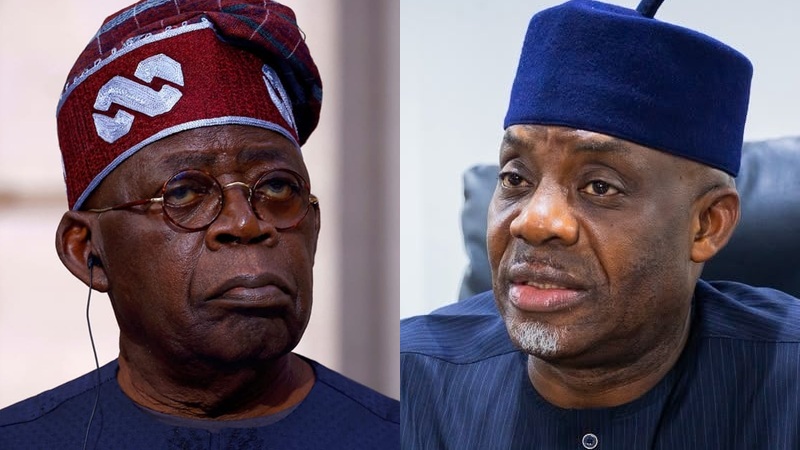

 A set of Federal Ministry of Education guidelines requiring senior secondary students to sit approved national examinations has drawn criticism from education entrepreneur, Mr. Alex Onyia.
The document, titled National Guidelines on Mandatory Participation in an Approved Senior Secondary School Qualifying Examination in Nigeria, states that the requirement is expected to take effect in 2027.
It covers students in public, private, faith-based, international and dual-curriculum schools, according to the text supplied for this report.
Students completing Senior Secondary Three would be required to take an approved examination administered by WAEC, NECO, NABTEB or NBAIS.
The document says foreign qualifications, including Cambridge and International Baccalaureate programmes, may be taken alongside national examinations but cannot replace them.
Schools would be responsible for registering students and submitting their continuous assessment records from SS1 through SS3 to the relevant examination bodies.

The text also sets out possible sanctions for non-compliance, including loss of examination-centre approval, licence revocation and blacklisting.
It further says students without an approved national examination result would not qualify for admission to Nigerian tertiary institutions or mobilisation for NYSC.
The ministry’s publicly available National Policy on Non-State Schools already addresses national examinations for schools offering foreign curricula.
Existing education policy and stated exemptions
The ministry’s policy document says schools following foreign curricula should ensure their candidates register for national examinations, including WAEC, NECO, NABTEB or NBAIS.
That provision appears in section 5.1.5 of the official policy document.
The text circulated as the 2026 guidelines therefore appears to set out implementation details for a requirement already present in ministry policy.

The separate document’s authenticity and formal publication could not be independently confirmed from the ministry materials reviewed for this report.
The guidelines describe an exemption for foreign nationals attending diplomatic schools that teach purely foreign curricula, provided they do not seek admission to Nigerian tertiary institutions.
Nigerian students who completed schooling abroad and want to enter Nigerian tertiary institutions would need to provide evidence of their overseas enrolment and attendance.
The text does not prohibit students from pursuing international qualifications; it makes national examinations an additional requirement for students covered by the policy.
The ministry has also recently highlighted compliance among foreign-curriculum schools and preparation for Nigerian examinations in a Federal Ministry of Information report.
Onyia argues education policy could limit innovation
Onyia, chief executive of education company Educare, criticised the policy in a post on X, describing it as dangerous and retrogressive.

He argued that compelling international schools to use the same examination system could weaken educational innovation and restrict the choices available to families.
Onyia said government should prioritise improvements to public schools, laboratories and teacher training while modernising the curriculum.
He also called for greater emphasis on artificial intelligence, robotics, critical thinking and practical skills to prepare students for changing workplace demands.

His comments reflect concerns among some education stakeholders that uniform examination rules could constrain schools built around different curricula.
However, the requirement described in the document concerns national examination participation.
It does not state that international schools must abandon their existing programmes.
The ministry’s curriculum review information says a revised national curriculum took effect in the 2025/26 academic year.
The review includes changes intended to reduce subject overload and align the curriculum with national priorities, including Nigerian history and examination requirements.
Debate over standards and implementation
The policy debate centres on how government can maintain national standards while accommodating different school systems and international qualifications.
Supporters of a common examination requirement may argue it creates a consistent benchmark for school completion and access to Nigerian tertiary education.
Critics may question whether the rules account sufficiently for differences in curricula, school resources and students’ academic pathways.
The guidelines place significant administrative responsibilities on schools, including registration, record-keeping and submission of assessment information.
Their proposed sanctions could also have substantial consequences for schools that fail to meet those requirements.
The ministry has not been quoted here explaining the rationale, implementation timetable or process for reviewing penalties under the circulated document.
Further clarification would help schools and families understand how the requirements would apply to students already enrolled in international or dual-curriculum programmes.
The central question is how the government will implement the rules while preserving meaningful educational choice and ensuring equal access to examinations.
What parents and schools should watch
Families and school administrators will need clear information about the education policy’s effective date.
They will also need registration procedures and treatment of students following foreign curricula.
They will also need guidance on how continuous assessment records should be submitted and what evidence overseas graduates must provide.
The document’s stated 2027 start date gives schools limited time to assess their current systems and communicate possible changes to parents.
Because the ministry’s existing policy already addresses national examinations for foreign-curriculum schools, the new text may formalise or clarify that expectation.
But the specific 2026 document should be distinguished from the published policy until the ministry confirms its status and implementation details.
For now, Onyia’s criticism has intensified discussion over whether common examination requirements will improve accountability or narrow education flexibility.
The debate is likely to continue as schools, families and policymakers seek clarity ahead of the proposed commencement.