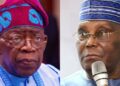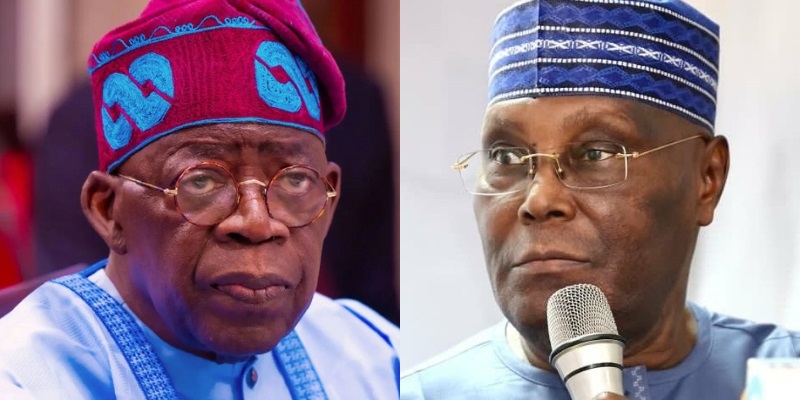

TD ABUJA, FCT — Paul Ibe, media adviser to former Vice-President Atiku Abubakar, has mocked President Bola Tinubu over his reference to “Moses and Musa” while defending the removal of Nigeria’s petrol subsidy.
Ibe said the president’s remarks provided another reason for Tinubu to heed Atiku’s earlier advice to “go back to school.”
The exchange followed Tinubu’s address to members of the City Boy Movement in Abuja on Monday, October 19, 2026, where he ruled out reinstating the petrol subsidy.
Defending the policy, Tinubu said Nigeria could have faced bankruptcy if the government had continued paying the subsidy.
“I remember my scripture studies, both in the Bible and in the Holy Quran.
“When Moses and Musa left Egypt, they faced a challenge, and the Red Sea parted and gave way.

“You cannot ask Moses to go back to Egypt,” the president said.
Tinubu used the account of the Israelites’ departure from Egypt to argue that Nigeria should not reverse the economic reforms introduced by his administration.
Ibe Questions the President’s Moses – Musa Remark
Reacting in a post on X, Ibe questioned Tinubu’s reference to Moses and Musa as though they were two separate individuals.
“Atiku Abubakar was right when he advised President Bola Tinubu to go back to school,” Ibe wrote.
“The President has just provided another compelling reason why he should urgently consider that advice!”
Ibe argued that Moses, known as Musa in Islam, refers to the same prophet in the Bible and the Quran.

“Mr President, Moses in the Bible is Musa in the Qur’an! Same prophet. Same person. Same journey. Different languages!” he wrote.
He added sarcastically that there was no separate expedition involving Moses and Musa, insisting that the two names refer to one figure associated with the Israelites’ departure from Egypt.
Ibe also questioned how the president’s remarks aligned with his stated confidence in the government’s economic policies.
Subsidy Removal and Economic Hardship
Beyond the religious analogy, Ibe shifted attention to the economic consequences of the government’s decision to remove petrol subsidy in May 2023.

He argued that Nigerians were more concerned about the cost of living than the president’s choice of biblical and Quranic references.
“Nigerians are not asking Tinubu to return to Egypt,” Ibe wrote, adding that Moses wouldn’t have taken such shabby decision.

He argued that citizens wanted relief from what he described as economic hardship under the administration.
He listed affordable petrol, cheaper food, lower transportation costs, affordable electricity and improved purchasing power among the concerns facing households.
Ibe accused the administration’s policies of worsening economic pressure on Nigerians.
He argued that the government should focus on easing those difficulties.
His remarks reflect the opposition’s wider criticism of the government’s economic reforms, particularly the removal of petrol subsidy and its effects on living costs.
Tinubu Defends the Reform
Tinubu, however, maintained that restoring petrol subsidy would undermine the direction of his administration’s economic reforms.
During the meeting with the City Boy Movement, he said the country had been left with insufficient resources to sustain the subsidy and rejected opposition promises to restore it.
The president urged supporters to communicate his administration’s policies and achievements to voters ahead of the 2027 general election.
His defence for the subsidy led to the Moses – Musa remark that attracted the ire of Paul Ibe.
The subsidy debate remains a major point of disagreement between the administration and opposition figures.
Competing arguments rage over public finances, economic reforms and the cost-of-living burden.
Ibe’s reaction has added a fresh political dimension to the dispute.
It turned the president’s religious analogy into a point of criticism while renewing questions about the impact of subsidy removal on Nigerians.