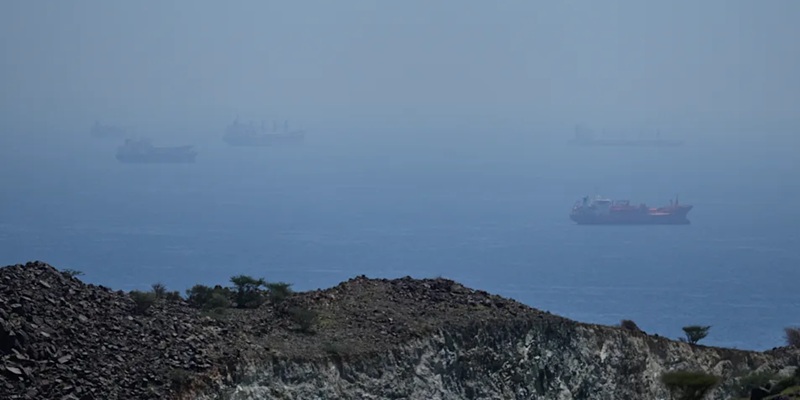

 DUBAI, United Arab Emirates — Iran has reported that four oil tankers were hit by explosions in the Strait of Hormuz.
The incidents have raised fresh concerns about maritime security and the stability of international energy supplies.
Iran’s military announced the developments on Thursday, November 12, 2026.
It accused the vessels of ignoring warnings and entering restricted areas of the strategic waterway.
According to Reuters, Iran’s Revolutionary Guards Navy said two supertankers were disabled by explosions on Wednesday.
The vessels reportedly ignored warnings against using what Iranian authorities described as an unauthorised shipping route.

Iranian state media subsequently reported that the tankers exploded after striking naval mines.
However, Reuters said it could not independently verify the Iranian military’s account.
Two More Tankers Reportedly Catch Fire
Iran’s military later announced that two additional oil tankers encountered explosions on Thursday afternoon.
According to Iranian state television, the vessels were travelling through the eastern section of the Strait of Hormuz.
Authorities alleged that the ships entered a restricted area after ignoring warnings and disabling their radar systems.
The vessels reportedly struck naval mines and subsequently caught fire.

The latest reports bring the number of affected tankers to four within approximately two days.
However, independent confirmation of the reported causes and circumstances remains unavailable.
Why the Strait of Hormuz Matters to Iran and Everyone
The Strait of Hormuz is one of the world’s most important maritime energy corridors.
It connects the Persian Gulf with the Gulf of Oman and the Arabian Sea.
The narrow waterway provides a major shipping route for crude oil and liquefied natural gas.
Before the current conflict involving Iran, the United States and Israel, approximately one-fifth of global crude oil supplies passed through the strait.

Major oil-producing countries, including Saudi Arabia, Iraq, Kuwait and the United Arab Emirates, depend heavily on the route.
Any prolonged disruption could affect international energy markets and increase transportation costs.
Asian countries that depend heavily on imported energy could also face significant supply challenges.
Oil Prices React to Shipping Disruptions
The latest maritime incidents have already influenced international oil markets.
Reuters reported that Brent crude futures rose by approximately $1.20 per barrel on Thursday.
The price reached $93.96 per barrel during trading, representing a 1.3 per cent increase.
US West Texas Intermediate crude also gained 53 cents, reaching $87.06 per barrel.
Market analysts attributed the increase partly to continuing shipping disruptions and broader geopolitical uncertainty.
However, both international benchmarks remained on course for weekly declines.
The developments demonstrate how security incidents in strategically important waterways can influence global energy prices.
Maritime Security Concerns Continue
The latest explosions come amid increasing attacks on commercial vessels across the Middle East.
The United Kingdom Maritime Trade Operations agency has also reported incidents involving commercial shipping around the region.
In a separate incident, the agency reported that an unidentified projectile struck a vessel northwest of Ras Al-Khaimah.
The impact reportedly caused a fire in the vessel’s engine room.
The crew evacuated safely, according to the maritime agency.
Meanwhile, shipping companies continue to face difficult decisions about navigating the increasingly dangerous waterway.
Higher insurance premiums, security risks and possible delays could further increase international shipping costs.
US-Iran Tensions Add to Global Uncertainty
The tanker incidents are unfolding amid continuing tensions between Washington and Tehran.
The United States has maintained a naval blockade affecting Iranian ports, while Iran continues restricting maritime traffic through the strait.
Both countries have exchanged accusations over military operations and maritime security.
US President Donald Trump recently indicated that Washington did not consider a diplomatic agreement with Iran necessary.
Nevertheless, diplomatic efforts to reduce tensions have continued amid concerns about further military escalation.
The situation has also affected international shipping companies and energy traders.
What This Means for Global Oil Supplies
The Strait of Hormuz remains essential to international energy transportation.
A prolonged disruption could reduce the volume of oil reaching international markets.
Such developments could place additional pressure on fuel prices, transportation expenses and electricity generation costs.
For countries such as Nigeria, international crude oil price movements could have implications for domestic fuel pricing and government revenue.
However, the actual impact will depend on how long shipping disruptions continue.
As the situation develops, international markets and maritime authorities will closely monitor further incidents.
This Dawn News will continue following developments in the Strait of Hormuz and provide updates as verified information becomes available.