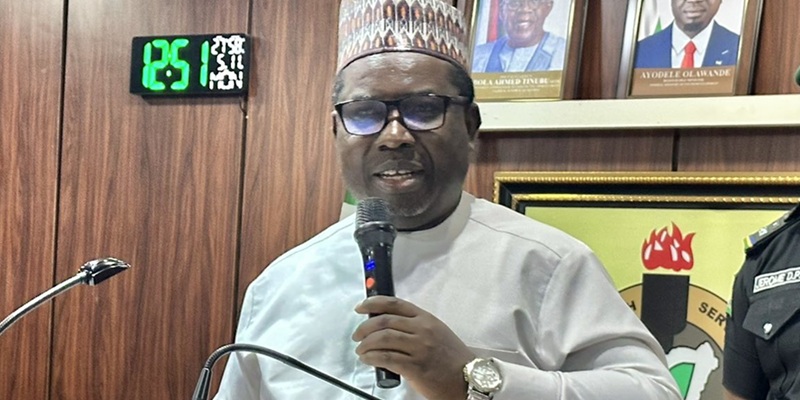

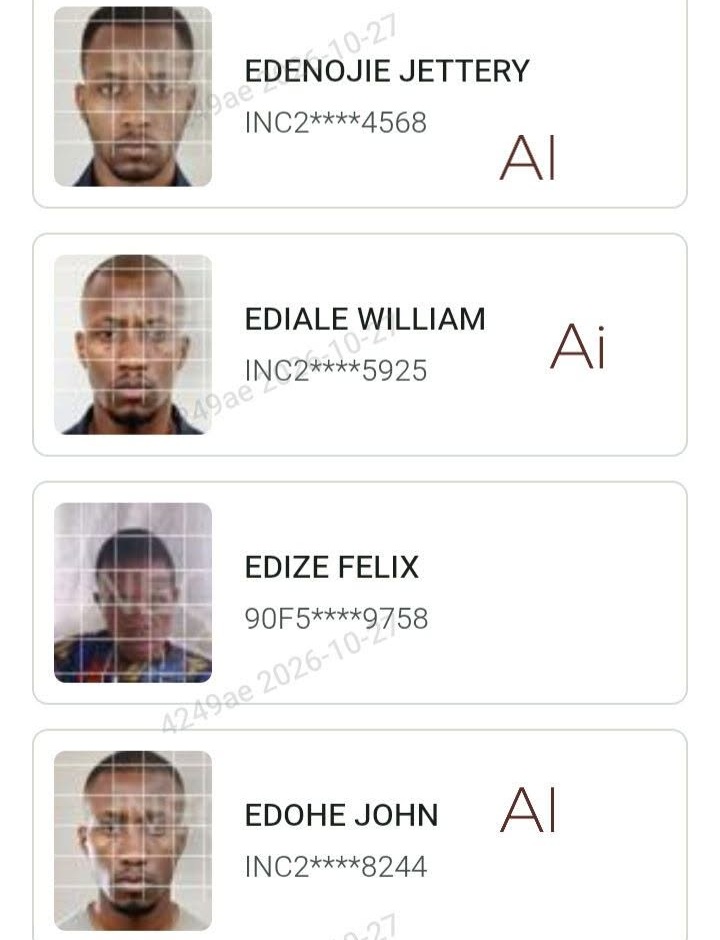
 Nigeria’s preparations for the 2027 general election have come under fresh scrutiny following an admission by the Independent National Electoral Commission (INEC) that irregularities, including artificial intelligence (AI)-generated photographs, were introduced into the country’s preliminary Register of Voters.
INEC’s Director of Information and Communication Technology, Dr Lawrence Bayode, made the disclosure during an appearance on Arise Television on Friday, October 30, 2026.
There he was questioned about suspicious photographs and questionable entries discovered in the recently unveiled voters’ register.
His revelation has raised serious questions about the integrity of Nigeria’s electoral database, particularly following reports of suspected AI-generated photographs, duplicate entries and names of deceased persons appearing in the preliminary register.
INEC BLAMES REGISTRATION OFFICERS FOR IRREGULARITIES
Explaining how the questionable records entered the database, Bayode disclosed that some registration officers across the country allegedly used their official login credentials to introduce irregularities into the registration system.
According to him, the problem was not restricted to the locations whose suspicious voter records had attracted attention on social media.

He explained that registration officers had access to the system and that some of them allegedly exploited that access to introduce questionable information.
“We have registration officers on the field. And these registration officers, they have login details to log into the system.
“So what we have found is that some of these registration officers, not all of them now, some of them across the states nationwide, they’ve done different things to bring these irregularities onto the register,” Bayode said.
The ICT director further clarified that not all suspicious photographs were generated using artificial intelligence.
While some were AI-generated, others resulted from what he described as extremely poor registration practices.
“Some of these pictures are AI-generated. Some of them not AI-generated, but very bad registration.

“And this thing got into the register by the registration officers and because they have access to register people,” he explained.
“WE KNOW WHAT THEY DID, WE KNOW HOW THEY DID IT”
Perhaps the most striking aspect of Bayode’s disclosure was his admission that INEC had identified how the irregularities entered its electoral database but could not establish the reasons behind the actions of the officials involved.
Explaining the findings of the commission’s Automated Biometric Identification System (ABIS), he said:
“When the ABIS was run on the system, we saw these people. We know what they did. We know how they did it. But honestly, I don’t know why.”
The statement has intensified calls for transparency and accountability within the electoral commission.
Questions are now being raised about the identities of the officials responsible, the number of questionable records introduced, the extent of the security breaches and whether anyone has been sanctioned.

CONCERNS OVER THE INTEGRITY OF THE 2027 ELECTION
The development is particularly significant because Nigeria is approaching another presidential election scheduled for January 16, 2027.
The voters’ register is one of the most important components of the electoral process. Its accuracy is essential to ensuring that eligible citizens can exercise their constitutional voting rights while preventing multiple registrations, impersonation and other forms of electoral malpractice.
The discovery of AI-generated photographs and other questionable records has therefore raised concerns about the effectiveness of INEC’s registration procedures and internal safeguards.
There are also concerns about whether fraudulent registrations, if not identified and removed, could potentially be exploited during the forthcoming election.
However, Bayode’s televised admission does not establish that millions of fake voters have been created, that the entire electoral system has been compromised by external hackers, or that the irregularities were deliberately introduced to favour President Bola Ahmed Tinubu or any other presidential candidate.
No evidence establishing such allegations or a coordinated partisan operation was presented in the reported interview.
Nevertheless, the revelations warrant a thorough investigation, given the potential implications for public confidence in the electoral process.
INEC SAYS IT HAS BEEN CLEANING UP THE REGISTER
Bayode also explained that the commission had been identifying and addressing irregularities even before releasing the preliminary voters’ register.
He attributed some of the challenges to the limited time available to complete the exercise within the statutory 90-day period.
According to him, INEC’s biometric identification processes helped uncover questionable records and identify patterns of irregularities in the database.
However, the commission’s assurance that it has been cleaning up the register has not eliminated concerns about the scale of the problem or the effectiveness of its corrective measures.
The crucial question is whether all questionable entries have been identified and whether the necessary safeguards are now in place to prevent further manipulation.
DEMANDS FOR FORENSIC AUDIT AND PUBLIC ACCOUNTABILITY
Bayode’s disclosure has strengthened calls for greater transparency in the management of Nigeria’s voters’ register.
Electoral stakeholders and concerned Nigerians have legitimate reasons to demand answers to several important questions:
- How many AI-generated photographs and other questionable records have been discovered?
- How many registration officers were involved in introducing the irregularities?
- Which states and local government areas were affected?
- Have the officials responsible been identified, suspended or investigated?
- Can INEC independently establish that all fraudulent and duplicate entries have been removed?
- Will the commission make the results of its investigations available to the public?
- What additional cybersecurity and biometric safeguards have been introduced to protect the electoral database ahead of the 2027 elections?
A transparent forensic audit, publication of the investigation’s findings and appropriate disciplinary or criminal action against anyone found culpable would be important steps towards restoring public confidence.
INEC MUST RESTORE CONFIDENCE IN THE ELECTORAL REGISTER
The integrity of an election begins long before ballot papers are printed or voters arrive at polling stations. It begins with a credible and verifiable register of eligible voters.
INEC’s admission that registration officers introduced AI-generated photographs and other irregularities into the preliminary voters’ register is therefore a matter of considerable national importance.
While the discovery does not, by itself, establish that the 2027 presidential election has been compromised or that a particular candidate is benefiting from fraudulent registrations, the commission must recognise that public confidence depends on transparency, accountability and verifiable corrective action.
With the presidential election scheduled for January 16, 2027, Nigerians deserve clear answers about the extent of the irregularities, the officials responsible and the measures being implemented to guarantee the credibility of the electoral register.
The responsibility rests with INEC to demonstrate, with verifiable evidence, that the voters’ register is accurate, secure and free from fraudulent entries before Nigerians go to the polls.