



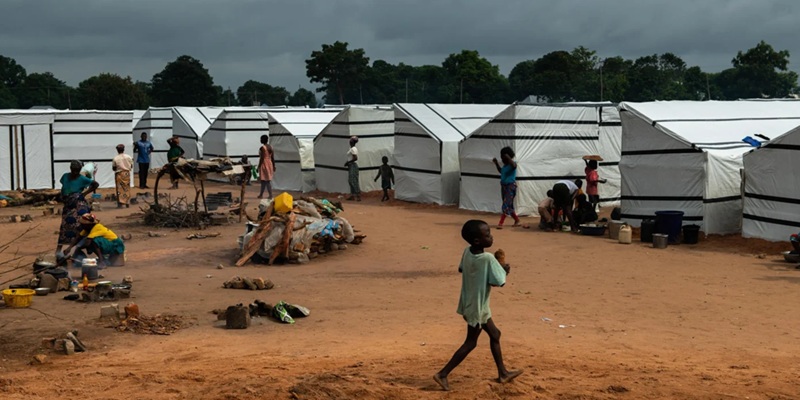

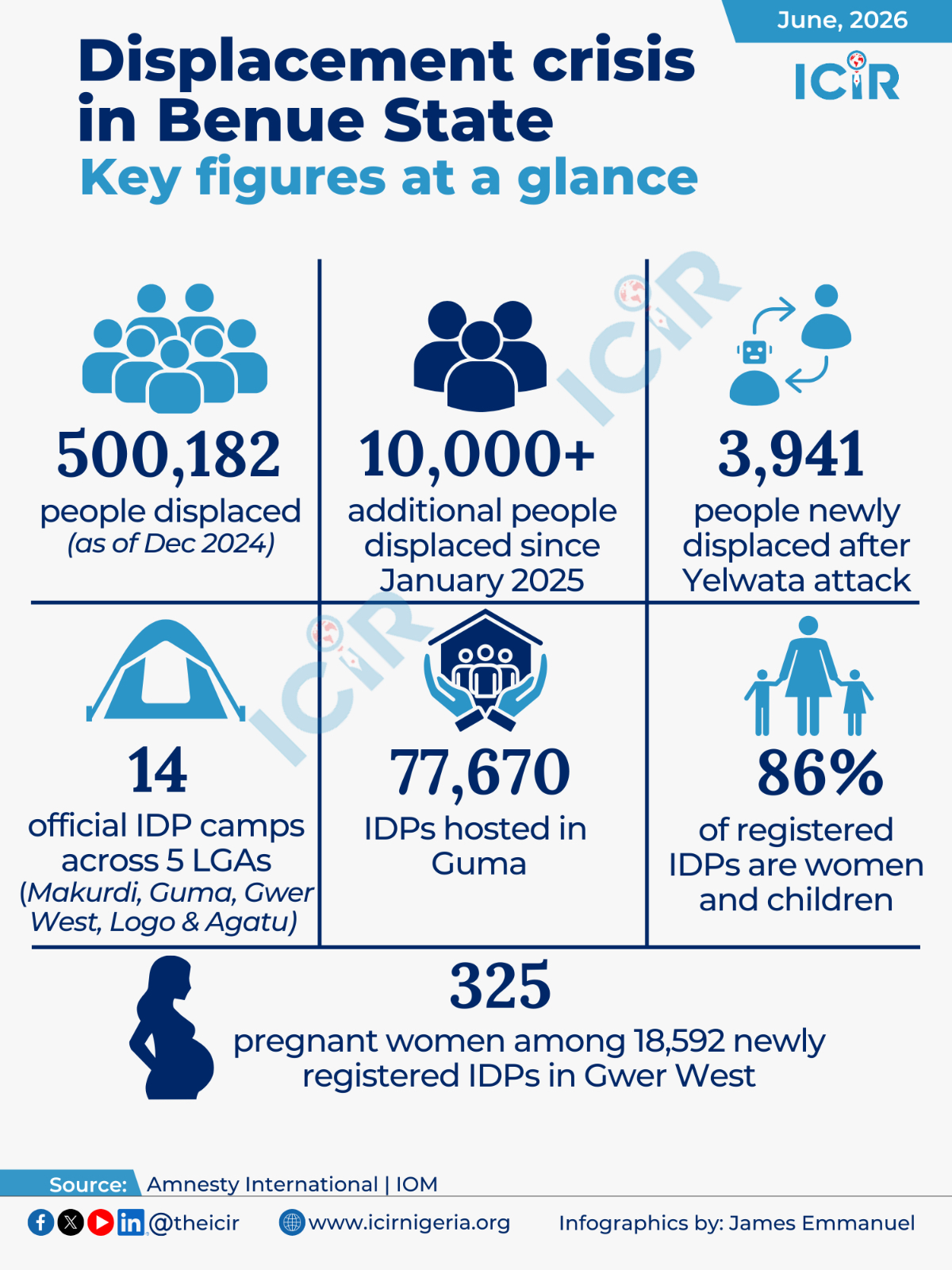
Makurdi, Benue State — In the heart of Nigeria’s “Food Basket of the Nation,” more than half a million internally displaced persons (IDPs) are trapped in a humanitarian crisis that has persisted for years.
Despite the fertile lands and agricultural wealth of Benue State, the displaced population lives with hunger, sickness, and despair, largely abandoned by the systems meant to protect them.
A Crisis Hidden Behind Camp Gates
The IDPs, scattered across camps in local government areas such as Guma, Gwer West, and Makurdi, fled their homes after waves of violent attacks by armed groups. Villages were razed, families torn apart, and livelihoods destroyed. In June 2025 alone, over 18,000 new arrivals were registered at a camp in Naka, including pregnant women, breastfeeding mothers, and children. For many, displacement has become a permanent condition rather than a temporary refuge.
Inside the camps, conditions are dire. Residents describe a life of deprivation where food distribution is irregular and healthcare is virtually nonexistent. One widow explained: “There is no hospital in the camp. If you fall sick, you have to find a way to buy drugs yourself.” Such testimonies reveal the stark reality: survival depends not on organized relief but on individual resilience and luck.
Children Born Into Displacement
Perhaps the most tragic dimension of the crisis is its impact on children. Thousands have been born and raised entirely within the camps, knowing no other life. Makeshift tents serve as classrooms, but education is inadequate. Volunteer teachers struggle with overcrowded spaces, lack of materials, and little support. The result is a generation growing up without proper schooling, their futures compromised before they begin.

Amnesty International has warned of a looming catastrophe, citing disrupted education, poor sanitation, and rising infections among pregnant women. Malnutrition is widespread, with children particularly vulnerable to stunted growth and preventable diseases.
Aid Scarcity and Mismanagement
Relief materials, when they arrive, often fail to reach those most in need. Residents allege that aid distribution is plagued by mismanagement, with supplies benefiting distributors more than the displaced themselves. International support is dwindling too. The United Nations Office for the Coordination of Humanitarian Affairs (UNOCHA) has scaled back operations in Nigeria due to funding shortfalls, leaving camps even more vulnerable.
Food insecurity is compounded by the irony that Benue is Nigeria’s agricultural hub. Farmers who once cultivated vast fields of yam, rice, and maize are now unable to access their land. Displacement has stripped them of their livelihoods, turning producers into dependents.
Government Promises and Reality
In 2025, the Nigerian government launched a five-year action plan to address internal displacement. Yet in Benue, IDPs say they have seen little evidence of promised initiatives. Their greatest wish is not charity but the chance to return home safely. However, insecurity remains widespread, with 17 of Benue’s 23 local government areas still under attack. Without peace, resettlement remains a distant dream.
Community leaders and human rights groups are calling for a transparent resettlement framework, urgent relief measures, and stronger security. They argue that the plight of IDPs is not just a humanitarian issue but a test of Nigeria’s commitment to protecting its most vulnerable citizens.

Lives in Limbo
For families like Tesu’s, displacement has become a way of life. She fled her village eight years ago and has raised her youngest child entirely in a camp. Her story is emblematic of thousands who remain trapped in limbo, waiting for a future that seems increasingly uncertain.
The camps are filled with similar narratives: widows struggling to feed their children, men unable to farm, youths losing hope, and elders yearning for the dignity of home. Each story underscores the human cost of neglect and the urgent need for action.
Conclusion
The plight of Benue’s IDPs is a humanitarian emergency hidden in plain sight. More than 500,000 people live without adequate food, healthcare, or hope, their suffering largely ignored. As Nigeria grapples with insecurity and economic challenges, the question remains: will the nation remember its displaced citizens, or will they continue to languish in silence?
Until concrete steps are taken — from securing communities to ensuring transparent aid distribution — the IDPs of Benue will remain forgotten, their lives a stark reminder of the gap between promises and reality.