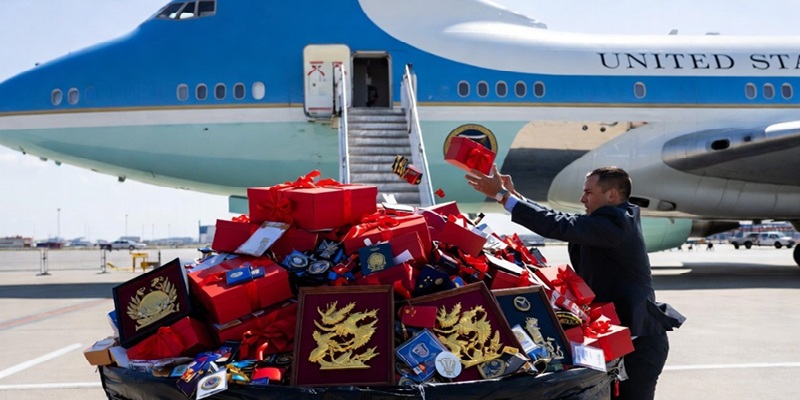
TDA striking incident has emerged from President Donald Trump’s recent trip to China, highlighting the tense and distrustful state of U.S.-China relations.
According to reports translated from Japanese media, everything distributed by the Chinese side to the U.S. delegation was collected and discarded before boarding Air Force One.
These included press badges, burner phones, and pin badges.
Eyewitness accounts, including that of a Daily Mail White House correspondent traveling with the group, confirmed the incident.
According to the correspondent, the U.S. staff gathered the items just before departure and threw them directly into a trash can.
The correspondent remarked: “Nothing made in China was brought onto the plane.”

The decision underscores the depth of suspicion within Washington regarding Beijing’s technological capabilities.
China is widely regarded as one of the world’s most advanced cyber espionage actors.
U.S. officials are acutely aware that even seemingly innocuous items — such as a pin badge — could potentially conceal surveillance devices or tracking technology.
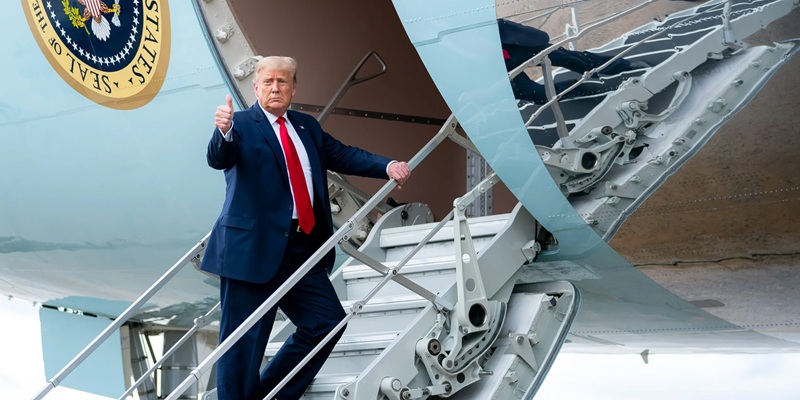
Security experts note that such precautionary measures are not unprecedented.
Delegations often exercise extreme caution when dealing with equipment or materials provided by foreign governments, particularly in contexts where espionage risks are high.
However, the symbolism of discarding all items in plain view sends a powerful message: trust between the United States and China remains virtually nonexistent.

The episode reflects the broader reality of U.S.-China relations in 2026.
While diplomatic gestures such as handshakes and official ceremonies continue, the underlying atmosphere is one of suspicion and strategic rivalry.
The United States has repeatedly accused China of cyber intrusions targeting government agencies, corporations, and critical infrastructure.
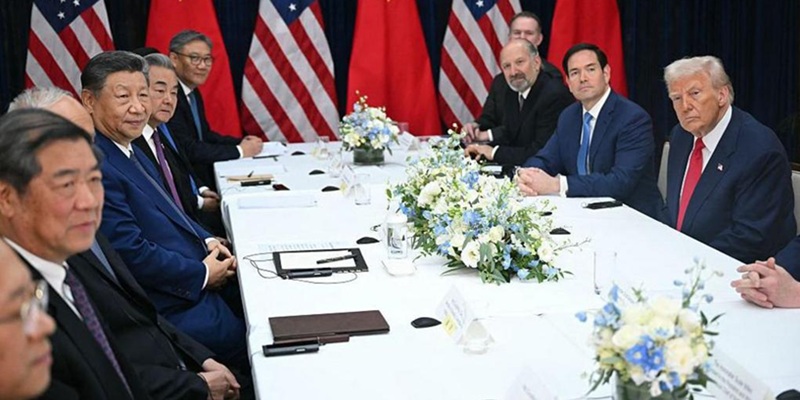
In turn, Beijing has dismissed such allegations as politically motivated.
Observers argue that the act of discarding Chinese-provided materials is emblematic of a “zero-trust” approach.
It illustrates how even routine diplomatic exchanges are overshadowed by concerns about espionage, surveillance, and national security.

For many analysts, this incident encapsulates the current state of affairs.
While the optics of diplomacy remain, the substance is defined by mistrust.
The U.S. government’s actions demonstrate a determination to minimize risks, even at the cost of symbolic gestures that could further strain relations with Beijing.
As one commentator put it, “While hands are shaken, trust is zero.”