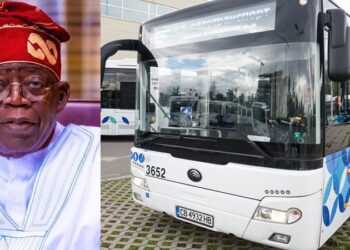



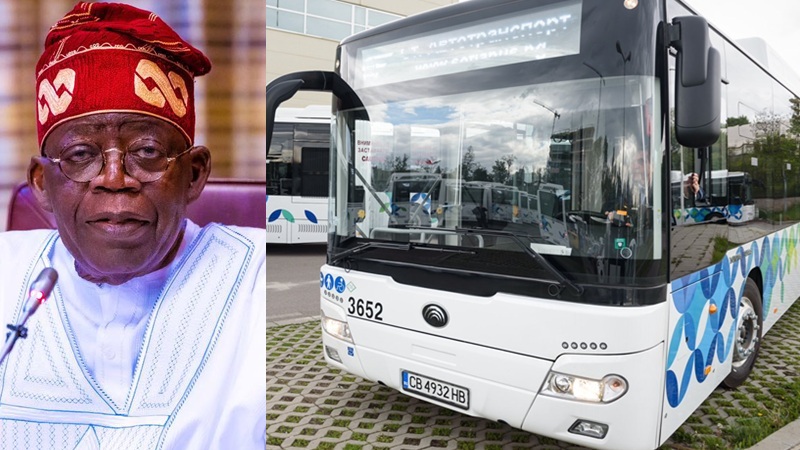

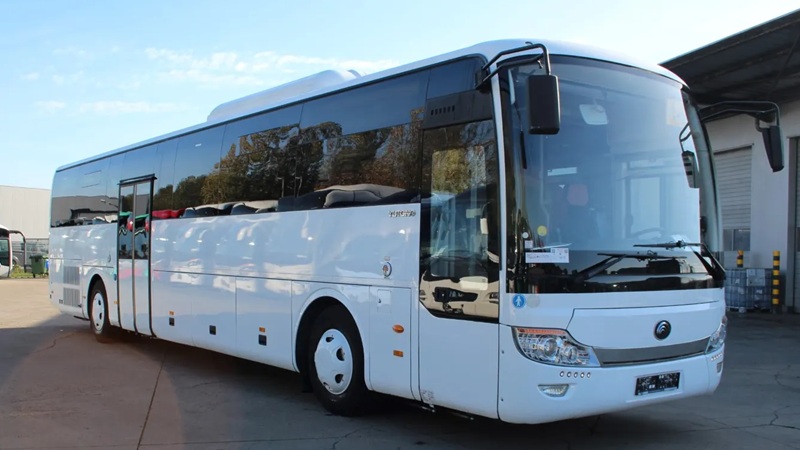
 President Bola Tinubu’s administration says Yutong will supply 300 compressed natural gas buses under Nigeria’s National Affordable CNG Transit Programme.
The agreement was signed in Lagos on Thursday through the Presidential Initiative on CNG and Electric Vehicles, according to reports.
The first 100 buses are expected to arrive in Lagos by the end of December, with later vehicles assembled locally.
The government says the programme aims to reduce fares by about 40 per cent on participating routes.
That figure is a target; the announcement does not specify fares, participating routes, or when reductions would take effect.
Tinubu said the investment is intended to lower transport costs for people who rely on commercial buses for work, school, markets, and moving goods.

The administration plans to work with state governments and transport operators to expand CNG bus services.
Whether passengers see savings will depend on the rollout and whether operators pass lower running costs through to fares.
Yutong Assembly Planned at Former Leyland Plant
The subsequent buses are expected to be assembled by YP Automobiles Bus Assembly at the former Leyland Automotive plant in Ibadan, Oyo State.
The federal government says local assembly could revive manufacturing capacity, reduce reliance on imported buses, and create jobs for engineers and technicians.
The agreement is also expected to support technology transfer and strengthen Nigeria’s automotive industry.
Yutong reported sales of 49,518 buses in 2025 and operates in international markets, according to the company.

The State House describes the company as the world’s largest bus manufacturer; the sales figure provides context for its scale but does not independently establish that ranking.
The investment follows an invitation from Tinubu for Yutong to support mass transportation in Nigeria.
The announcement does not give a value for the investment, the plant’s production capacity, or a date for local assembly to begin.
Those details will help show how quickly the project can move from agreement to regular bus supply.
Government Says CNG Expansion Should Cut Costs
The programme is part of a wider government push to expand CNG use and related refuelling infrastructure.
The State House says the effort involves the CNG and Electric Vehicles initiative, the Midstream and Downstream Gas Infrastructure Fund, and private investors.

It also points to mobile refuelling units and a presidential directive for 1,000 additional CNG refuelling infrastructure units nationwide.
A wider network could support more commercial buses, although the announcement does not specify locations or completion dates for the planned facilities.
The government argues that CNG vehicles’ lower operating costs should translate into lower passenger fares.
The stated fare-reduction target applies only to routes participating in the programme, rather than every commercial transport route nationwide.
Officials say the programme’s success should ultimately be measured by how much passengers save.
The first bus deliveries and publication of route-level fare information will provide early tests of that commitment.