TD Millions of dollars allegedly diverted from Nigeria’s security funds during the tenure of former National Security Adviser Sambo Dasuki have been traced to luxury real estate and other assets in the United States, according to an investigation by the Platform to Protect Whistleblowers in Africa (PPLAAF).
The investigation, conducted using thousands of pages of property deeds, company records, bank documents and court filings, traced financial transactions involving Dasuki’s office and his close associates, Robert and Mimie Oshodin.
PPLAAF shared its findings with Premium Times and The Washington Post, which independently retraced key elements of the financial trail.
The investigation found that the Oshodins acquired expensive properties in California and Virginia during the period Dasuki served as Nigeria’s National Security Adviser between 2012 and 2015. PPLAAF said the couple received at least $27 million from Dasuki’s office and invested a comparable amount in US real estate.
What is Dasukigate?
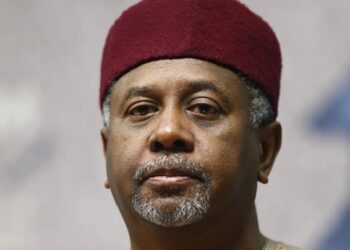
Sambo Dasuki, a retired army colonel and former National Security Adviser to President Goodluck Jonathan, was appointed to the position in June 2012.
He was responsible for coordinating aspects of the government’s response to Boko Haram, which at the time was carrying out increasingly deadly attacks across northeastern Nigeria.

Following the election of Muhammadu Buhari in 2015, Dasuki was removed from office and subsequently arrested over allegations involving the diversion of billions of dollars earmarked for national security and defence procurement.
Nigerian authorities accused him of misappropriating approximately $2.1 billion intended for the procurement of arms to fight Boko Haram.
Dasuki has denied wrongdoing and pleaded not guilty to the charges. His case has remained before Nigerian courts.
Money trail leads to Oshodins
According to PPLAAF, Dasuki’s office made numerous payments to Robert and Mimie Oshodin during his tenure.
The couple had longstanding personal ties with the Dasuki family and had served as legal guardians to two of Dasuki’s children while they attended school in the United States.
The investigation found that the couple’s real-estate purchases increased dramatically after money began flowing from the Office of the National Security Adviser.

Before 2012, the Oshodins had spent approximately $1.6 million acquiring five properties in California and Nevada.
That pattern changed after Dasuki became NSA.
PPLAAF said the couple subsequently spent approximately $24 million on US real estate during Dasuki’s tenure, with some purchases occurring close in time to large transfers from his office.
$9.5m Los Angeles mansion
One of the most striking transactions involved a $9.5 million mansion in Los Angeles.
According to documents reviewed by Premium Times and The Washington Post, Nigerian investigators identified a $12 million payment from Dasuki’s office to an account belonging to the Oshodins’ Nigerian furniture company.
Within days, approximately $7.7 million was transferred from that account to the United States.

The Oshodins subsequently used funds to acquire the Los Angeles property, according to the investigation.
The mansion, located in Los Angeles’ Windsor Square area, is a historic property that was once associated with the Chandler family, former owners of the Los Angeles Times.
Court records cited by The Washington Post also documented the Oshodins’ extensive collection of jewellery and other valuables kept at the property.
McLean property near Washington
The investigation also traced money to luxury property in McLean, Virginia, an affluent Washington, DC suburb.
Property records showed that an Oshodin-controlled company purchased a large mansion in McLean for approximately $6.5 million.
The property later became the subject of Nigerian asset-recovery efforts.
In 2022, the Oshodins sold the larger McLean property for approximately $5.3 million and purchased a smaller mansion for about $2.8 million, according to property records cited by The Washington Post.
PPLAAF said the couple still held US real estate valued at approximately $20 million when its 2024 investigation was published.
EFCC charges against the Oshodins
The financial trail also became the basis for Nigerian money-laundering proceedings against the Oshodins.
The Economic and Financial Crimes Commission (EFCC) accused Mimie Oshodin and her company of receiving more than $57 million in national-security funds allegedly diverted from the Office of the National Security Adviser.
She was arrested in 2019 and charged with money laundering alongside the company. She pleaded not guilty and was subsequently released on bail.
The Washington Post reported that Robert Oshodin appeared to remain outside the reach of Nigerian law-enforcement authorities for much of the period following the allegations.
More recently, however, a Nigerian Federal High Court discharged the Oshodins and their company from the money-laundering charges relating to the alleged $12 million transaction. Premium Times reported in 2026 that the court’s decision affected the prosecution’s case involving the funds linked to the NSA office.
That development is important because allegations contained in investigative reports and charges filed by law enforcement should not be presented as equivalent to a criminal conviction.
Jewellery and other valuables
The investigation went beyond property.
Court filings obtained by PPLAAF indicated that the Oshodins had stored tens of millions of dollars’ worth of jewellery and other valuables in their Los Angeles residence.
Among the items was a ring valued at more than $3 million, alongside expensive furnishings and antiquities.
PPLAAF said that when the identified American properties and valuables were combined, the couple’s wealth exceeded $40 million at the end of Dasuki’s tenure as NSA.
US authorities were alerted
Another significant aspect of the investigation is that Nigerian authorities reportedly alerted their American counterparts in 2018 to allegations concerning Dasuki and the Oshodins.
PPLAAF said Nigerian law-enforcement officials urged US authorities to follow the money trail into American assets.
Despite this, the Oshodins continued to buy and sell properties, according to the investigation.
The case has consequently raised broader questions about the use of US real estate to hold wealth originating from countries with significant corruption risks.
The Washington Post described the US property market as vulnerable to the concealment of illicit wealth through opaque ownership structures.
A wider Nigerian corruption investigation
The Dasuki investigation is now part of a much larger examination of Nigerian wealth held in American property.
A separate PPLAAF investigation published in September 2026 identified 284 US properties worth nearly $271 million linked to 61 current and former Nigerian officials, their relatives, associates and affiliated companies.
Of those properties, 152 worth approximately $177 million were acquired while the officials were in office.
PPLAAF’s findings suggest that US real estate has repeatedly been used as a destination for wealth associated with politically exposed Nigerians, highlighting challenges surrounding asset recovery, beneficial ownership and cross-border financial investigations.
Dasukigate remains unresolved
The allegations surrounding Dasuki and the Oshodins remain part of a wider and protracted accountability process.
Dasuki continues to deny the corruption allegations against him, while the legal status of individual property and money-laundering proceedings has changed over time.
The investigation nevertheless provides a detailed reconstruction of how funds allegedly originating from Nigeria’s security apparatus moved through individuals and companies connected to Dasuki and into high-value American real estate.
For Nigeria, the case underscores the difficulty of recovering suspected proceeds of corruption once they have crossed international borders.
For the United States, it raises questions about how effectively its real-estate sector can prevent American property from becoming a repository for illicit wealth originating abroad.