
PARIS, France — French President Emmanuel Macron has condemned widespread rioting and looting following nationwide protests over rising living costs, fuel prices and deteriorating school conditions.
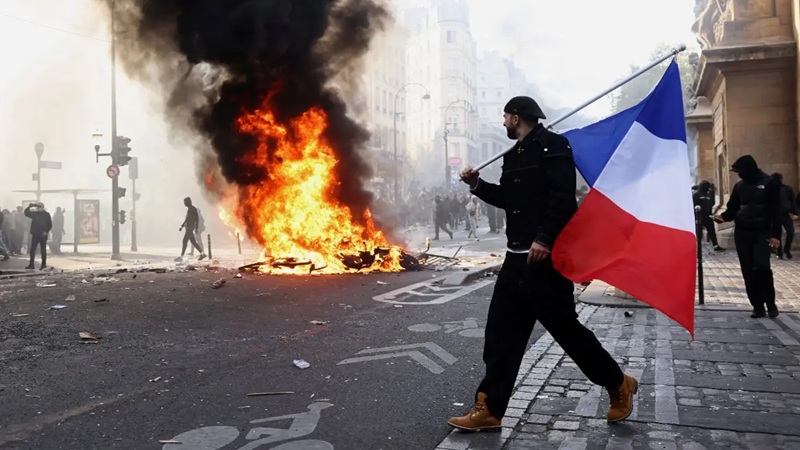
The unrest intensified over the weekend, with demonstrations turning violent in several cities, including Paris, Marseille, Lyon, Bordeaux and Limoges.
France’s Interior Ministry reported that 2,397 people were arrested and 997 police officers and gendarmes injured, including seven seriously, during Saturday’s unrest.
The violence included attacks on public buildings, burning vehicles, looting shops and damage to businesses, while authorities worked to restore order.
In Limoges, rioters set fire to the historic city hall, causing extensive damage to the building and drawing widespread condemnation from political leaders.

Macron Addresses Nation, Expresses Anger and Shame
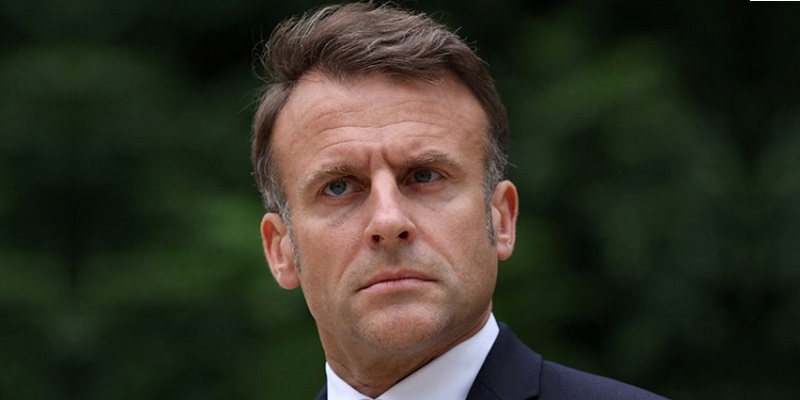
Addressing the nation on Sunday evening, October 18, Macron expressed anger and shame over the destruction witnessed across the cities of France.
The president condemned what he described as shocking scenes, insisting that peaceful demonstrations must not become an excuse for violence and criminal damage.
Macron said those who looted businesses or attacked public institutions would face prosecution.
He also vowed that those responsible for attempting to undermine the Republic would be held accountable.
“Those who looted will have to pay for the damage, and those who sought to bring down the Republic will be held accountable,” he said.
He accused radical far-left groups and criminal elements of exploiting the demonstrations to provoke confrontations with police and attack public buildings.

However, Macron also acknowledged the concerns of peaceful protesters, including young people worried about their future, school conditions and the rising cost of living.
The president promised stronger security measures and ordered a review of intelligence gathering and police preparedness before the demonstrations.
He also called for discussions involving political parties, trade unions, mayors and other stakeholders to identify proposals addressing the underlying grievances.
Despite the strong condemnation, Macron did not announce a nationwide state of emergency during his televised address.
France Announces Plans for Local Curfews
French Prime Minister Sébastien Lecornu announced on Monday that regional government representatives would be instructed to impose limited, localised curfews in areas vulnerable to further violence.
Lecornu said the restrictions would target affected locations rather than impose a blanket curfew across the entire country.

Authorities were expected to provide details of the areas affected as officials assessed security risks and the possibility of renewed unrest.
The prime minister described the scale of the destruction across France as severe.
He, meanwhile, praised police officers who confronted violent groups during the demonstrations.
The government also confirmed that Interior Minister Laurent Nuñez had offered to resign.
Nuñez accepted responsibility for security failures surrounding the unrest.
Macron rejected the resignation, saying continuity in law enforcement leadership was necessary while the government addressed the crisis.
The president instructed Nuñez to ensure transparency regarding possible failures in planning and intelligence gathering and to introduce improved policing tactics.
Rising Fuel Prices and Cost-of-Living Grievances
The demonstrations reflect mounting frustration over the cost of living, expensive fuel, public-service pressures and concerns about deteriorating conditions in schools.
The protests have brought together students, trade union members, workers and demonstrators associated with France’s Yellow Vest movement.
Fuel-price increases linked to disruptions in global energy supplies amid the US–Iran conflict have contributed to economic anxiety among households and businesses.
However, available reporting identifies several overlapping grievances rather than establishing that the conflict alone caused the nationwide unrest.
Students have protested against under-resourced schools, while other demonstrators have raised concerns about purchasing power, wages, pensions and public spending priorities.
Although many marches remained peaceful, groups of masked individuals engaged in violence, looting and attacks on public property in several locations.
Authorities have blamed radical activists and opportunistic criminals for much of the destruction, while critics have questioned the government’s handling of security and public grievances.
Trump Blames Immigration for the Unrest in France
US President Donald Trump has reportedly weighed into the French crisis by linking the unrest to immigration and urging French authorities to tighten border controls.
Statements attributed to Trump include claims that migrants have taken over France and that the country is burning.
However, the precise wording of the quotations supplied in circulating reports could not be independently verified from the sources reviewed for this report.
The claims about immigration remain political commentary rather than an established explanation for the protests, which have been linked to living costs, school conditions and wider economic concerns.
State of Emergency Remains a Possibility
The French government has indicated that it could consider stronger emergency measures if the security situation deteriorates further.
For now, the announced response centres on targeted curfews, increased security, investigations into planning failures and prosecutions of people accused of violence.
The government has not announced a nationwide state of emergency in the reporting reviewed for this article.
The authorities face the challenge of preventing further destruction while preserving the right of citizens to participate in peaceful demonstrations.
Businesses Assess Damage as Tensions Continue
The violence has left businesses and public institutions facing extensive damage, with authorities estimating that thousands of businesses were affected during the unrest.
Shop owners in several cities reported looting and vandalism, while local authorities began assessing damage and organising clean-up operations.
The destruction has also raised concerns about the economic consequences of prolonged unrest, particularly for small businesses already struggling with higher operating costs.
The government has promised accountability for those responsible and signalled that support measures for affected businesses would be considered.
What Happens Next in France?
Officials in France are expected to continue security operations while reviewing how authorities prepared for and responded to the demonstrations.
The proposed local curfews are intended to prevent renewed violence without imposing broad restrictions on communities unaffected by the worst incidents.
Meanwhile, calls for dialogue over fuel prices, school funding and the cost of living are likely to remain central to the political debate.
The unfolding crisis presents Macron’s government with two connected challenges: restoring public order and addressing the grievances driving peaceful demonstrations.
This Dawn News will continue monitoring developments and update this report as further verified information becomes available.