THIS DAWN — Liberia, the oldest independent republic in Africa, was founded in the 19th century as an American project.

Conceived by white American politicians and philanthropists as a solution to the “problem” of free Black people in a slaveholding society, it became the only African nation explicitly created by the United States.
Yet, 150 years later, the same country that helped birth Liberia played a significant—though rarely acknowledged—role in its near-total collapse during the civil wars of 1989–2003.
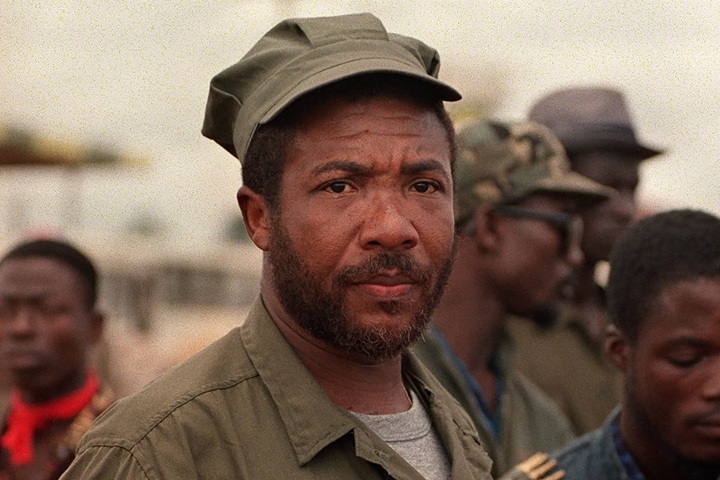
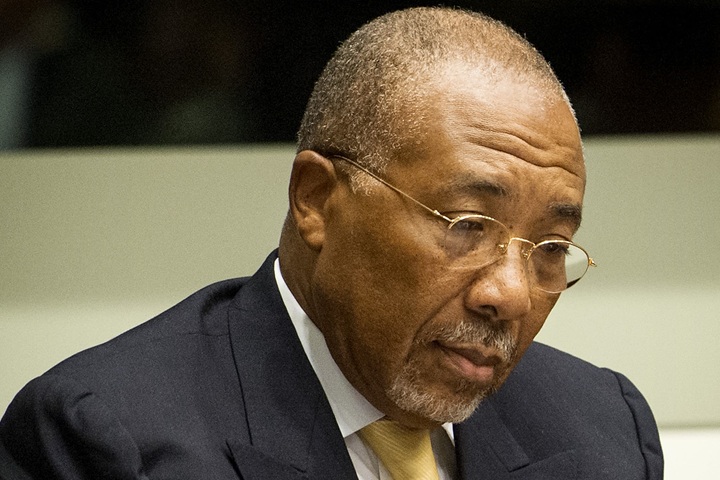
At the center of that collapse stands Charles McArthur Taylor: embezzler, escaped prisoner, revolutionary, warlord, president, and convicted war criminal.
Taylor’s rise and the devastation he unleashed cannot be fully understood without examining the long history of American involvement in Liberia and the intelligence relationship that shadowed his career.
From American Colony to Independent Republic (1821–1847)
In 1816, the American Colonization Society (ACS)—backed by figures such as Henry Clay, Andrew Jackson, and Francis Scott Key—was formed to resettle free African Americans and emancipated slaves on the West African coast.
Between 1821 and the 1860s, approximately 16,000 Black Americans and recaptured Africans from the illegal slave trade were sent to what became Liberia.
The settlers, known as Americo-Liberians, established Monrovia (named after U.S. President James Monroe) and modeled their society on the United States—complete with a constitution, flag, and capital city layout.
However, the indigenous populations (Kpelle, Bassa, Kru, Grebo, and others), who made up more than 95% of the inhabitants, were systematically excluded from citizenship and political power until the mid-20th century.
The Americo-Liberian elite replicated many of the hierarchical practices they had fled, imposing taxes, seizing land, and using forced labor.
On 26 July 1847, Liberia declared independence, becoming Africa’s first republic.
For the next 133 years, the True Whig Party—representing the Americo-Liberian minority—maintained almost unbroken one-party rule.
Economic Domination and Political Stagnation (1900–1980)
In 1926, the Firestone Tire and Rubber Company signed a 99-year lease for one million acres at six cents per acre—the largest rubber plantation in the world.
Firestone’s presence turned Liberia into a classic enclave economy: vast profits flowed out while local labor conditions were condemned internationally.
A 1930 League of Nations investigation found evidence of forced labor and conditions “scarcely distinguishable from slavery,” forcing the resignation of President Charles D.B. King.
Presidents William Tubman (1944–1971) and William Tolbert (1971–1980) introduced limited reforms, extending citizenship and voting rights to indigenous Liberians in the 1950s and 1960s.
Yet real power and wealth remained concentrated in Americo-Liberian hands.
By the late 1970s, Tolbert’s attempts to diversify foreign relations (with the Soviet Union and China) and challenge Firestone’s dominance alarmed Washington.
The 1980 Coup and the Rise of Samuel Doe
On 12 April 1980, Master Sergeant Samuel K. Doe, an ethnic Krahn soldier with a fifth-grade education, led a coup that ended 133 years of Americo-Liberian rule.
Doe and 16 enlisted men stormed the Executive Mansion, disemboweled President Tolbert, and publicly executed 13 cabinet ministers on a Monrovia beach.
Initially celebrated by many indigenous Liberians, Doe’s regime quickly received strong U.S. backing.
Between 1980 and 1985, American aid increased from $20 million to over $80 million annually as Liberia became a Cold War ally against Libya and Soviet influence in West Africa.
Doe, however, ruled through ethnic favoritism, repression, and corruption.
Charles Taylor Enters the Stage
Charles McArthur Taylor—born in 1948 to an Americo-Liberian family—was educated in the United States, graduating from Bentley College in Massachusetts in 1977.
After Doe’s coup, Taylor returned to Liberia and was appointed director-general of the General Services Agency, effectively controlling government procurement.
In 1983, Doe accused Taylor of embezzling nearly $1 million.
Taylor fled to the United States, where he was arrested in Somerville, Massachusetts, in 1984 on a Liberian extradition warrant and held at the Plymouth County House of Correction.
The Mysterious 1985 Escape
On the night of 15 September 1985, Taylor and four other inmates escaped from the maximum-security facility.
According to the most widely repeated account (later recounted by Taylor himself), a guard simply opened the cell door, and a car was waiting outside.
No alarms sounded, and no serious manhunt followed.
Taylor made his way to Mexico and eventually to Libya, where he received military training in Colonel Muammar Gaddafi’s camps alongside other African dissidents.
Declassified U.S. documents and testimony at Taylor’s 2012 war-crimes trial confirm that he had been a paid informant for the CIA and the Defense Intelligence Agency since at least the early 1980s.
Taylor claimed the CIA facilitated his escape so he could work with Liberian dissident Thomas Quiwonkpa to overthrow Doe.
The CIA has consistently denied orchestrating the jailbreak, calling the allegation “utterly unfounded.”
No conclusive evidence proving direct CIA involvement has ever been made public.
The First Liberian Civil War (1989–1997)
On Christmas Eve 1989, Taylor’s National Patriotic Front of Liberia (NPFL)—initially fewer than 100 fighters—crossed from Côte d’Ivoire into Nimba County.
The invasion ignited a conflict that rapidly spiraled into one of the most brutal civil wars in African history.
The war featured widespread atrocities: massacres, systematic rape, and the recruitment of thousands of child soldiers (some as young as seven).
By 1990, multiple factions had emerged, and the country fractured.
An estimated 200,000–250,000 people died, and more than half the population was displaced.
The United States, despite its historic ties, remained largely passive.
Washington provided limited support to the West African peacekeeping force ECOMOG but refused direct military intervention.
In 1997, war-weary Liberians went to the polls in an election monitored by the international community.
Taylor’s campaign slogan—“He killed my ma, he killed my pa, but I’ll vote for him”—reflected the terror factor. He won 75% of the vote.
Presidency and the Second Civil War (1997–2003)
As president, Taylor ruled through fear, using diamond and timber revenues to fund his regime and regional insurgencies (notably the Revolutionary United Front in Sierra Leone).
By 1999, new rebel groups—Liberians United for Reconciliation and Democracy (LURD) and the Movement for Democracy in Liberia (MODEL)—launched attacks from Guinea and Côte d’Ivoire.
The second civil war (1999–2003) killed another 50,000–100,000 people and brought Monrovia under siege.
In June 2003, as rebels entered the capital, the Special Court for Sierra Leone indicted Taylor for war crimes.
Under intense international pressure—particularly from the George W. Bush administration—Taylor resigned on 11 August 2003 and accepted asylum in Nigeria.
Trial and Legacy
Arrested in 2006 after attempting to flee Nigeria, Taylor was transferred to The Hague.
In 2012, the Special Court for Sierra Leone convicted him on 11 counts of aiding and abetting war crimes and crimes against humanity in Sierra Leone—the first head of state convicted by an international tribunal since Nuremberg.
He is currently serving a 50-year sentence in a British prison.
Conclusion: A Shared Responsibility
Liberia’s tragedy was not solely an American creation, but the United States bears significant responsibility.
It founded a settler state built on exclusion; propped up corrupt regimes with Cold War dollars; maintained intelligence relationships with figures like Charles Taylor; and stood by as the country descended into chaos.
The wars left Liberia with one of the world’s lowest human-development indices, shattered infrastructure, and deep ethnic scars.
While the country has enjoyed relative peace since 2003 under presidents Ellen Johnson Sirleaf (2006–2018) and George Weah (2018–present), the legacy of foreign interference and internal division remains.
Liberia’s story is a stark reminder that nations created as experiments in someone else’s image, and later abandoned or manipulated for strategic gain, often pay the heaviest price.