



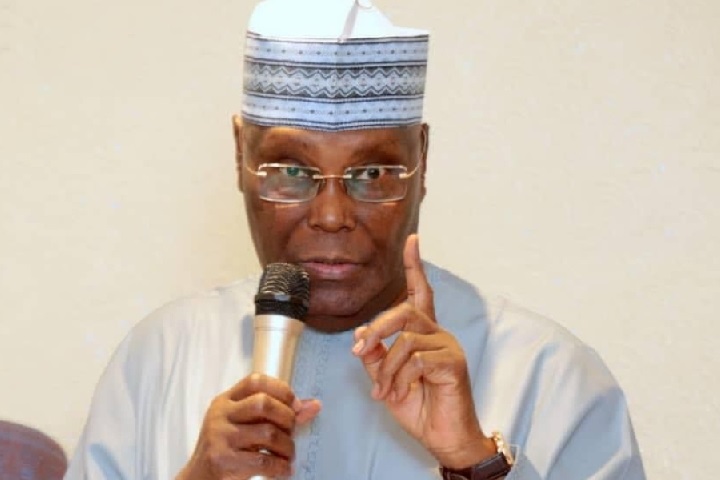

Former Vice President Atiku Abubakar has sharply criticised the Nigerian National Petroleum Company Limited (NNPCL) following its admission that reopening the Port Harcourt Refinery is a waste of scarce public resources, despite an estimated $1.5 billion already expended on the facility.
Atiku said the admission validates his long-standing position that Nigeria’s refineries should be privatised rather than sustained through public funding.
“Belated Admission Confirms Economic Reality” — Abubakar
In a statement shared on his official social media handle, Abubakar described NNPCL’s position as a belated acceptance of an unavoidable economic truth.
According to him, continued investment of public funds in non-performing refineries is economically indefensible and contrary to the national interest.
He noted that maintaining refineries that produce no petrol at all, while billions are spent on salaries and overheads, amounts to a misuse of public resources.

Criticism of Tinubu Administration’s Refinery Policy
Abubakar argued that the Tinubu administration has now come to terms with a reality he has consistently highlighted over the years.
He stated that pouring public money into moribund refineries does not represent sound economic policy and only deepens Nigeria’s fiscal challenges.
The former vice president stressed that political considerations, rather than economic logic, have driven repeated attempts to revive the refineries.
Decades of Failed Turnaround Maintenance
Abubakar recalled that successive governments have spent billions of dollars on so-called turnaround maintenance of Nigeria’s refineries.
According to him, these efforts have yielded no meaningful results.
He said the repeated failures expose:

-
Severe capacity limitations
-
Weak technical expertise
-
Poor financial discipline
-
Structural inefficiencies within the state-run oil sector
Atiku maintained that these systemic weaknesses cannot be resolved through continued government ownership.
Abubakar Defends His Privatisation Stance
Abubakar noted that for many years, his advocacy for refinery privatisation was met with public hostility and political attacks.
He said he was often accused of attempting to sell national assets to associates.
However, he argued that recent developments have proven that those criticisms were misplaced.
“Today, the facts have caught up with the rhetoric,” he stated.
He insisted that public ownership has turned refineries into economic liabilities rather than strategic assets.

Abubakar Warn Against New Refinery Deals, Calls for Asset Sale and Structural Reform
Abubakar also warned against any proposed refinery arrangements, including partnerships with foreign entities.
He argued that such deals merely repackage failed models and risk repeating the same mistakes under a different guise.
According to him, Nigeria should discontinue all proposed refinery revival agreements that rely on public financing.
The former vice president said Nigeria would have been better served if the refineries had been sold before rehabilitation efforts began.
He argued that early divestment would have:
-
Prevented ballooning public debt
-
Reduced asset depreciation
-
Shifted financial risk to private investors
Abubakar reiterated that privatisation remains the most viable path to efficiency, transparency, and sustainability in the downstream petroleum sector.
Broader Implications for Nigeria’s Oil Sector
Analysts say Atiku’s comments have reignited debate over the future of Nigeria’s state-owned energy infrastructure.
With the rise of private refineries and persistent fiscal pressures, critics argue that government-run refineries no longer align with modern energy economics.
The controversy also raises questions about accountability for past expenditures and the long-term direction of Nigeria’s oil and gas reforms.
The renewed criticism of NNPCL by Atiku Abubakar signifies growing concerns about the sustainability of Nigeria’s refinery strategy.
As public funds tighten and private sector participation expands, the debate over privatisation versus state control is expected to intensify.
Whether the government adjusts its approach may shape the future of Nigeria’s energy sector for decades to come.