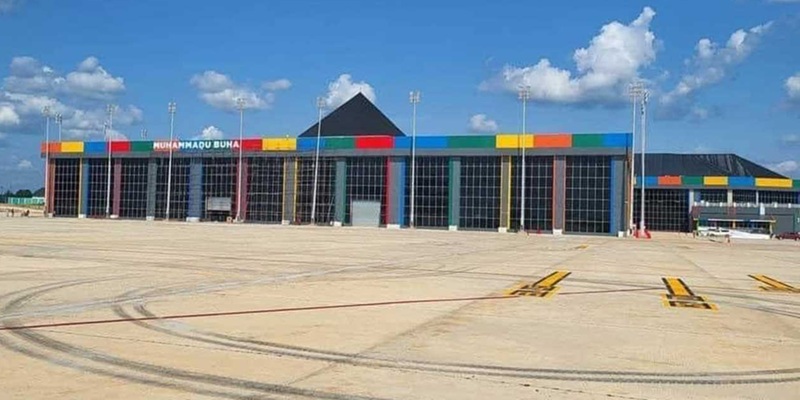
TD The multimillion‑naira airport project in Ebonyi State, championed by former governor and current Minister of Works David Umahi, has become the subject of public criticism and ridicule.

Reports and videos have surfaced showing the facility being used for church services rather than aviation operations.
Built at an estimated cost of ₦36 billion, the airport was envisioned as a gateway to boost economic activity in the South‑East.
However, years after its commissioning, flights have largely avoided the facility, raising questions about its viability and planning.
From Aviation Hub to Worship Venue
A viral video clip shows the airport terminal hosting a church service, with no aircraft activity in sight.
Critics have labeled the project a “white elephant”, arguing that it represents a waste of public funds.
One commentator quipped that “not even a drone lands on this airport,” underscoring the perception that the facility has failed to serve its intended purpose.
Watch a brief documentary of the airport below:
Public Reaction
The development has sparked outrage among citizens and activists, who accuse Umahi of mismanaging resources.
Many argue that the funds could have been better spent on repairing existing infrastructure, such as federal roads in Delta and Edo States, which have also been the subject of heated debate in the Senate.
Social media users have amplified the criticism, pointing to the airport as an example of misplaced priorities in governance.
The fact that the facility is now being repurposed for non‑aviation activities has further fueled anger and ridicule.
Accountability Questions
Analysts note that the Ebonyi airport controversy highlights broader issues of accountability and project planning in Nigeria.
Large‑scale infrastructure projects often consume vast sums of money but fail to deliver tangible benefits to citizens.
The case raises questions about feasibility studies, sustainability, and whether political prestige projects are prioritized over practical needs.

Analysis
The Ebonyi airport saga illustrates the dangers of pursuing grand projects without ensuring long‑term viability.
While airports can serve as engines of growth, they require consistent airline patronage, strategic location, and integration with broader transport networks.
Without these, facilities risk becoming underutilized monuments.
For Umahi, the criticism adds to mounting pressure over his stewardship of public works, especially as senators and opposition leaders continue to question his handling of road projects nationwide.
In summary, the ₦36 billion Ebonyi airport, now hosting church services instead of flights, has become a symbol of wasted resources and poor planning.
The controversy underscores Nigeria’s struggle with infrastructure accountability and raises urgent questions about how public funds are allocated in the name of development.
Fact‑Check Sidebar: Ebonyi Airport
| Government’s Official Claims | Current Reality on the Ground |
|---|---|
| The airport was built to serve as a regional aviation hub for the South‑East, boosting trade, tourism, and connectivity. | Flights have largely avoided the facility. Viral videos show the terminal being used for church services, with no visible aviation activity. |
| Estimated ₦36 billion investment was justified as a strategic project to attract airlines and stimulate economic growth. | Critics label it a “white elephant project”, arguing the funds could have been better spent on repairing existing infrastructure. |
| Umahi described the airport as a gateway for development, expected to integrate with national transport networks. | Observers note that not even drones land there, underscoring its underutilization and lack of integration into Nigeria’s aviation system. |
| Government officials insisted the project would create jobs and position Ebonyi as a competitive state in aviation. | The facility’s repurposing for non‑aviation activities has fueled public outrage and ridicule, with many questioning its sustainability. |
While the government promoted the Ebonyi airport as a transformative project, current evidence suggests it has failed to meet its intended purpose.
The facility’s use for church services instead of flights highlights the gap between political promises and practical outcomes.