


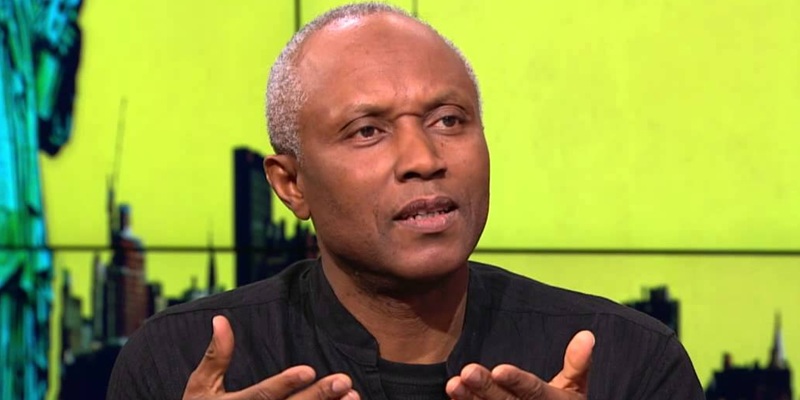

TDThe Department of State Services (DSS) has denied reports that it arrested or detained Nigerian-American novelist and public intellectual Professor Okey Ndibe at the Murtala Muhammed International Airport (MMIA), Lagos, on June 1, 2026.
In a statement issued Tuesday, the agency described the encounter as a brief, professional routine interface.
It linked the interface to the review and potential delisting of an outdated entry on its watchlist dating back to 2013.
Background on the Watchlist Review
According to the DSS, Professor Ndibe, who arrived from the United States, was engaged for about one hour as part of an ongoing agency-wide review of legacy Watch-List Actions (WLAs).
Many of these entries, it said, originated during Nigeria’s military era.
The current Director-General ordered a systematic cleanup to prevent undue embarrassment to citizens and align with international best practices.

The process requires interfacing with affected individuals to verify that their recent activities, travel history, and conduct no longer align with the original reasons for inclusion before final delisting.
Ndibe’s Case and Resolution
“Prof Ndibe has been on the Watchlist since January 29, 2013,” the DSS statement read.
“His case has been reviewed and downgraded.
“The interface at the airport was geared towards the final delisting of his details from the Action,” the statement added.
After the interaction, Ndibe was cleared and escorted out.
The DSS emphasized that Ndibe himself acknowledged the professional, courteous, and decorous conduct of its operatives in a Facebook post.

DSS claimed he praised their respect for the rule of law and human rights under the new leadership.
Other Citizens Benefiting from the Review
The DSS noted that several Nigerians, including journalists, have benefited from this review process.
A notable example is Mr. Lanre Arogundade, Executive Director of the International Press Centre.
Arogundade’s delisting was approved in May 2025 after over a decade on the list.
Citizens still affected are encouraged to formally report to the DSS National Headquarters to expedite reviews.
Initial Reports and Rights Groups’ Reactions
The clarification followed initial reports, amplified by human rights activists and media outlets, which described Ndibe’s experience as a “brief detention.”

Rights groups, including the Rule of Law and Accountability Advocacy Centre (RULAAC) and SERAP, however, condemned the action.
They described the scenario as arbitrary harassment of a critic and demanded respect for fundamental rights.
Ndibe, on his part, is known for his sharp columns critiquing governance and corruption.
Known for his novels such as Arrows of Rain and Foreign Gods, Inc., he has faced similar airport encounters in the past (notably in 2011 and 2017).
Social Media Responses and Criticism of DSS Priorities
The DSS statement triggered a flurry of responses online, reflecting deep public skepticism toward Nigeria’s security agencies.
Some users commended the transparency and reform efforts—praising the agency for cleaning outdated lists and treating Ndibe professionally.
Many others, however, delivered sharp rebukes.
Critics accused the DSS of writing lengthy justifications to “cover up atrocities” while bandits, kidnappers, and terrorists ravage communities unchecked.
One user posted: “DSS know how to write 1 million pages article when they want to cover up.”
Others questioned selective enforcement: “But Gumi has never been on your watchlists? We all know what we’re doing.”
Another critic questioned the list: “How many Islamic Fulani terrorists, bandits or kidnappers are in your watch list?”
Broader Skepticism and Supportive Voices
Skepticism extended to the agency’s priorities.
One remark read: “I have never seen our government agencies this daft… All their powers na to lick Tinubu Asx.”
Others dismissed the explanation outright, suggesting comments were influenced.
Other say that the agency should not need to issue statements at all if nothing was amiss.
Supporters, however, viewed the episode positively.
One user wrote: “This is a commendable example of transparency, respect for human rights, & rule of law.”
Others urged verification of facts before sensational reporting, criticizing initial coverage by Sahara Reporters and Sowore.