


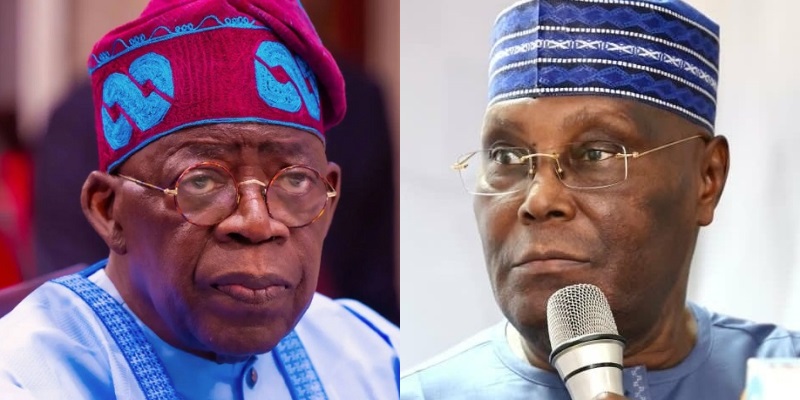

TD Media adviser to former Vice President Atiku Abubakar, Paul Ibe, has criticised the latest endorsement of President Bola Ahmed Tinubu for the 2027 presidential election by the Charismatic Bishops Conference of Nigeria (CBCN), questioning the organisation’s identity, credibility and reasons for backing the President.
Ibe said the endorsement was the democratic right of the bishops but argued that Nigerians were equally entitled to question the basis upon which the group arrived at its decision.
His comments followed the CBCN’s declaration of support for Tinubu during its 2026 Synod in Abuja.
Its President-General, Archbishop Leonard Bature Kawas, said the organisation resolved to support the president’s bid for a second term.
“Who Are the CBCN?”
Reacting to the endorsement in a post on X, Ibe questioned the identity of the organisation.
He also questioned whether its support was based on the performance of the Tinubu administration.

“Meanwhile, Tinubu has secured another 2027 endorsement, this time from the Charismatic Bishops Conference of Nigeria (CBCN).
“Fine. That is their democratic right,” Ibe wrote.
“But Nigerians have a right to ask: who are the CBCN, and what is the basis of this endorsement?”
He then listed economic and security challenges facing Nigerians and questioned whether those issues formed part of the bishops’ assessment.
Ibe Questions Tinubu’s “Economic Miracle”
Ibe sarcastically referred to what he called Tinubu’s “economic miracle”.
He asked whether rising food prices, declining purchasing power, insecurity, unemployment and economic hardship were the reasons behind the endorsement.

“Was it Tinubu’s ‘economic miracle’—rising food prices, collapsing purchasing power, insecurity, unemployment and crushing hardship?” he asked.
The opposition figure’s media adviser argued that political endorsements would not determine how ordinary Nigerians ultimately assess the President.

CBCN: ‘Robes Do Not Confer Credibility’
Ibe also invoked the controversial 2022 episode involving clerics who appeared at the unveiling of Kashim Shettima as Tinubu’s running mate.
He wrote: “Truly, the hood does not make the monk,”, referring to the CBCN.
Ibe then referred sarcastically to the controversy as the APC’s “‘Fake Bishops’ Netflix series 1″.
He made an unverified reference to an allegation that some individuals had allegedly been recruited from beer shops for a “cameo appearance.”

The claim about recruitment should be treated as an allegation rather than established fact.
The 2022 ‘Fake Bishops’ Controversy
Similar to the CBCN controversy, in July 2022 several men dressed in clerical robes attended the APC event where Shettima was formally unveiled as Tinubu’s running mate.
The appearance attracted widespread criticism because Tinubu and Shettima were running on a Muslim-Muslim presidential ticket.
The ticket had been opposed by sections of Nigeria’s Christian community.
The presence of the robed men was interpreted by critics as an attempt to demonstrate Christian support for the APC ticket.
The Christian Association of Nigeria (CAN) said it was not represented at the event and challenged the APC to identify the clerics.
The Catholic Church also distanced itself from the men, saying they were not representatives of the Catholic Church.
Tinubu Camp Denied the Clerics Were Fake
Tinubu’s campaign organisation rejected the allegation that the men were fake bishops.
Bayo Onanuga, who was then the campaign’s Director of Media and Communication, maintained that the men were genuine Christian clerics.
He, rather, said that they were not necessarily prominent figures within mainstream Christian circles, unlike CBCN.
Some of the accused clerics subsequently appeared before journalists and produced documents they said established their ordination and church affiliations.
Consequently, the 2022 controversy remained contested, with allegations of political staging on one side and denials and evidence of clerical identity on the other.
“We Have Seen This Movie Before”
Against that background, Ibe said the latest CBCN endorsement reminded him of the earlier controversy.
“We have seen this movie before,” he wrote.
“In 2023, the APC’s ‘fake bishops’ controversy exposed how easily clerical robes could be deployed for political optics.”
The reference to 2023 reflects the political context in which the controversy continued to feature during the 2023 election campaign.
Meanwhile, the disputed appearance itself occurred at the July 2022 unveiling of Shettima.
CBCN “Endorsements Do Not Substitute for Performance”
Ibe argued that religious titles and endorsements should not be allowed to replace scrutiny of government performance.
“Robes do not confer credibility. Titles do not guarantee moral authority. And endorsements do not substitute for performance,” he wrote.
He maintained that the ultimate decision would rest with Nigerian voters rather than religious leaders.
Nigerians Will Judge Tinubu on Lived Experience, Not CBCN, Ibe Says
According to Ibe, the issues that will matter most to voters in 2027 are practical concerns affecting their daily lives.
“In 2027, Nigerians—not bishops—will deliver the verdict,” he said.
“And that verdict will be based on food prices, jobs, security, wages, purchasing power and lived experience—not robes and rhetoric.”
CBCN Says Tinubu Deserves a Second Term
The criticism comes shortly after CBCN leaders publicly endorsed Tinubu for another term.
Kawas said the organisation’s support was based partly on its assessment of the President’s appointments and what it described as religious balance in his administration.
He cited the appointment of George Akume as Secretary to the Government of the Federation and other Christian appointments.
He said they are evidence that Tinubu had addressed concerns raised by some Christian leaders over the Muslim-Muslim ticket.
The bishops also praised First Lady Oluremi Tinubu for her role and Christian background.
Battle for Religious and Political Support Intensifies
The competing positions highlight the increasingly political role of religious endorsements ahead of the 2027 presidential election.
While the CBCN says Tinubu’s record and appointments justify its support, Atiku’s camp is challenging Nigerians to look beyond endorsements.
It urged Nigerians to assess the administration through economic conditions, security, employment and purchasing power.
With the 2027 election approaching, the dispute suggests that religious support will remain an important part of Nigeria’s presidential contest.
Same applies to questions about the credibility and political motivations of religious endorsements.