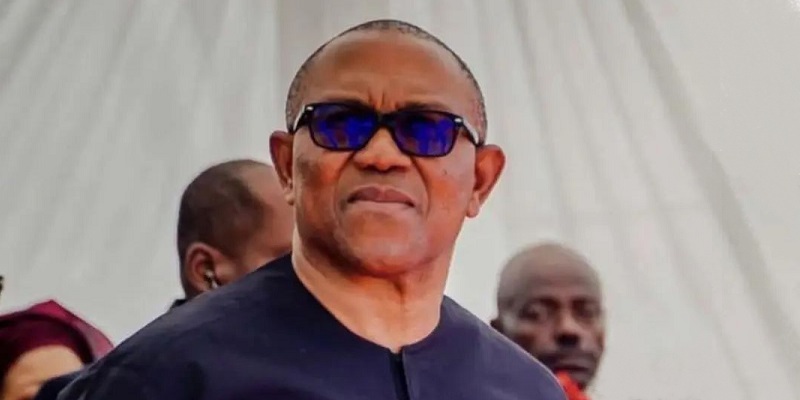

Nigeria’s political landscape is once again in turmoil as the camp of Peter Obi, the Labour Party’s 2023 presidential candidate and now a leading contender for the 2027 election, raises alarm over what it describes as a deliberate plot to block his candidacy.
The Obi Media Office has issued a fiery statement warning that any attempt to deny him a platform would pose a “huge threat to democracy.”
The statement accuses President Bola Ahmad Tinubu and the ruling party of orchestrating a long‑running scheme to destabilize Obi’s political base.
It started with the Labour Party and now within the African Democratic Congress (ADC), where Obi has aligned himself since late 2025.
Labour Party Turmoil and Exit
The crisis traces back to the aftermath of the 2023 election.
According to Obi’s camp, government infiltrators and a compromised judiciary deliberately injected instability into the Labour Party.
Despite Obi’s efforts to restore peace, factional disputes persisted.
In April 2025, the Supreme Court ruled on the rightful control of the party, but the ruling party allegedly disregarded the decision, using lower courts to undermine it.
By December 31, 2025, Obi made the difficult decision to exit the Labour Party, citing credible intelligence that turmoil would continue until he was forced out.
Days later, courts suddenly dismissed the factional disputes—an outcome Obi’s team claims validates their suspicions of manipulation.
ADC Alliance and Renewed Hostility
Obi’s move to the ADC injected fresh energy into the party, culminating in a major rally in Kano on March 30, 2027.
At that event, former Kano governor and NNPP leader Rabiu Kwankwaso officially joined forces with the ADC, strengthening Obi’s coalition.
But this alliance appears to have intensified hostility from the ruling party.
The Obi Media Office alleges that bizarre legislative changes, including amendments to the Electoral Act, were pursued specifically to weaken the ADC and sabotage Obi’s presidential ambitions.
INEC and Judicial Maneuvers
The tipping point came when the Independent National Electoral Commission (INEC) reinterpreted an Appeal Court ruling, leading to the delisting of the ADC’s leadership.
This move, according to Obi’s camp, puts him and other aspirants at serious risk of being denied a platform for the January 2027 poll.
The statement accuses the government of attempting to create an illusion of democratic choice by propping up surrogates in various parties while scheming toward a one‑party system.
Democracy at Stake
Obi’s spokesperson, Ibrahim Umar, condemned the developments as a blatant attempt to undermine democracy and entrench dictatorship.
He stressed that millions of Nigerians—particularly youth, women, and intellectuals—are demanding a transformative vision that prioritizes production over consumption, curbs waste, and eradicates corruption.
“True democracy allows citizens to make informed choices about their leadership.
“Blocking Obi’s candidacy is a scheme to undermine democracy and continue exploiting the nation’s resources through corruption,” the statement declared.
Call to Action
The Obi Media Office has urged Nigerians and the international community to remain vigilant, warning that the country’s democratic future is at stake.
It calls for transparency, integrity, and collective action to ensure that Obi has the opportunity to present his vision to the electorate.
As Nigeria heads toward 2027, the unfolding drama around Obi’s candidacy underscores the fragility of its democratic institutions.
Whether the courts, INEC, and political actors can uphold fairness will determine not just the fate of one candidate, but the credibility of Nigeria’s democracy itself.