



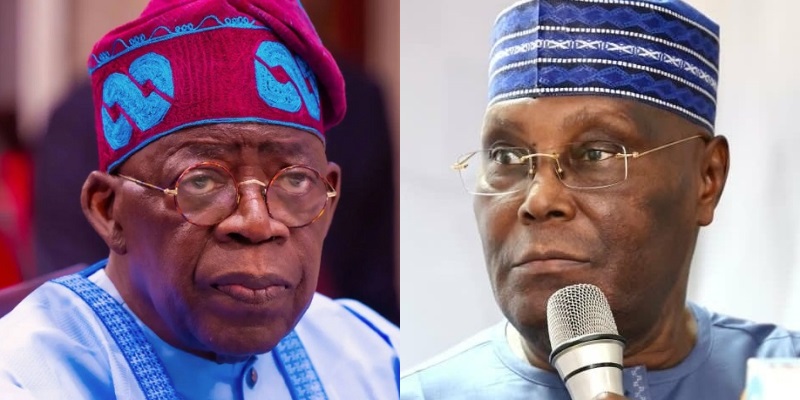

TD Abuja, Nigeria — The political storm surrounding the Freedom of Information Act (FOIA) case in Washington, D.C. has escalated yet again, as former Vice President Atiku Abubakar’s camp delivered a fiery rebuttal to the Presidency’s recent clarification.
Phrank Shaibu, Atiku’s Special Assistant on Public Communication, released a statement that directly challenges the Presidency’s narrative,
Shaibu accused officials of sidestepping the central issue: the contents of the 399 pages of FBI and DEA records produced in the case.
Shaibu’s Counterattack
Shaibu dismissed the Presidency’s lengthy explanation as a deliberate distraction:
“Nobody said a Freedom of Information Act case is a criminal trial.
“That is a convenient straw man erected by Bayo Onanuga so that he can knock it down and pretend he has answered the real question. He has not.”
He argued that Nigerians are not concerned with legal technicalities but with the substance of the records themselves.
He also questioned why President Tinubu is personally invoking privacy rights and legal exemptions to keep portions of them hidden.

Key Points Raised by Atiku’s Camp
- Transparency vs. Secrecy: Shaibu insisted that if the records contain nothing incriminating, then openness should be the Presidency’s strongest defence.
- Existence of Records: He emphasized that the records are undeniable and not fabricated by opposition figures:
“Atiku Abubakar did not create the FBI files.
“Karl von Batten did not create the DEA files.
“Aaron Greenspan did not manufacture 399 pages of United States government records.
“The records exist.”
- Criticism of Presidency’s Strategy: He accused the Presidency of hiding behind “legal jargon” — citing terms like Glomar defence, exemptions, and redactions — while resorting to predictable attacks on Atiku and his associates.
The Punchline and Context of the FOIA Case
Shaibu concluded with a blunt message that resonated across social media:
“After 399 pages, the issue is no longer whether there are records. The issue is what is inside them.
“Egbon, enough grammar. Enough diversion. Enough name-calling. Let the records speak.”
The FOIA litigation, overseen by Judge Beryl A. Howell in Washington, D.C., revolves around whether portions of FBI and DEA records relating to President Tinubu can remain redacted under U.S. law.
The Presidency has argued that statutory exemptions — including protections for grand jury proceedings, confidential sources, and privacy rights — justify withholding sensitive information.
Atiku’s camp, however, frames the matter as a test of transparency and accountability, suggesting that the Presidency’s defensive posture raises suspicions rather than dispels them.
Political Implications
This latest exchange underscores how the FOIA case has become more than a legal dispute — it is now a political weapon in Nigeria’s heated rivalry between President Tinubu and Atiku Abubakar.

- For the Presidency, the case is portrayed as a technical disclosure battle, with no bearing on Tinubu’s integrity.
- For Atiku’s camp, the existence of 399 pages of records is ammunition to question Tinubu’s credibility and demand transparency.
With Nigeria’s 2027 elections looming, the FOIA case in Washington has morphed into a proxy battlefield for domestic politics, where every filing and statement is amplified into partisan narratives.
The clash between the Presidency and Atiku’s camp highlights a deeper struggle: whether Nigerians will accept legal explanations as sufficient, or demand full disclosure of the records to settle lingering doubts.