





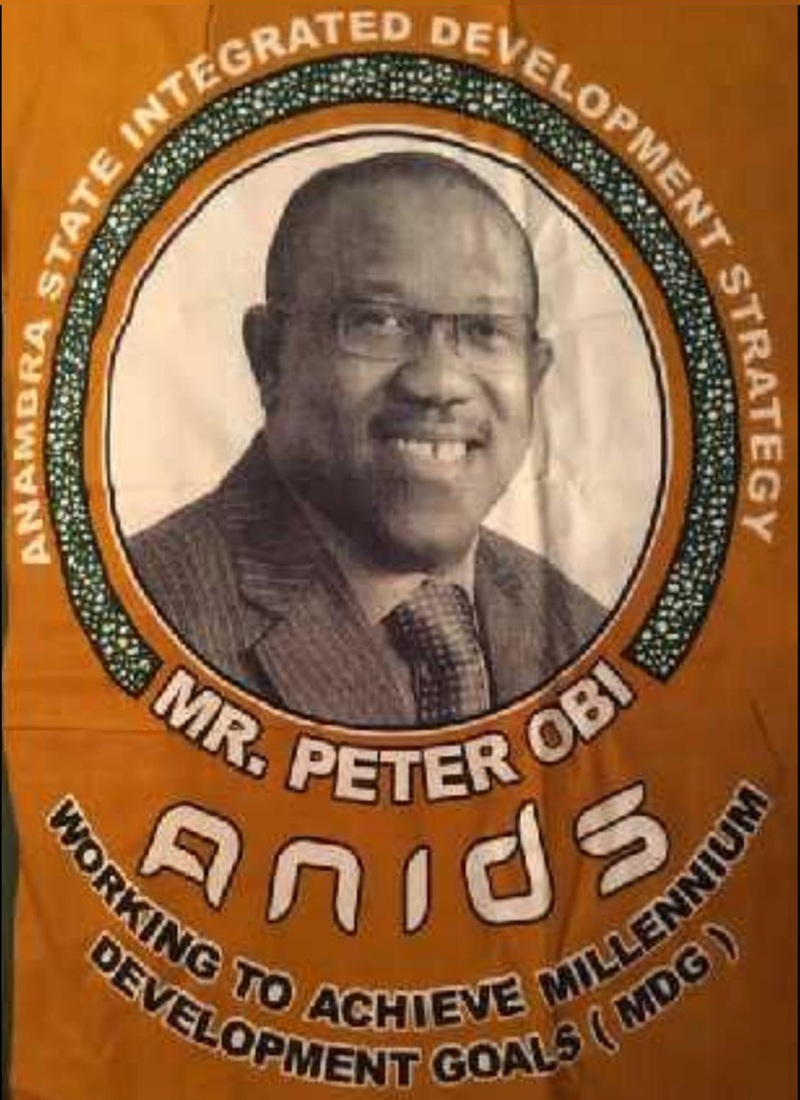
 Mr. Peter Obi has begun a series recounting his time as Anambra State governor, presenting governance as a public trust grounded in accountability and results, beginning with the Anambra Integrated Development Strategy, known as ANIDS.
In the first instalment, titled “Nigerians, Go and Verify,” Obi said he took office when state institutions were weak and development lacked coordination.
He argued that government needed to move beyond established habits and focus on serving citizens through transparency, prudence and demonstrable outcomes.
Obi described his governing philosophy through four principles: character, competence, capacity and compassion.
He said public leadership should not be used for personal acclaim, political slogans or self-promotion, but to improve ordinary people’s lives.

That responsibility, he wrote, required more than good intentions and depended on clear vision, careful planning and disciplined execution.
Obi said public resources should be converted into concrete benefits, with government’s foremost responsibility being service to the people.
The former governor’s opening instalment presents this philosophy as the foundation for the development initiatives he plans to describe in subsequent posts.
ANIDS: Anambra Integrated Development Strategy
Obi said his administration found that Anambra lacked a unified development plan to guide government priorities and resource allocation.
He said the government established a Ministry of Economic Planning to create an institutional basis for coordinated and sustainable development.
Following groundwork and consultations, his administration launched the Anambra Integrated Development Strategy.

Obi described ANIDS as the state’s overarching development philosophy and strategic framework for setting priorities and guiding programmes.
He said the strategy adapted the Millennium Development Goals to Anambra’s circumstances, needs and development priorities.
Those goals covered poverty and hunger, primary education, gender equality, child and maternal health, disease prevention and environmental sustainability.
The framework also included global partnership for development, another of the eight international goals in place at the time.
Obi said his government sought to turn these broad objectives into practical policies and measurable results that could improve residents’ lives.
Balanced Progress Across Public Services
Obi said ANIDS reflected his administration’s commitment to broad-based development, rather than concentrating on one sector while neglecting others.

He described education, healthcare, infrastructure, security, agriculture and capable public institutions as closely connected priorities.
In his account, progress in one area could not be sustained without corresponding advances across other parts of government and public life.
He said the administration aimed to assess development through lives changed, public services delivered and institutions made more effective.
Obi linked the dignity of Anambra residents to practical conditions, including roads, healthcare, education and the performance of public institutions.
He also included how government treated public workers, pensioners and traditional institutions among the measures of dignity and effective governance.
The statement says his administration sought to strengthen government institutions and make them more accountable to the public interest.
It does not provide project-by-project evidence or independent assessments of results in this first instalment.
Obi said a later instalment would describe institutional reforms and initiatives in education and other essential sectors.
ANIDS: Rebranding Anambra and Extending the Model
Obi said his administration changed Anambra’s public identity from “Home for All” to “The Light of the Nation.”
He described the change as more than a slogan, saying it was intended to renew civic pride and restore confidence in government.
He also said the rebranding reflected an ambition to show that Anambra could model purposeful leadership and development.
Obi argued that the state’s ANIDS experience was neither a one-time achievement nor an experiment that could not be repeated.
He said Nigeria could apply similar principles through capable leadership, effective planning, responsible management and accountable institutions.
The former governor said he was prepared to extend the approach nationally, asserting that what was achieved in Anambra could also be achieved across Nigeria.
His “Go and Verify” framing invites readers to examine his account, though this instalment mainly sets out principles and strategy.
The promised follow-up posts are expected to provide more detail about institutions, education and other sectors.