



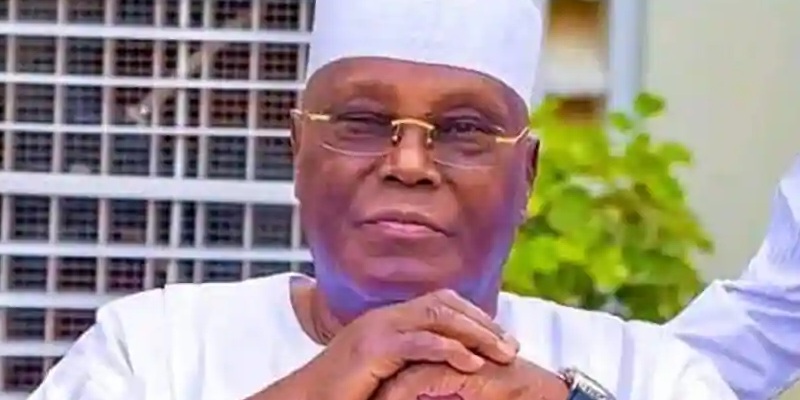

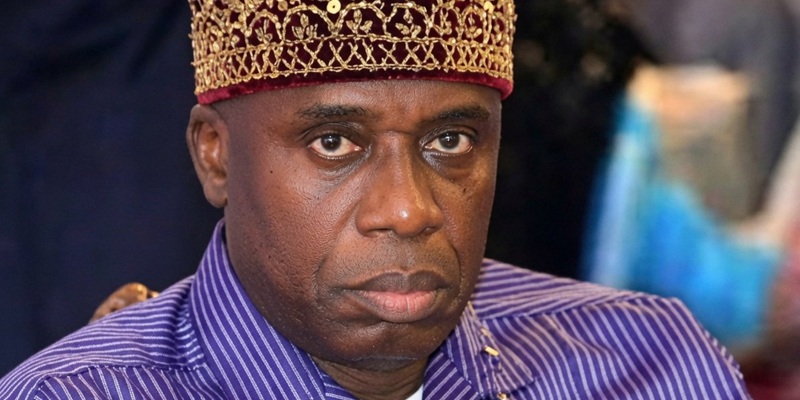
TDOn June 15, 2026, Mallam Bolaji Abdullahi, the National Publicity Secretary of the African Democratic Congress (ADC), announced what was expected to be a groundbreaking political development, revealing that the party had selected Rt. Hon. Chibuike Rotimi Amaechi as the Vice-Presidential running mate to Alhaji Atiku Abubakar, the ADC’s presidential candidate for the 2027 elections.
Abdullahi described the pairing as a “unity and rescue ticket,” a phrase meant to signal a coalition of strength and reform in Nigeria’s turbulent political landscape.
Yet, nearly two weeks later, the announcement has produced more confusion than clarity.
Alhaji Atiku Abubakar himself has not acknowledged the development on any of his official platforms—neither on social media nor through press statements.
This silence has fueled speculation that the supposed alliance may not be as solid as the ADC leadership initially portrayed.
Amaechi’s Precondition Politics
According to Amaechi’s close ally and personal assistant, Alhaji Kalgo, the former Rivers State governor has not formally accepted the position of running mate.

Kalgo explained that the announcement was made merely to avoid creating a vacuum within the party, but Amaechi’s acceptance hinges on two major preconditions.
The first condition is a sweeping demand for appointments.
Amaechi reportedly insists on nominating key figures to strategic national institutions, including:
- the Nigerian National Petroleum Company Limited (NNPCL),
- the Economic and Financial Crimes Commission (EFCC),
- the Central Bank of Nigeria (CBN), and,
- the Chief of Army Staff.
In addition, he seeks two ministerial slots of Atiku’s choice and no fewer than twenty Director-General positions.
This demand underscores Amaechi’s desire to wield significant influence over Nigeria’s economic, financial, and security architecture should the ADC win power.
The second condition is even more politically consequential.

Amaechi requires a signed and sealed agreement—endorsed by Atiku, the ADC Chairman, the ADC Secretary, and all members of the National Working Committee (NWC)—that Atiku will serve only one term.
Furthermore, Atiku must commit to endorsing and supporting Amaechi as the ADC’s presidential candidate in 2031.
This stipulation effectively positions Amaechi as the heir apparent, ensuring his long-term political ambitions are safeguarded.
Silence and Suspicion
Since the announcement, Atiku and Amaechi have not appeared together at any public event.
There has been no joint press conference, no campaign rally, and no formal confirmation of the arrangement.
This absence of unity has raised eyebrows among political observers.

In Nigerian politics, power-sharing agreements are often negotiated behind closed doors, but once announced, they are typically followed by visible demonstrations of solidarity.
The lack of such gestures suggests unresolved tensions.
For Atiku, the dilemma is clear.
Accepting Amaechi’s conditions would mean ceding enormous influence to his running mate, potentially undermining his own authority as president.
On the other hand, rejecting the conditions risks losing Amaechi’s support, which could fracture the ADC’s fragile coalition.
Alternatives and Calculations
Some analysts argue that Atiku has other options.
Figures such as Baba Dele Momodu or Emeka Ihedioha could serve as viable running mates without demanding such extensive concessions.
These individuals bring credibility, political experience, and regional balance to the ticket.
However, Amaechi’s appeal lies in his ability to mobilize resources and potentially assist with campaign financing.
This advantage reminiscent of former Delta State Governor Ifeanyi Okowa’s role during the 2022/2023 election cycle.
Ultimately, Atiku must weigh whether Amaechi’s demands are worth the risk.
While the Vice Presidency is not a ceremonial office, the scale of Amaechi’s proposed influence could reshape the balance of power within the ADC and the Nigerian presidency itself.
The Legal Threat
Complicating matters further, Amaechi has threatened to sue the ADC if the party continues to associate his name with reports that he is Atiku’s running mate.
He has issued an ultimatum demanding that his details be uploaded to the Independent National Electoral Commission (INEC) portal by June 27, 2026.
Failure to comply, he warns, will result in legal action.
This threat has plunged the ADC into internal turmoil.
What was intended to be a moment of unity has instead exposed divisions, mistrust, and competing ambitions.
The party now faces the dual challenge of managing Amaechi’s demands while maintaining credibility with the electorate.
A Race Against Time
With the 2027 presidential election drawing closer, the ADC cannot afford prolonged uncertainty.
The public is waiting for clarity, and time is running out.
Atiku Abubakar must decide whether to embrace Amaechi’s conditions, seek alternative running mates, or renegotiate terms that preserve party unity without compromising his authority.
Whatever the outcome, this episode highlights the complexities of Nigerian politics, where alliances are fragile, ambitions are vast, and the struggle for power often overshadows the pursuit of national interest.
The ADC’s “unity and rescue ticket” may yet rescue the party—or it may unravel before the campaign even begins.