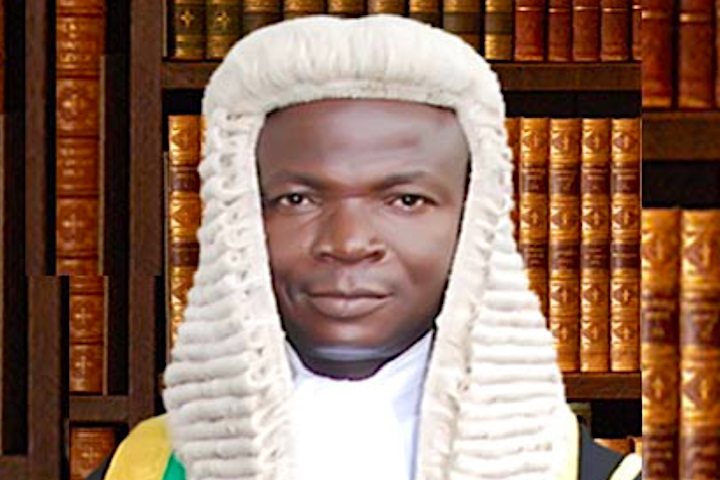
TDJustice James Omotosho of the Federal High Court, Abuja, has delivered a ruling that reaffirms the Independent National Electoral Commission (INEC)’s authority to set and adjust the timetable for the 2027 general elections.

In his judgment, Omotosho declared that INEC is constitutionally empowered to issue election timetables and even alter them when necessary, provided such adjustments remain within the statutory limits prescribed by the Electoral Act 2026.
He emphasized that the timetable is a chain of electoral events—including submission of membership registers, conduct of primaries, and nomination of candidates—and that INEC’s role in coordinating these processes is valid and lawful.
The judgment, promptly certified, strengthens INEC’s position as the central regulator of Nigeria’s electoral calendar.
The Previous Judgment
In sharp contrast, Justice M.G. Umar of the same Federal High Court had earlier struck down INEC’s directive requiring political parties to submit membership registers by May 10, 2026.
That case was brought by the Youth Party, which argued that INEC’s guidelines unlawfully shortened the statutory period guaranteed under Section 29(1) of the Electoral Act 2026.
Justice Umar agreed, ruling that political parties are entitled to the full 120-day window before an election to submit particulars of their candidates.
He concluded that INEC lacked the legal authority to impose deadlines outside the provisions of the law.
The ruling effectively extended the compliance period to September 2026, offering parties more time to reorganize, resolve internal disputes, and prepare for the polls.
Key Points of Divergence
-
Justice Umar’s ruling (April 2026):
INEC cannot abridge timelines fixed by law. The May 10 deadline was void.
Political parties gained additional months to comply, easing pressure on those facing internal restructuring.
-
Justice Omotosho’s ruling (May 2026):
INEC has constitutional authority to issue and adjust timetables. Its schedule for the 2027 elections is valid.
However, it must respect statutory provisions such as the 120-day requirement for candidate submissions.
Implications
The two judgments expose a significant judicial divide over the scope of INEC’s regulatory powers.
Umar’s ruling was welcomed by political parties and stakeholders who had complained that the May deadline was restrictive and impractical.
Omotosho’s decision, however, bolsters INEC’s authority, reinforcing its ability to maintain order and predictability in the electoral process.
Legal analysts warn that the conflicting interpretations could create uncertainty unless clarified by the Court of Appeal or ultimately the Supreme Court.
The stakes are high: the resolution will determine whether INEC can impose stricter timelines or whether parties retain broader flexibility under the law.
Stakeholder Reactions
Civil society groups and political parties are divided.
Some view Omotosho’s ruling as necessary to prevent chaos and ensure timely preparation for the 2027 elections.
Others argue that it undermines statutory safeguards designed to protect parties from rushed deadlines and potential exclusion.
The debate underscores broader concerns about balancing INEC’s regulatory authority with the rights of political parties under the Electoral Act.
With two Federal High Court judges delivering opposing rulings within weeks, Nigeria’s electoral timetable has become a contested legal battleground.
The clash between Umar’s and Omotosho’s interpretations highlights the tension between statutory guarantees and regulatory oversight.
As the 2027 elections draw closer, clarity from higher courts will be essential to ensure confidence in the electoral process and to prevent further disputes over timelines.