


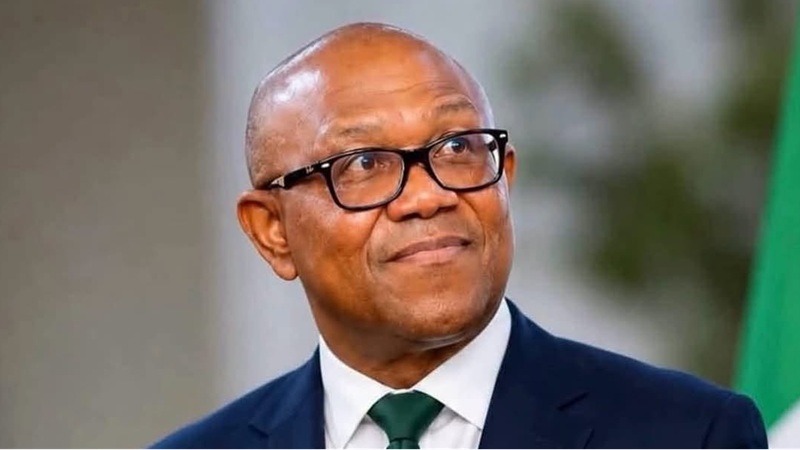

 A political simulation by Wale Pops Adekimoye has outlined the geographical challenges facing Peter Obi and his running mate, Rabiu Musa Kwankwaso, ahead of Nigeria’s January 16, 2027 presidential election.
The analysis, titled “Obi’s Chance of Winning,” identifies the states where the Nigeria Democratic Congress (NDC) presidential ticket could record its strongest performances.
Meanwhile, it warned that a nationwide popular-vote lead might not be sufficient to secure victory in the first round.
Addressing supporters of the Obi-Kwankwaso ticket, Adekimoye divided Nigeria’s 36 states and the Federal Capital Territory into four electoral categories based on his projected performance for Obi.
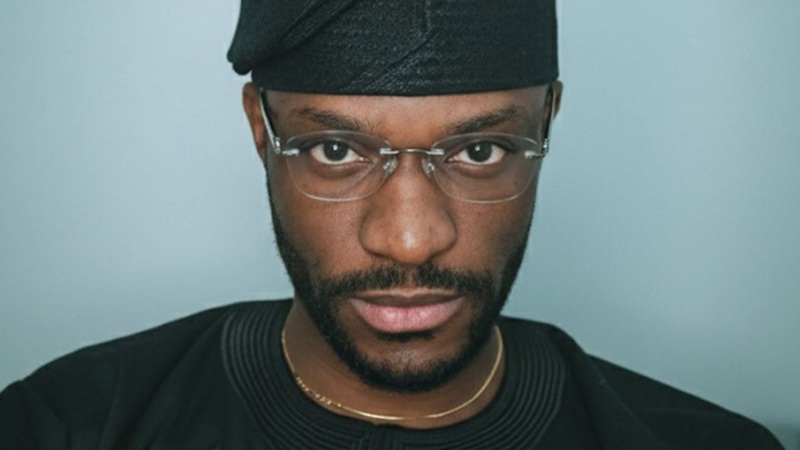
His central concern is that Obi could finish with the highest nationwide vote total but fail to meet the constitutional requirement for geographical spread.
According to his simulation, Obi currently reaches the 25 per cent threshold in only 20 of the 37 geographical units, while President Bola Ahmed Tinubu is projected to secure at least 25 per cent in 30.

The author argues that the opposition must expand its electoral support beyond its traditional strongholds to avoid a possible second election.
However, the projections are the author’s personal simulation, not an independently verified opinion poll or an official electoral forecast.
No detailed methodology, state-level voting figures or turnout assumptions accompanied the published analysis.
Four Electoral Bands in Adekimoye’s Simulation
Adekimoye categorised the states into four groups:
BAND A: States Where Obi Could Record His Strongest Performances
The first category comprises states where Obi is projected to win outright or make substantial contributions to his nationwide vote total.
They are:

- Anambra
- Enugu
- Abia
- Ebonyi
- Imo
- Delta
- Edo
- Bayelsa
- Kano
- Cross River
- Federal Capital Territory (FCT)
- Plateau
- Oyo
- Akwa Ibom
- Lagos
- Nasarawa
The author particularly describes Oyo State as a special entry, suggesting that its political significance could become clearer as the election approaches.
He argues that voter turnout in these areas could substantially influence the national outcome.
Adekimoye therefore urges supporters not to abandon polling units because of delayed electoral materials, insisting that voters should remain until they cast their ballots and demand transparent counting.
BAND B: States Where Obi Could Cross 25 Per Cent With Narrower Margins
The second category identifies states where the simulation projects that Obi could secure at least 25 per cent of the votes, although with less comfortable margins.
They are:
- Benue
- Rivers
- Kaduna
- Taraba
Adekimoye considers these states particularly important because losing the required geographical spread could undermine an otherwise strong nationwide performance.

He calls for stronger grassroots mobilisation, vigilance at polling units and collation centres, and transparent declaration of election results.
BAND C: States Where Obi Could Fall Below 25 Per Cent
The third category comprises five states where the simulation projects that Obi could fail to reach the constitutional 25 per cent threshold.
They are:
- Ogun
- Zamfara
- Adamawa
- Kogi
- Niger
According to Adekimoye, the projected performance in these states presents a major challenge to the opposition ticket.
He argues that the campaign must begin serious efforts to expand its support base in these areas rather than concentrating exclusively on states where Obi already enjoys considerable political support.
His position is that improving the ticket’s performance in at least five additional geographical units would be necessary to bridge the gap between its projected 20 units and the constitutional threshold of 25.
BAND D: States Where Obi Is Projected to Record His Lowest Vote Shares
The fourth category identifies states where the simulation anticipates the weakest performance for Obi.
They are:
- Katsina
- Ondo
- Bauchi
- Jigawa
- Osun
- Kwara
- Gombe
- Yobe
- Ekiti
- Kebbi
- Borno
- Sokoto
Adekimoye describes these areas as strongholds of political opponents and warns that substantial margins for rival candidates could offset Obi’s projected advantages elsewhere.
He consequently advocates sustained campaigning, stronger voter mobilisation and effective election monitoring rather than abandoning these states because of perceived political disadvantages.
Tinubu’s Projected Geographical Advantage Raises Concern
One of the most significant aspects of the simulation is its projection that President Tinubu could secure at least 25 per cent of the votes in 30 geographical units, compared with Obi’s projected 20.
Although Adekimoye’s model gives the Obi-Kwankwaso ticket a narrow advantage in the nationwide vote, he argues that the geographical distribution of votes could prevent the opposition candidate from securing an outright victory.
He also projects that Tinubu could win more states outright than Atiku Abubakar in the scenario examined.
The implication, according to the author, is that a candidate’s national vote total and geographical spread must both be considered when assessing the prospects of winning the presidency.
What Does the Constitution Require?
Section 134(2) of Nigeria’s 1999 Constitution, as amended, provides that where more than two presidential candidates contest an election, a candidate must:
- Obtain the highest number of votes cast nationwide.
- Secure not less than 25 per cent of the votes cast in at least two-thirds of all states in the Federation and the Federal Capital Territory.
The Supreme Court’s interpretation in the 2023 presidential election dispute treated the FCT as equivalent to a state for calculating the geographical requirement.
Consequently, the calculation is based on two-thirds of 37 geographical units, which amounts to at least 25 units.
This means that a candidate who records the highest nationwide vote total but fails to meet the geographical requirement cannot automatically be declared elected in the first round.
Section 134(3) provides for a second election involving the candidate with the highest nationwide votes and the qualifying candidate who secured a majority of votes in the highest number of states, subject to the constitutional provisions.
Therefore, a second election would not automatically mean a contest between Obi and Tinubu merely because they are the two leading candidates in a particular simulation. The constitutional criteria determine the qualifying candidates.
Obi-Kwankwaso Ticket and the Changing Opposition Landscape
The political configuration ahead of the 2027 election has changed considerably since the 2023 presidential contest.
Peter Obi, who contested the previous election under the Labour Party, has secured the presidential ticket of the Nigeria Democratic Congress, with former Kano State Governor Rabiu Musa Kwankwaso as his running mate.
The pairing brings together two politicians who contested separately in 2023, when Obi polled 6,101,533 votes and Kwankwaso secured 1,496,687 votes under the New Nigeria Peoples Party (NNPP).
Their combined previous vote totals have generated considerable discussion about the potential electoral strength of the NDC ticket.
However, votes recorded by candidates in separate elections cannot automatically be added together to predict a future result.
Voter preferences, party structures, turnout, campaign strategies and the political environment can change significantly between elections.
The ticket has also faced questions about internal coordination and campaign organisation.
In September 2026, the NDC authorised Obi and Kwankwaso to nominate campaign council officials following disagreements involving party leadership and members of the OK Movement.
TheCable reported in October that the party was preparing to inaugurate its presidential campaign council.
Opposition Division Could Influence the Election
Another major development is the failure of opposition parties to maintain a unified presidential challenge against the ruling All Progressives Congress (APC).
Former Vice-President Atiku Abubakar is contesting under the African Democratic Congress, while Obi and Kwankwaso remain committed to their NDC ticket.
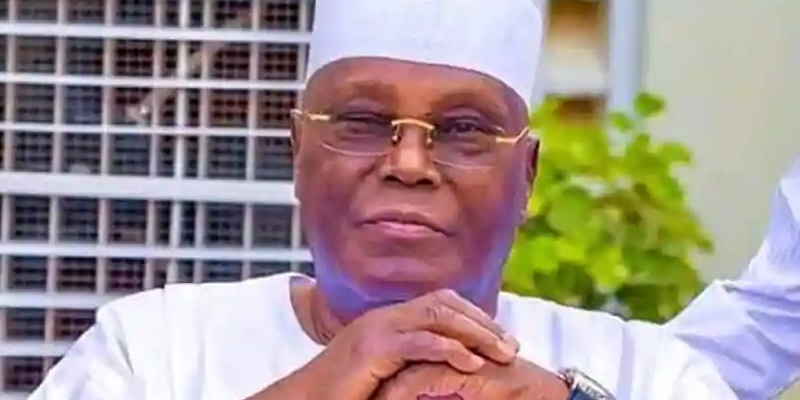
On October 18, 2026, Kwankwaso declared that the NDC would not withdraw its presidential candidature in favour of the ADC or another political party.
His statement followed disagreements between the two opposition camps over calls for Atiku to step aside in favour of Obi.
The development suggests that the 2027 election could feature competing opposition tickets rather than a single opposition candidate.
The Associated Press also reported that President Tinubu’s October 24 campaign launch in Kaduna took place against the backdrop of a divided opposition, with Atiku and Obi emerging as prominent challengers.
The division presents a significant strategic consideration for opposition parties seeking to consolidate votes across Nigeria’s different geopolitical zones.
Economy and Insecurity Remain Important Electoral Issues
Beyond party alliances and geographical voting patterns, the state of the Nigerian economy is likely to feature prominently in the presidential campaign.
President Tinubu has defended his administration’s economic reforms, including the removal of petrol subsidies and foreign-exchange adjustments, arguing that they have improved macroeconomic stability and government revenue.
In a statement published by the State House on October 30, 2026, Tinubu reported that Nigeria recorded 4.43 per cent economic growth in the second quarter of 2026, while headline inflation declined to 14.63 per cent in September.
However, food inflation remained elevated at 19.59 per cent.
Reuters reported on October 15 that the moderation in headline inflation had not removed the pressure on Nigerian households, with rising food and transport costs continuing to affect consumers.
The Associated Press similarly identified the cost-of-living crisis as a major political challenge confronting Tinubu as he seeks re-election.
On November 3, BusinessDay reported that the Federal Government had unveiled a three-phase strategy aimed at reducing inflation to single digits by the end of 2027.
Economists, however, warned that election-related spending, insecurity, energy-price shocks and implementation challenges could undermine the target.
Security also remains a major national concern, with banditry, kidnapping, insurgency and attacks on farming communities continuing to affect different parts of the country.
These issues are likely to shape voters’ assessments of the incumbent administration and the alternatives being presented by opposition candidates.
INEC Fixes January 16, 2027 for Presidential Election
The Independent National Electoral Commission has scheduled the presidential and National Assembly elections for Saturday, January 16, 2027.
The governorship and State Houses of Assembly elections will follow on February 6, 2027.
INEC’s revised timetable followed the enactment of the Electoral Act 2026, which necessitated adjustments to the electoral calendar.
The Commission’s official portal also published an updated list of presidential candidates on October 31, 2026.
With the presidential campaign season underway, political parties are expected to intensify voter mobilisation, public engagements and campaign activities across the country.
The Central Question: Can Obi Expand Beyond His Strongholds?
Adekimoye’s simulation raises an important strategic question for the Obi-Kwankwaso campaign:
“Can the NDC ticket translate its support in its projected strongholds into a sufficiently broad national coalition?”
The author’s central warning is that concentrating political resources in states where Obi is already popular may not be enough to secure a first-round victory.
The projected shortfall in geographical spread makes states in Bands B and C particularly important in his analysis.
Nevertheless, the simulation should be treated as a starting point for political discussion rather than a definitive forecast.
Actual election outcomes will depend on voter preferences, turnout, campaign organisation, party structures, electoral administration, security conditions and the credibility of the voting process.
For supporters of the NDC ticket, the challenge identified by Adekimoye is not simply to accumulate votes but to build support across different regions of the country.
The 2027 presidential election will ultimately be determined by votes cast and the constitutional requirements, not campaign enthusiasm or projections.
Original analysis: Wale Pops Adekimoye, “Obi’s Chance of Winning.”
This Dawn News — Free, Current, Verified, Researched and Unbiased News.