



TDThe argument that the Igbo people are excluded from Nigerian power-sharing is an outdated narrative.
With the 2027 general elections approaching, it is evident that the political hurdles facing the Igbo remains entirely self-imposed.
The current electoral cycle perfectly illustrates this pattern of self-sabotage. This is driven primarily by four factors: a pattern of weak delegations to the National Assembly, marginalization of the Igbo youths and women, the Peter Obi dynamic, and a lack of strategic planning.
A Pattern of Embarrassing Delegations to The National Assembly
The National Assembly is the crucible where national resources are distributed, Nigerian politics is shaped, and the future is decided.
Yet, despite the abundance of talent in the region, the Igbo have–in most part–continually sent a bunch of monumental misfits to this critical legislative body.
For example, there are 18 senators of Igbo extraction (drawn from the Southeast and South-South zones) at the Red Chamber.

But a shocking truth is that, with the exception of a fierce trio, the rest have been reduced to mere political furniture, whose sole raison d’être of being in politics is mere vestigial prestige and, of course, primitive accumulation of wealth.
Any attempt to narrate the story at the Federal House of Representatives is to exhume a stinking mess.
But the problem lies squarely on the political culture within Igbo land that produced them in the first place.
The recent primary elections offered a golden opportunity to make amends. Instead of planning for the future, regional leaders allowed political buccaneers to impose incompetent candidates on the masses.
The field is an embarrassing detail. I mean, most of them are totally unknown individuals without any meaningful track record, a cluster of rent-seekers who lack the intellectual depth and the sagacity to champion the Igbo cause in the comity of nations.
Whittier the future: The Stark Igbo Marginalization of Women and the Youth in the 2027 field
The lack of reasonable representation of the youth and women from the Igbo candidate pool for the 2027 elections is a severe blow to regional diversity, political evolution, and social progress.

Regional leaders actively bypassed these vital demographics, choosing instead to impose cash-and-carry candidates through systemic extortion and exploitation.
By trading long-term progress for immediate financial gain, the political elite compromised the very future of the Igbo society they claim to protect.
Peter Obi and the Mantle of Igbo leadership
Not since Dr. Nnamdi Azikiwe has an Igbo politician commanded the widespread devotion that Peter Obi enjoys across the East and the nation.
Yet, a stark disconnect remains between his immense popularity and the institutional framework needed to sustain lasting political power.
For now, it appears Mr. Obi either lacks a concise strategy to march or surpass Azikiwe’s legacy or he misjudges the structural demands of his current political standing.
His hands-off approach strongly highlights this unfortunate indifference or pure political naivety.

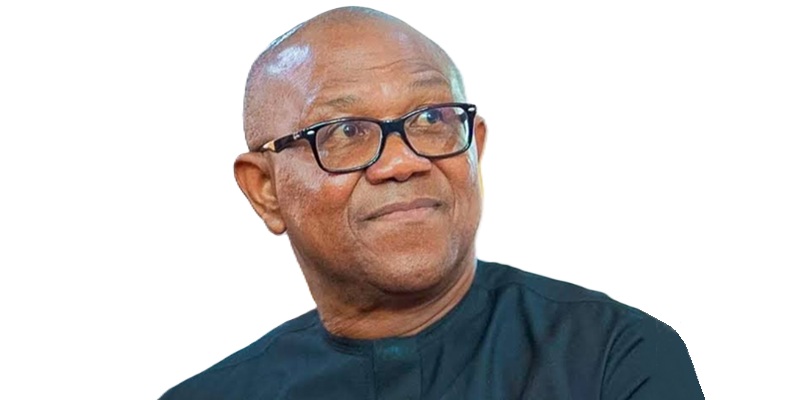
Every election typically yields a binary outcome: winning or losing. If Mr. Obi wins, which most Igbo do hope he does, he must need competent legislators on his side.
And if he loses, the Igbo still deserve a contingent that can fight their interest at the National Assembly.
Sadly, like the situation in 2023 where the ‘Obi wave’ in Igboland ushered in a bunch of flight-by-night wannabes into the legislature, there was no attempt whatsoever to ensure that capable candidates emerge for the 2027 cycle.
A prevailing narrative is that Obi must not meddle in the local politics so as not to appear too Igbotic, but the crux must not negate the genius of the ageless maxim: charity begins at home.
The Lack of Strategic Planning Towards 2027 Elections
Politics fundamentally shapes the present and future of a society. It acts as the framework through which a nation determines its rules, values, and priorities.
The continual failure to grasp this fact is why the Igbo people of Nigeria stand on the precipice of total political irrelevance ahead of the 2027 elections.
Despite possessing one of the most dynamic, economically powerful, and widely dispersed populations in Africa, the Igbo political landscape is defined by apathy, fragmentation, and a fatal lack of cohesive foresight.
While other regions methodically build alliances and map out their paths to power, the Igbo political engine remains completely stalled, threatening to turn a major ethnic group into mere spectators in Nigeria’s democratic process.
The last three years after the election of 2023, where the Igbo felt short-changed, were a lost opportunity.
Not only was the presidential election deeply flawed, the new government of Bola Ahmed Tinubu also orchestrated the worst form of Igbo marginalization in the nation’s democratic journey.
Even non-Igbo figures, such as Omoyele Sowore, Rabiu Kwankwaso, Reuben Abati, Rufai Oseni, Dele Farotimi, Shehu Sani, Aisha Yusuf, and Mohammed Ali Ndume, among others, called out Tinubu on the apparent lack of equity and justice.
But what did the Igbo leaders themselves do?
The Governors in the Southeast and their political leaders instead transformed Igbo leadership into a race for sycophancy.
Rather than strategize for lasting political relevance, they were busy attempting to outdo each other on how best to pat President Bola Tinubu on the back for the naked injustice against their own people.
Further, with rare exceptions like the Igbo Agenda Dialogue (IAD) led by Chief Chekwas Okorie, both the opposition and Igbo socio-cultural groups have lacked a clear vision for 2027.
The IAD, by the way, appears to offer an elaborate strategy for voter participation but requires broad support, especially from influential politicians who are the primary beneficiaries of this civic mobilization.
It defies all logic that the Igbo leaders completely failed to grasp the raw power of voting strength.
It never dawned on these ‘wise-men from the East’ to devise the best way to counter a deeply embarrassing statistical anomaly where the entire Southeast zone pooled only about 2.1 million total votes out of 11.5 million that registered to vote in 2023 elections.
Interestingly, Kano State alone posted about 1.7 million total votes cast. That is, a single Northern state nearly matched the voting output of an entire Southern geopolitical zone! Who is to blame?
Hope is not totally lost.
First, the 2027 elections could still trigger a seismic political resurrection for Igboland—but only if leaders violently overthrow selfish agendas for pure, strategic common sense.
The voter apathy in the region is not a badge of honor. With window for registration of voters virtually closed, the leaders must without delay craft specific action plans to ensure that a majority of the few that registered truly vote.
It has become very imperative that the people’s voting output is at least commensurate with their population and on par with those of other regions.
The year 2027 offers the Igbo a golden opportunity to unleash a catastrophic wave of ballots that finally forces the rest of Nigeria to respect their true population power. The strategy is not a rocket science!
Second, the time has come for Mr. Peter Obi to embrace a critical leadership responsibility. His perceived political detachment must now give way to pragmatic action.
History has cast him as the most influential figure in Igboland today. This makes it very vital that he uses his powerful voice to guide the region’s politics. Remember those widely celebrated words of Thomas P. O’Neill: All politics is LOCAL.
This also goes without saying that his Igbo heritage is an inseparable part of Obi’s political identity.
Make no mistake about this: Peter clearly attends his fair share of social functions in Igbo land. The problem is his glaring, illogical detachment from the region’s politics.
Marginalizing his political roots and the progressive efforts within do not enhance his national appeal; rather, it shows lack of leadership authenticity. It is pure political naivety.
SKC Ogbonnia writes from Ugbo, Awgu LGA, Enugu State, Nigeria.