TD I love Nigeria. That is precisely why I refuse to lie about her.
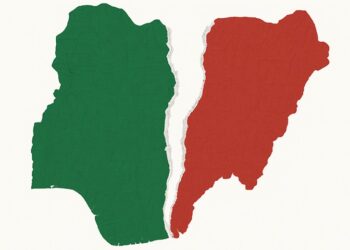
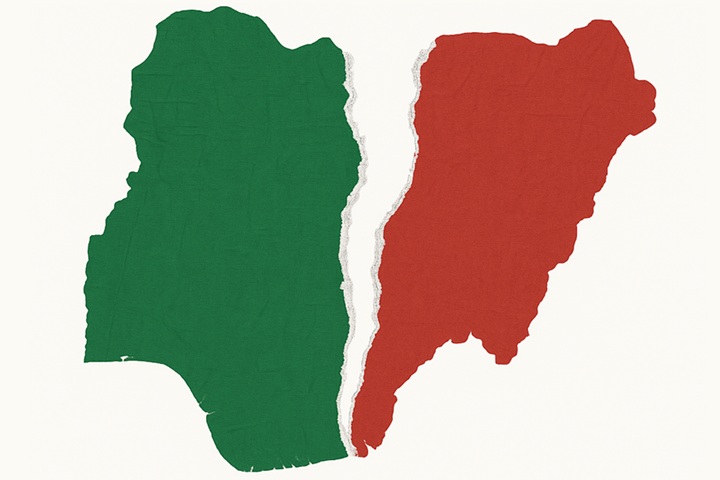
Patriotism is not the art of pretending. It is not standing for the anthem while the house burns behind you. A patriot tells the truth about his country, and the truth is this: one hundred and twelve years after Lord Lugard joined North and South with a signature, we are still two countries sharing one flag.
I am the son of a Kalabari father and a Yoruba mother from Lagos. I am what One Nigeria looks like when it is allowed to happen. So nobody will lecture me about unity. I am asking why we have not built it.
Start with history, because history matters. The British amalgamated the protectorates in 1914 and then went on governing them as two separate places. The World Bank has documented the result. In 1957, three years before independence, the North had 2,080 primary schools and 18 secondary schools. The South had 13,473 primary schools and 1,305 secondary schools. Eighteen secondary schools for half a country. That was not an accident. That was policy.
But the British lowered their flag in 1960. Lugard has been dead for over eighty years. At some point a nation must stop blaming the man who drew the map and start asking questions of the men who have held the pen ever since.
So let us look at what they have written.
The National Bureau of Statistics, in its landmark 2022 survey, found 133 million Nigerians living in multidimensional poverty. Sixty-five percent of them, 86 million human beings, live in the North. In Ondo the poverty rate was 27 percent. In Sokoto it was 91 percent. Nine out of every ten people. In the seat of the Caliphate.

And what poverty has not taken, the gunmen are taking. ACLED records more than 900 people killed in Sokoto State alone in the year to June 2026, more than double the year before. June was the deadliest month in Sokoto since records began in 1997. Farmers slaughtered in their fields. Villages emptied overnight. Families drowning in overloaded boats as they flee. This very month, bandits walked into a Sokoto community, killed at will and marched dozens away.
Do not tell me this is a northern problem. A child buried in Sabon Birni is a Nigerian child. This is a Nigerian emergency.
Now I turn to the northern political and business elite, and I ask them plainly.
Where did the money go?
For the greater part of our years since independence, men from the North have sat at the very top of federal power. Generals and civilians. Decrees and budgets. Oil booms and windfalls. You had the pen. You had the treasury. You had the army.

So where are the schools? Where are the factories? Where are the irrigation schemes, the power stations, the agro-industries that should have made northern Nigeria the breadbasket of Africa? How does a region with that much land, that much water, that much power in Abuja, end up with the poorest people in the federation?
Hear me clearly. This is not a charge against the Hausa, the Fulani, the Kanuri, the Nupe, the Tiv or any other people. The ordinary northerner is not the culprit. He is the victim. He is the one whose daughter has no school, whose farm has no road, whose village has no protection. My quarrel is with the men who governed him, grew rich in his name and left him with nothing but his vote.
And let no southerner read this with a smile. A governor who loots in Port Harcourt is no better than one who loots in Kano. The Niger Delta has received its 13 percent derivation for a generation, and I can show you creeks where you would never know it. Corruption has no tribe. It has no religion. It has no zone. The thief in agbada and the thief in a three-piece suit bank in the same cities abroad.
Let us also kill a lazy slogan. It is too easy to say the North lives on southern oil. Federation revenue is pooled from oil, taxes, customs and much else, and BudgIT’s State of States reports show that most states, North and South alike, would struggle to survive without the monthly allocation from Abuja. That is the real scandal. We have not built a federation. We have built thirty-six queues outside one cashier’s window.
That must end. Every region must produce.

Oil and gas in the South, with the communities that host it finally seeing the benefit. Agriculture and livestock across the North and the Middle Belt, mechanised, irrigated and processed at home. Minerals mined legally and openly, with the revenue in the public accounts. Manufacturing, technology, energy, trade. A state should be an economy, not a collection point.
And where gold and lithium are leaving the North through illegal pits while villagers are driven off their land, investigate it. Follow the money. Name the financiers on the evidence, prosecute what can be proven and recover what was taken. No sacred cows. No ethnic shield. No political shield.
But laws and budgets alone will not make a nation. People make a nation.
Let young Nigerians school together, serve together, build companies together, live in each other’s cities and, where they freely choose it, marry each other. A Yoruba child should grow up believing Kano is part of his inheritance. A Hausa child should feel the same about Port Harcourt. An Ijaw child should be as free to build a business in Kaduna as in Yenagoa. Our Constitution makes room for Sharia and customary courts beside the common law, and diversity is no sin. But above every court and every custom there must stand one thing: a single Nigerian citizenship, with the same rights and the same protection in every corner of the country.
One Constitution. Equal citizenship. Freedom to live and work anywhere. Freedom of worship. Every kobo of public money accounted for.
Nigeria does not need northern domination. Nigeria does not need southern domination. Nigeria needs the word Nigerian to mean something.
My generation inherited this divide and did not close it. I say that with no pride. So I put the question to the young, because it now belongs to them:
How much longer will you be northerners and southerners first, and Nigerians second?
We inherited the line Lugard drew. We are under no obligation to hand it on.
Nigeria belongs to Nigerians.