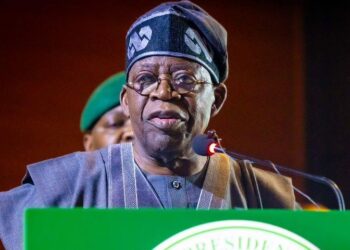
THIS DAWN — Human rights activist and former presidential candidate, Omoyele Sowore, accused the Nigeria Police Force of engaging in practices that undermine law and order, following the arrest of Sodeeq Atanda, a senior reporter with the Foundation for Investigative Journalism (FIJ).

Nigeria’s policing institution once again came under sharp criticism following allegations of misconduct involving the detention of a journalist and his family.
He described the incident as emblematic of systemic abuse under the current Inspector General of Police, Kayode Egbetokun.
Atanda Detained, Family Held Hostage
According to Sowore, Atanda was detained by officers at the Obalende Police Station in Lagos.
What shocked observers, however, is the claim that police officers held Atanda’s wife and nine-month-old child hostage.
Moreso, they effectively used them as bait to lure the journalist into custody.
FIJ Publisher, Fisayo Soyombo, confirmed Atanda’s release but expressed deep concern over the tactics employed by the police.
Sowore recounted that Atanda’s wife was coerced into calling her husband under false pretenses.
The asked her to tell him their child was sick and that they were at the hospital.
When Atanda rushed to the location in panic, he was immediately handcuffed and detained.
Sowore Faults Collusion with Private Interests
Even more disturbing, Sowore alleged that the Investigating Police Officer admitted the complainant was the subject of a fraud report.
The complainant, however, had paid private individuals to track Atanda’s family by phone.
The wife and infant were then handed over to the police, who used them to entrap the journalist.
Sowore described the officers’ casual admission of this arrangement as evidence of a troubling normalization of kidnapping-like tactics within the force.
“They stated this without shame or restraint, as though abducting civilians, including a baby, has become standard police procedure,” he said.

Atanda: A Public Call for Accountability
The activist did not limit his criticism to the incident alone.
He accused the Nigeria Police Force under Inspector General Kayode Egbetokun of openly collaborating with private interests to terrorize citizens.
Sowore claimed that since his arrival in Lagos, the police had been tracking his movements.
They also share information with both public and private actors, he claimed.
“A police institution that operates this way is not preserving law and order; it is accelerating the collapse of law and order,” Sowore declared.
He further argued that the force, as presently constituted, is designed to hasten the demise of the current administration led by President Bola Ahmed Tinubu.
The reports have sparked outrage among civil society groups, journalists, and human rights advocates.
Many see the incident as part of a broader pattern of police misconduct, including arbitrary arrests, harassment of journalists, and collusion with powerful interests.
Press freedom organizations have condemned the reported treatment of Atanda and his family.
They stressed that such actions not only violate fundamental rights but also erode public trust in law enforcement.
“The use of family members as leverage against journalists is a dangerous precedent that must be investigated and punished,” one advocacy group stated.
Implications for Governance
The incident raises troubling questions about the state of Nigeria’s democracy and the rule of law.
Analysts warn that if law enforcement agencies are perceived as instruments of intimidation rather than protectors of citizens, the legitimacy of governance itself is undermined.
Sowore’s remarks highlight the growing tension between civil society and state institutions.
Critics argue that unchecked police power could destabilize the political environment.
The allegations also underscore the risks faced by investigative journalists in Nigeria.
They often confront harassment and threats in the course of exposing corruption and abuse.
The detention of FIJ reporter Sodeeq Atanda and the alleged hostage-taking of his wife and infant child have ignited fresh debate about police accountability in Nigeria.
Sowore’s condemnation of the Nigeria Police Force reflects broader concerns about systemic abuse and the erosion of democratic norms.
As calls for investigation intensify, the incident stands as a stark reminder of the urgent need for reform in Nigeria’s policing system.
Whether authorities will act decisively to address these allegations remains to be seen.