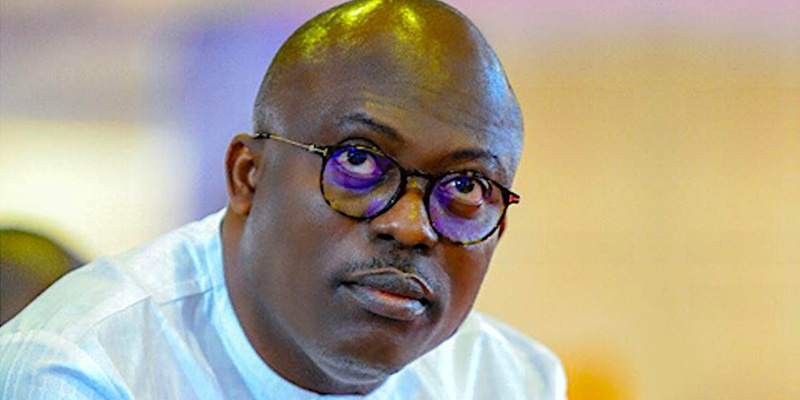
THIS DAWN — Rivers State Governor Siminalayi Fubara has made a bold declaration regarding members of the Rivers State House of Assembly, insisting that their existence depends on his recognition.

Speaking in Port Harcourt, Fubara dismissed the legitimacy of lawmakers opposed to him.
He said they are “not Assembly members” and only exist because he accepted a peace accord.
In his statement, Fubara went further to personalize his relationship with the lawmakers, recalling past assistance he had extended to them.
Context of the Crisis
The remarks come amid a prolonged political standoff between Governor Fubara and a faction of the Rivers State House of Assembly.
The faction claims loyalty to a former state governor and current FCT Minister, Nyesom Wike.
- In January 2026, the Assembly initiated impeachment proceedings against Fubara and his deputy, Prof. Ngozi Nma Odu.
They cited allegations of gross misconduct.
- A peace accord brokered by President Bola Tinubu temporarily eased tensions, with lawmakers withdrawing the impeachment notice.
- However, divisions remain deep, with questions over the legitimacy of defected lawmakers and the balance of power between the executive and legislature.
Implications of Fubara’s Statement
Fubara’s comments underscore the fragility of the peace accord and highlight the Governor’s determination to assert authority over the Assembly.
- Legitimacy Dispute: By declaring lawmakers “non-existent,” Fubara challenges the constitutional standing of the Assembly faction.
- Political Fallout: The remarks may reignite tensions, especially among legislators who insist they remain duly elected representatives.
- Governance Concerns: Analysts warn that continued confrontation between the executive and legislature could paralyze governance in Rivers State, an oil-rich region critical to Nigeria’s economy.
Reactions
Immediate reactions from the Assembly are yet to be formally issued.
However, political observers suggest Fubara’s remarks could deepen mistrust and further polarize the state’s political environment.
Civil society groups have urged restraint, warning that inflammatory rhetoric risks undermining democratic institutions.
Supporters of the Governor, however, argue that his comments reflect frustration with lawmakers who they believe are pursuing personal and factional interests rather than serving the people.
Governor Fubara’s declaration that he can “de-recognise” Rivers Assembly members marks a new escalation in the state’s political crisis.
By questioning their legitimacy and asserting that their existence depends on his recognition, Fubara has reignited debate over the balance of power in Rivers State.
With the peace accord already fragile, the Governor’s remarks raise fresh uncertainty about whether reconciliation is possible.
It may, on the other hand determine whether Rivers State is heading toward another round of political turmoil.
The Statement
Watch the video clip here or read the transcript of the video below:
“Let me say it here.
“The young people, those group of men who claim that they are assembly members are not assembly members.
“They are not existing.
“I want it to be on record. I accepted that peace accord to give them a floating. That is the truth.
“There was nothing in that peace accord that is a constitutional issue. It is a political solution to a problem.
“And I accepted it because these were people that were eating in my house.
“These were people that have helped pay their children’s school fees when I wasn’t even a governor.
“So, what is the thing there?
“Yeah, we might have our division, but I believe that one day we could also come together.
“That was the reason I did it.
“But I think I have gotten to a time when I need to make a statement on this thing so that they understand that they are not existing.
“The existence is me allowing them to exist. If I didn’t organize them, they are nowhere. That is the truth.”