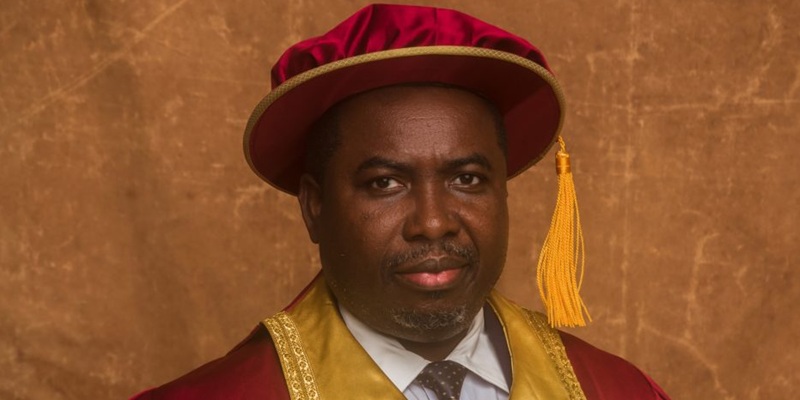

Recent calls by the Nigerian Supreme Council for Islamic Affairs (NSCIA) for the removal of Prof. Joash Ojo Amupitan, SAN, the current Chairman of the Independent National Electoral Commission (INEC), have sparked controversy and raised questions about the underlying motives.
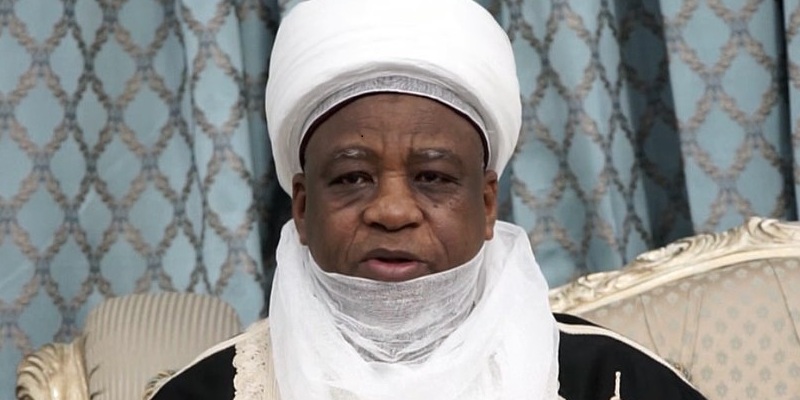
It is worthy of note that the head of the Nigerian Supreme Council for Islamic Affairs is His Eminence, the Sultan of Sokoto, Alhaji Muhammadu Sa’ad Abubakar.
Alhaji Abubakar serves as the President-General of the council, which is the apex Islamic authority in Nigeria.
The debate intensified after renewed attention to Amupitan’s authorship of the Legal Brief: Genocide in Nigeria.
A section of the Silent Slaughter report (2021) had examined atrocities committed by Boko Haram and Fulani militias.
Background: The Legal Brief
Prof. Amupitan’s legal brief is widely regarded as a scholarly work that meticulously quoted historical and contemporary literature to analyze Nigeria’s cycles of violence.
The brief explored multiple narratives, including:
-
Poverty and economic malaise as drivers of militancy.
-
Climate change and desertification fueling farmer-herder conflicts.
-
Proliferation of arms from regional crises (Libya, Syria).
-
Political manipulation of ethnic and religious divisions.
Ultimately, the brief concluded that religious and ethnic persecution—particularly targeting Christians and non-Muslims—was a central motive behind the violence.
The Controversy
The Nigerian Supreme Council for Islamic Affairs has reportedly called for Amupitan’s removal, citing his authorship of the brief.
Critics argue that this reasoning is insufficient, as the brief is an academic document grounded in evidence and citations.
Observers now question whether deeper political or sectarian motives are driving the campaign against him.
See excerpts of pages 43 to 46 of the Legal Brief below:
Legal Brief: Genocide in Nigeria
“There are different narratives in respect of the atrocities of the Boko Haram sect and the Fulani ethnic militia in Nigeria.²³ In this segment, some of these narratives shall be examined and the real reasons for this seemingly unending cycle of violence in the country shall be chronicled.
“Firstly, it is often contended that poverty is responsible for militancy amongst the populace. After all, a hungry man is said to be an angry man, so says an adage. That being so, it is often submitted that members of Boko Haram sect and, by extension, their Fulani militia counterparts are victims of economic malaise in Nigerian who have taken to violence against a system or state that has failed to provide decent livelihood for them.²⁴
“Secondly, the bloodletting orchestrated by Fulani militia, in particular, is often explained away in terms of the impact of climate change and desertification which have created conflict over arable land between the Fulani pastoralists and local farmers.²⁵
“Thirdly, the proliferation of small arms and light weapons arising from the Syrian and Libyan crises has been described as another cause of the violence in Nigeria.²⁶
“Fourthly, the political class is often quick to explain the violence away as product of some desperate politicians who sow seeds of discord in order to gain political power.
“Speaking on the above issues, Agnes Callamard²⁷, United Nations Special Rapporteur for Extrajudicial, Summary or Arbitrary Executions, observes as follows:
“”Weak rule of law and its brewing crisis are intertwined with, result from, and come on top of, a nation-wide population explosion and increased rates of extreme poverty which characterises the reality for roughly half of the Nigerian population.
“This is exacerbated by the spreading environmental degradation and desertification evident throughout West Africa. It is also fed by the increasing proliferation of small and military-grade weapons made readily available as a result of regional instability and originating, according to some reports, from as far as the Libyan conflicts.²⁸
“We must admit that the above narrative is, to some extent, a plausible (or possible) explanation of the violence. It is, however, submitted that these issues, though genuine in some cases, only mask the real causes of the Boko Haram and Fulani militia’s activities in the country.
“They have been employed as convenient smokescreen by the sponsors and architects of the violence. Therefore, the main reasons for the series of carnage by the Boko Haram sect and the Fulani ethnic militia have been identified and set forth hereunder.
(b) Real Reasons for the Situation: Religious and Ethnic Persecution?
“Available literature on the activities of Boko Haram shows clearly that the sect is an Islamist group committed to the enthronement of Islam as the only religion sanctioned by God.
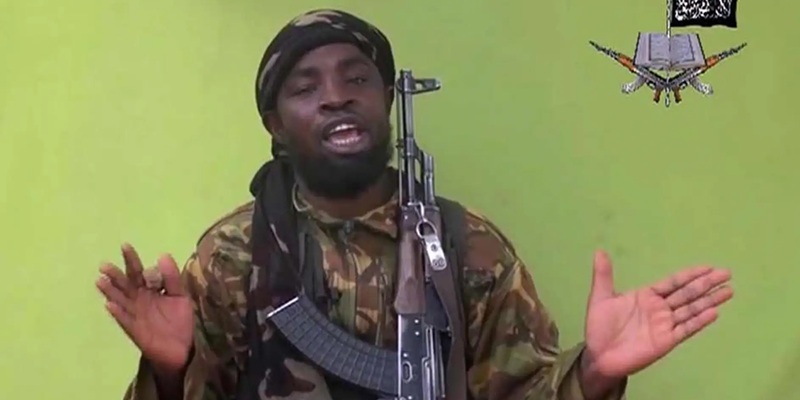
“Abubakar Shekau, the sect’s leader, does not mince words in stating the objectives of his group. He has couched the violence as a war (jihad) between the faithful and the infidels.
“His aim is clearly the establishment of a caliphate under the effective control of his sect where every non-Muslim will either convert to Islam or be killed. After the kidnapping of the Chibok girls, for example, Shekau released a video with the following message:
“”All those clerics are to be killed for following democracy, all of them are infidels. I will tell Muslims what Allah wants them to do. We are anti-Christians, and those that deviated from Islam, they are forming basis with prayers but infidels…
“To the people of the world, everybody should know his status, it is either you are with us Mujahedeen or you are with the Christians. The likes of Obama, Lincoln, Clinton, Jonathan, Aminu Kano. They are your fathers of democracy, the likes of Tafawa Balewa. It is Usman Dan Fodio that is our own.
“We know what is happening in this world, it is a jihad war against Christians and Christianity. It is a war against western education, democracy and constitution. We have not started, next time we are going inside Abuja; we are going to refinery and town of Christians.
“Do you know me? I have no problem with Jonathan. This is what I know in Quran. This is a war against Christians and democracy and their constitution. Allah says we should finish them when we get them.²⁹”
“Boko Haram, therefore, targets Christians, other non-Muslims and even Muslims opposed to their ideologies of Salafi-Jihad.³⁰ Even prior to 2014, Boko Haram had made it clear that they were out to “create so much effort to end the Christian presence… to have a proper Islamic state that the Christians won’t be able to stay.”³¹
“Consequently, Christians in Nigeria “have suffered some of the worst atrocities inflicted on Churchgoers anywhere in the world.”³² This objective is glaring in virtually all operations of Boko Haram. For instance, the schoolgirls abducted in Chibok were predominantly Christians.³³
“Chibok itself is a predominantly Christian community. Many of the girls were forced to convert to Islam³⁴ or risked being killed, raped or otherwise subjected to the most gruesome acts of torture.
“Today, the story of Leah Sharibu, a Christian schoolgirl abducted alongside her mates in Government Science School in Dapchi sometime in 2018, still remains fresh in the minds of many Nigerians. One of the reasons Leah was not released with the others, it was said, was because she refused to convert to Islam.³⁵
“In addition to the above, there are documented statistics of Boko Haram’s pogrom against churches and Christian communities generally in Nigeria. Okoroafor and Ukpabi³⁶, for example, give graphic details of churches and Christian communities that have come under attacks by the Boko Haram sect since 2011.³⁷ In particular, the authors state that:
“”Another North-eastern state of Nigeria under siege by Boko Haram is Yobe State. In Damaturu the Yobe State Capital, a neighbourhood called New Jerusalem is a popular abode for Christians. Most Christians consider it a safe haven (sic) to reside because many Churches are also located there.
“It has the highest concentration of Christians and non-indigenes. It was therefore not surprising that it was one of the targets of Boko Haram, when they unleashed mayhem on Damaturu and Potiskum on Friday November 4, 2011. It was one of the deadliest attacks ever carried out by Boko Haram, the Islamic fundamentalist sect which has become a thorn in the flesh of the nation.
“The deadly strike claimed more than 150 lives and rendered thousands of people homeless. Churches like St. Mary’s Catholic Church, Living Faith also known as Winners’ Chapel, All Saints Anglican Church, Cherubim and Seraphim Chapel…”
Public Reactions from Posts and Responses
The debate has triggered strong reactions across social media:
- Steven Kefas (@SKefason): “Prof. Amupitan did an excellent job quoting historical and contemporary literatures…
“I seriously do not understand why the Nigerian Supreme Council for Islamic Affairs is calling for the removal of Amupitan because he wrote this legal brief.
“Is there anything the council is not telling us? Because obviously, this legal brief cannot be the reason why they want Amupitan out.”
- Riel (@RielTheos): “Those wicked Arewa Jihadis fear the truth. Their antidote is exposure. They want to slaughter in secrecy.”
- Maximus (@maximusinmotion): “The Fulani and Kanuri Islamist section often tests waters to see if a leader is weak.
“They did it to GEJ in 2013 when ACF pressured him to fire Festus Odumegwu.”
- Bush (@NajaParrot): “People who feel an attack on terrorists is an attack on them shouldn’t call him out.
“He’s anti-terrorism, they are not.”
- Thamo Sunday (@thamo_sunday): “Why are they scared of the truth? Something is fishy.”
- Kelvin Eze (@athwatchr): “Prof’s brief shows serious work, but the Council dey cry foul. Dem dey fear books now?”
- Smoky Dev (@smoki_2na): “It’s not Nigerians, it’s Arewa radicals calling for his removal.
“Yoruba Muslims are solidly behind Prof. Amupitan.
“He has lived in Northern Nigeria all his life and knows firsthand the barbaric practices of radicals.”
- Banenchet bin Bulus (@BVicmoore): “The Fulani/Pulako agenda demands obliteration of any obstacle in their path.
“But Pulako’s agenda is now at a dead end forever.”
Analysis
The reactions reveal a deep divide.
Supporters of Amupitan view the calls for his removal as an attempt to silence truth about religious persecution and terrorism in Nigeria.
Critics aligned with NSCIA argue that his brief unfairly targets Islamic groups, though they have not provided substantive counter-evidence.
The controversy underscores Nigeria’s fragile intersection of religion, politics, and security, where academic work can become a flashpoint for political battles.
The campaign against Prof. Amupitan raises critical questions: Is the push for his removal genuinely about his legal brief, or does it reflect broader political and sectarian struggles?
Until clear reasons are provided, suspicions will persist that the move is less about scholarship and more about silencing uncomfortable truths.