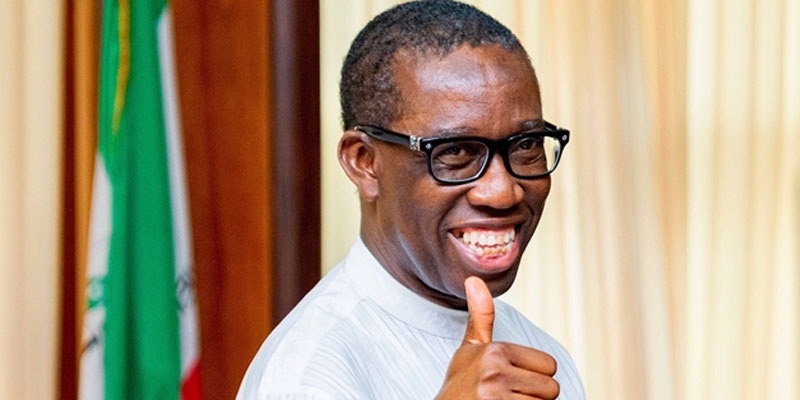
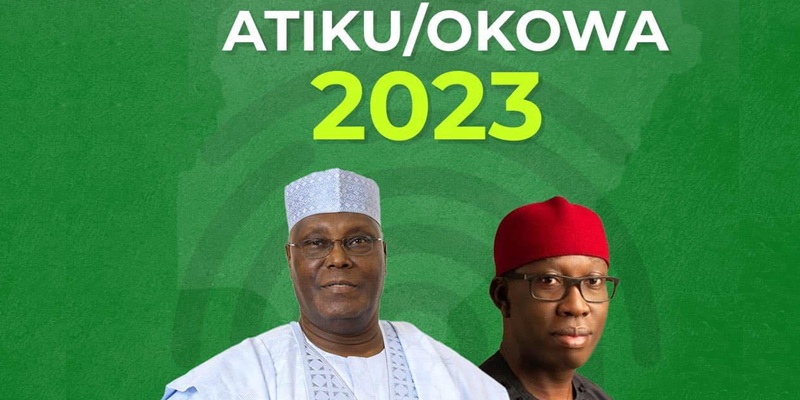
THIS DAWN — Nigeria’s democracy is once again under scrutiny following allegations that former Delta State Governor Ifeanyi Okowa made massive financial contributions to the campaign of former Vice President Atiku Abubakar.

Reports claim that Okowa donated ₦100 billion to Atiku’s campaign team, paid ₦8 billion to secure the Vice Presidential ticket, and allegedly gave ₦3 billion to the party’s screening committee.
He is also said to have facilitated Atiku’s nationwide campaign trips using businessman Tony Elumelu as a front man, while Atiku’s son allegedly transported campaign funds in dollars from Delta State to Abuja.
NOTE:
These claims remain unverified and are subject to ongoing investigation.
Neither Okowa, Atiku, nor the individuals mentioned have publicly confirmed these allegations.
This report is presented as part of public discourse, not as established fact.
The Allegations and Their Implications
If substantiated, these allegations highlight the corrosive role of money in Nigerian politics.
Campaign financing has long been criticized for favoring wealthy elites, leaving ordinary Nigerians and grassroots candidates unable to compete.
- Massive Donations: A ₦100 billion contribution would dwarf resources available to most parties.
- Buying Influence: Alleged payments for tickets and clearance suggest political legitimacy is commodified.
- Control of Campaign Machinery: Financing nationwide tours through proxies shows how wealth dominates visibility.
Such practices erode democratic integrity, turning elections into contests of wealth rather than contests of ideas.
Public Reaction
Nigerians have expressed outrage, seeing the allegations as proof of how politicians are destroying the country.
Citizens argue that the dominance of money in politics makes it nearly impossible for ordinary Nigerians, especially youths, to participate meaningfully.
- Exclusion of the Poor: “For the children of nobody to become somebody without anybody in the same camp with them is like daydreaming,” one commentator lamented.
- Distortion of Democracy: Hard-earned money cannot compete with alleged state funds or illicit wealth.
- Fear of Manipulation: Some suspect that vast cash reserves could be used to manipulate primaries or derail opposition candidates.
There is growing suspicion of a conspiracy against Peter Obi’s presidential ambition in 2027, with fears that entrenched elites could deploy vast sums to undermine his candidacy.
Supporters argue Obi and Kwankwaso should consider alternative strategies, such as leveraging the NNPP, to counter potential financial sabotage.
Comparative Perspective: Campaign Finance Scandals in Africa
Nigeria is not alone in facing the destructive influence of money in politics.
Across Africa, campaign finance scandals have undermined democratic integrity:
| Country | Scandal/Issue | Impact on Democracy |
|---|---|---|
| Ghana | Allegations of opaque funding channels and vote-buying during elections | Eroded trust in electoral institutions and fueled corruption. |
| South Africa | Controversies around private donations to ruling party campaigns | Raised concerns about undue influence of wealthy donors on policy decisions. |
| Kenya | Reports of politicians using state resources and illicit funds for campaigns | Reinforced inequality, sidelining grassroots candidates. |
| Nigeria | Alleged massive donations and inducements in party primaries | Entrenched elite dominance, weakened accountability, and excluded ordinary citizens. |
Experts note that weak regulatory frameworks, opaque funding channels, and the undue influence of private money undermine electoral integrity across the continent.
The Broader Problem
The allegations against Okowa and Atiku, whether proven or not, highlight systemic issues:
- Money Politics: Elections increasingly determined by wealth, not competence.
- Institutional Weakness: Screening committees and party structures vulnerable to inducements.
- Youth Disillusionment: Young Nigerians feel locked out, fueling apathy and mistrust.
This dynamic perpetuates corruption, weakens accountability, and entrenches a cycle where political power is reserved for the wealthy few.
Specific Reforms Nigeria Could Adopt to Curb Money Politics
1. Enforce Campaign Finance Limits
- Electoral Act 2022 already sets ceilings for campaign expenditures (e.g., ₦30 million for local government chairmanship candidates).
- Problem: Parties and candidates routinely exceed these limits without consequence.
- Reform: Establish independent auditing mechanisms and impose automatic disqualification or heavy fines for violators.
2. Transparency in Political Donations
- Require public disclosure of all donations above a set threshold (e.g., ₦1 million).
- Create a centralized online portal managed by INEC where citizens can track who funds each candidate.
- This would reduce hidden influence from wealthy individuals or corporations.
3. Empower INEC with Audit Powers
- INEC currently lacks robust enforcement capacity.
- Reform should grant INEC authority to audit party accounts annually, with mandatory publication of findings.
- Independent auditors could be contracted to ensure credibility.
4. Criminalize Vote-Buying and Enforce Penalties
- Vote-buying remains rampant despite existing laws.
- Reforms should:
- Treat vote-buying as a serious electoral crime with mandatory jail terms.
- Establish special electoral courts to fast-track prosecution.
- Protect whistleblowers who expose vote-buying networks.
5. Digital Tracking of Campaign Spending
- Introduce digital receipts and blockchain-based tracking systems for campaign expenditures.
- This would make it harder to launder money through opaque channels.
- Lessons can be drawn from South Africa’s reforms, where disclosure rules were tightened to limit private donor influence.
6. Strengthen Anti-Money Laundering Oversight
- Nigeria was recently delisted from the EU’s high-risk money laundering list, reflecting improvements in financial governance.
- Building on this, reforms should integrate AML/CFT frameworks directly into campaign finance monitoring.
- This ensures that illicit funds cannot be funneled into elections.
7. Cap Party Nomination Fees
- Allegations of exorbitant nomination fees (e.g., ₦30 million for local government chairmanship forms) undermine fairness.
- Reforms should set legal maximums for nomination fees, preventing parties from pricing out grassroots candidates.
8. Civic Education and Youth Inclusion
- Launch nationwide programs to educate citizens on the dangers of money politics.
- Provide state-backed grants or subsidies for youth and women candidates to level the playing field.
Conclusion
Nigeria’s democracy is at risk of being hijacked by money politics.
By enforcing campaign finance limits, mandating transparency, empowering INEC, criminalizing vote-buying, and adopting digital monitoring systems, Nigeria can begin to restore credibility to its elections.
These reforms would not only curb corruption but also open the political space to ordinary Nigerians, especially youths, who currently feel excluded.
The alleged ₦100 billion campaign donation by Okowa to Atiku has reignited debate about the destructive role of money in Nigerian politics.
While investigations continue, the controversy underscores the urgent need for electoral reforms, transparency in campaign financing, and stronger institutions to safeguard democracy.
Post Scriptum:
-
The allegations presented remain unverified.
-
They are based on claims circulating in political discourse and should not be taken as established fact until confirmed by credible investigations.