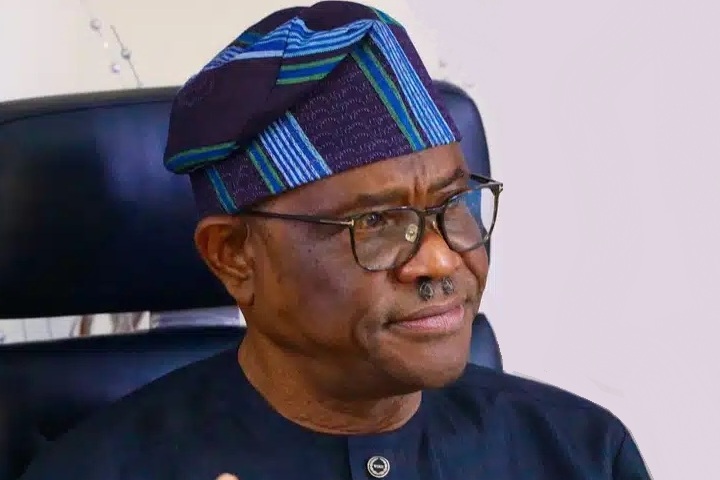
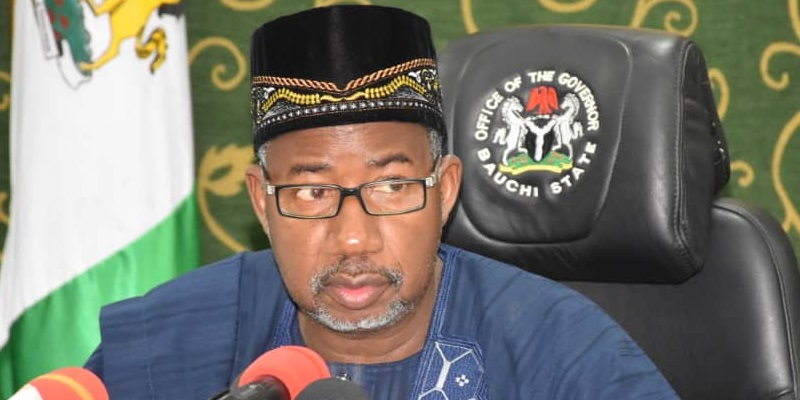
THIS DAWN — The political feud between Federal Capital Territory (FCT) Minister Nyesom Wike and Bauchi State Governor Bala Mohammed escalated this week after Bala accused Wike of being behind the Economic and Financial Crimes Commission (EFCC)’s terrorism financing charge against his Commissioner of Finance.

Wike, in a fiery response, dismissed the allegations as baseless and accused Bala of scapegoating him for his political troubles.
Background to the Dispute
Governor Bala Mohammed recently alleged that Wike was orchestrating his political woes, including the EFCC’s investigation of Bauchi State’s Commissioner of Finance.
Bala claimed Wike had vowed to “put fire” in Bauchi politics, suggesting that the minister was using his influence to destabilize his administration.
The EFCC’s terrorism financing charge against Bala’s commissioner has generated significant controversy, with opposition figures accusing the anti-graft agency of being used for political vendettas.
Against this backdrop, Bala’s comments directly pointed fingers at Wike, sparking a sharp rebuttal.
Wike’s Response
In a statement caught on video that blended sarcasm with defiance, Wike rejected Bala’s accusations.
“I watched what Governor Bala said. That all the problems he’s having, that I’m the one behind it, because I said I’ll put fire in his state.
“So, if you know I have such power, why are you fighting?” Wike asked rhetorically.
He accused Bala of meddling in Rivers State politics by attempting to impose party leaders during his tenure as governor.
“Bala came to my state to impose party leaders. I told him to be careful or else, he’ll see crises.
“Today, he doesn’t have a party to bring his successor, and this is what I warned them.
“If you know you don’t have the strength to fight, why not go and rest?” Wike declared.
On EFCC Investigations
Wike distanced himself from the EFCC’s actions, insisting that the agency operates independently.
“Now, EFCC is chasing him, and he’s saying it’s me. What’s my business? If your state is clean, go there and clear yourself,” he said.
The minister argued that Bala’s attempt to link him to the charges was a diversionary tactic. “Anybody that has stroke, it’s Wike.
“The ones with headache, it’s Wike. The ones in Sokoto, Wike. You’re in Taraba, Wike. You’re in Lagos, Wike, you’re in Bauchi, Wike.
“Leave this Wike. He’s too strong,” he added, mocking the tendency to blame him for every political crisis.
Political Undertones
The clash between Wike and Bala highlights deeper tensions within Nigeria’s political landscape, particularly within the ruling party and opposition blocs.
Wike, known for his combative style and influence in national politics, has often been accused of wielding disproportionate power.
Bala’s comments reflect concerns among some politicians that Wike’s influence extends beyond his ministerial role into shaping political outcomes across states.
However, Wike’s response underscores his refusal to be cast as a political villain.
By turning Bala’s accusations into a broader commentary on scapegoating, Wike sought to portray himself as unfairly targeted by rivals who cannot manage their internal crises.
Implications for Bauchi Politics
Governor Bala Mohammed faces mounting challenges in Bauchi, including internal party divisions and questions over succession planning.
Wike’s remarks that Bala “doesn’t have a party to bring his successor” point to the fragility of Bala’s political base.
The EFCC’s terrorism financing case against his commissioner further complicates his administration’s credibility.
Observers note that Bala’s attempt to link Wike to his troubles may reflect desperation to rally sympathy and deflect attention from governance issues.
Yet, the public spat risks deepening divisions within the political class and distracting from pressing governance challenges.
Wike’s Political Persona
The minister’s response reinforces his reputation as a fearless and outspoken figure in Nigerian politics. His sarcastic remark that “every headache is Wike” reflects his awareness of being a lightning rod for controversy.
While critics accuse him of arrogance, supporters view his bluntness as refreshing honesty in a political environment often dominated by evasive rhetoric.
The war of words between Nyesom Wike and Bala Mohammed illustrates the volatile nature of Nigeria’s political arena, where allegations of influence, corruption, and vendetta are common.
Wike’s dismissal of Bala’s claims as scapegoating highlights the minister’s determination to defend his image against accusations of political manipulation.
As the EFCC continues its investigation in Bauchi, the feud between the two leaders is likely to remain a focal point of political discourse.
For now, Wike’s message is clear: he refuses to be blamed for every crisis across Nigeria.
“Leave this Wike. He’s too strong,” he declared, turning Bala’s accusations into a statement of resilience and defiance.