
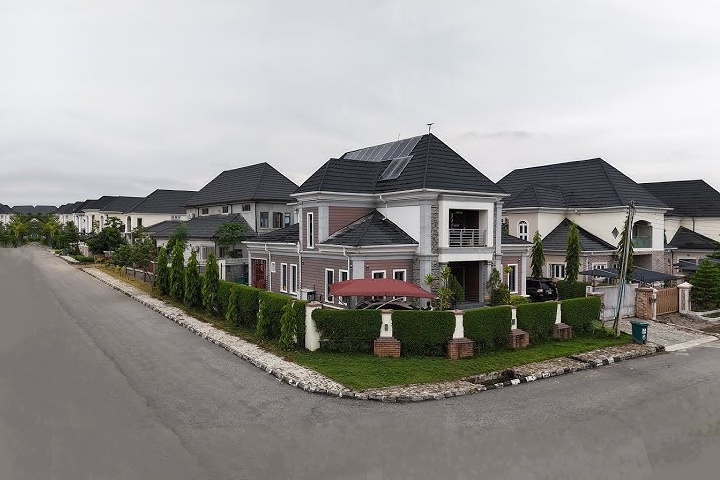
TDFCT Minister Nyesom Wike has ordered the demolition of an illegal residential estate built on land designated for Park and Recreation in Guzape, Abuja.

According to reports, Wike directed the Federal Capital Territory Administration (FCTA) to revoke any approvals granted to the developer.
The discovery was made during an inspection tour of ongoing projects on Monday, 16 March 2026.
Authorities confirmed that the structures have already been marked for demolition, stressing that enforcement will be carried out regardless of the individuals or interests involved.
Key Facts
- Who: FCT Minister Nyesom Wike and the Federal Capital Territory Administration (FCTA).
- What: Demolition order for an estate illegally constructed on land allocated for Park and Recreation in Guzape district, Abuja.
- When: Announced during an inspection tour on Monday, 16 March 2026.
- Why: The development violates Abuja’s master plan and represents a deliberate breach of land‑use approvals.
Wike’s Position and Government’s Stance
During the inspection, Wike was emphatic:
“This place was given for Park and Recreation, not for the development of an estate. But from what you have seen, they are developing it into an estate, which is a clear violation. We will not allow that.”
He stressed that the administration would withdraw any prior approvals granted to the developer and enforce planning regulations without fear or favour.
Wike lamented that many developers deliberately flout planning laws, banking on the idea that government officials will eventually leave office, allowing them to regularize illegal projects.
He warned that such practices will no longer be tolerated, adding that collusion within government agencies often enables these violations.
He likened the situation to criminal collaboration, saying:
“An armed robber cannot operate without someone linking him.
“There must be collaborators somewhere. In some cases, civil servants may be involved, but that will not stop us from doing what is right.”
Enforcement Actions and Precedent
The illegal structures in Guzape have been marked for demolition, with funds already budgeted for development‑control activities across the capital.
Wike referenced a recent demolition in Katampe district, where illegal structures were built on land allocated to foreign embassies.
He revealed that the administration had written to affected diplomatic missions to reclaim and develop their properties.
The Guzape case is part of a broader campaign to restore Abuja’s master plan, which has been undermined by years of unchecked development and bureaucratic loopholes.
Implications and Next Steps
- Immediate: Revocation of approvals, demolition scheduling, and possible investigations into how the developer obtained clearance.
- Medium term: Stricter oversight of land allocations, tighter monitoring of civil servants involved in approvals, and reinforced planning controls.
- Public advisory: Residents and prospective buyers are urged to avoid transactions on the disputed Guzape site until the FCTA issues formal clearance.
Developers are warned to comply strictly with Abuja’s master plan or face demolition and sanctions.
Broader Context
This move underscores Wike’s determination to reassert Abuja’s identity as a planned city, where green spaces, parks, and recreational areas are preserved against encroachment.
The Guzape case highlights the tension between rapid urban expansion and the need to protect designated public spaces.
By linking the issue to broader governance challenges — including insider collusion and bureaucratic loopholes — Wike is signalling that the administration intends to clean up systemic irregularities in land administration.
The demolition order is not just about one estate; it is a warning shot to developers across the FCT that illegal projects will not be regularized.
This development is likely to spark debate among urban planners, developers, and residents about the balance between growth and regulation in Abuja.