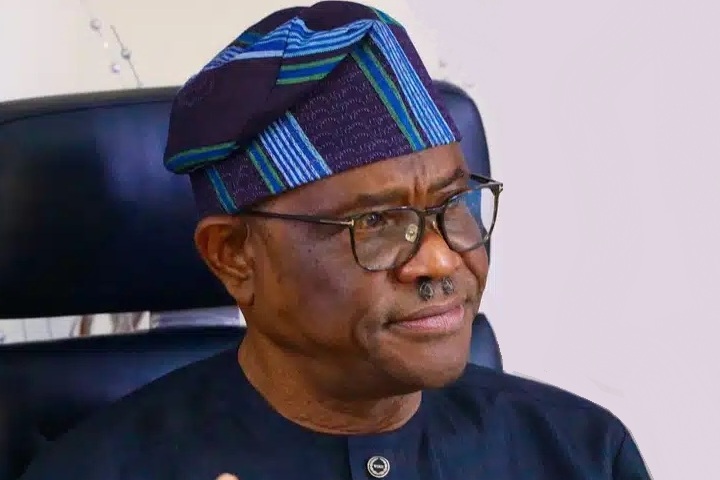
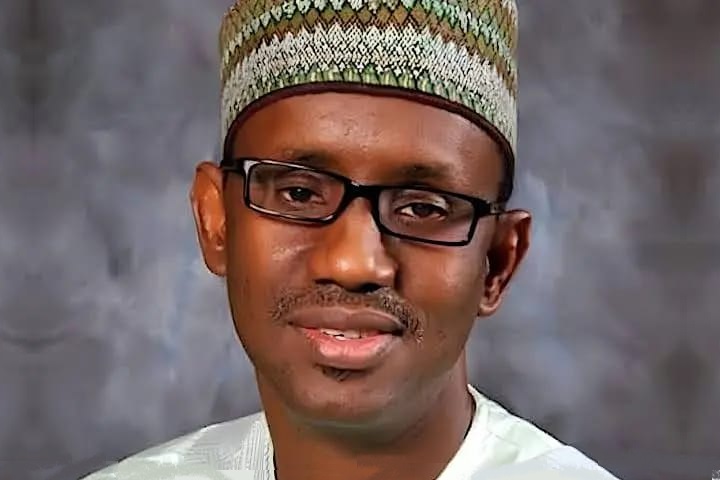
THIS DAWN — Nigeria’s political landscape was thrown into fresh controversy over the weekend as the Minister of the Federal Capital Territory (FCT), Nyesom Wike, launched a scathing verbal attack on the National Security Adviser (NSA), Mallam Nuhu Ribadu.

Speaking at separate events in Rivers State, Wike accused Ribadu of meddling in the state’s finances and seeking personal gain from the recently announced ₦600 billion revenue figure. His remarks, widely circulated across media platforms, have sparked heated debate about the minister’s intentions and the growing rift within the ruling All Progressives Congress (APC).
Wike’s Allegations
In his words, Wike alleged: “Nuhu Ribadu likes Rivers State money. He came to suck from the ₦600 billion in Rivers State coffers. Ribadu is looking for where to perch. In order to collect his own share, Ribadu came with his own committee to Rivers State and told Governor Fubara ‘the president is happy with you’ and he collected his own share.”
The minister further claimed that Ribadu was willing to say “any negative thing” about him in order to secure financial benefits.
Initially dismissed by some observers as a slip of tongue, Wike repeated the accusations the following day while addressing supporters in Isiokpo, confirming that his comments were deliberate.
Escalating Confrontations
The attacks on Ribadu are the latest in a series of confrontations involving Wike. Analysts note that the minister has increasingly targeted figures perceived to be sympathetic to Rivers State Governor Siminalayi Fubara, with whom Wike has been locked in a prolonged political feud.
Beyond Ribadu, Wike has reportedly clashed with fellow cabinet ministers, APC governors including Hope Uzodinma of Imo State, and even the APC leadership itself. His criticisms have now extended to President Bola Tinubu, raising questions about his loyalty to the administration.
Supporters of Wike have amplified the rhetoric, declaring “No Wike, no Rivers State” — a slogan interpreted as a warning to the president that failure to back Wike against Fubara could cost the APC its influence in the oil‑rich state.
Cryptic Messages to APC
In a visibly charged mood, Wike also suggested that Rivers State politics transcends party lines, declaring that “there is nothing like PDP or APC in Rivers State.” The statement has been read as a subtle declaration of independence from national party structures and a challenge to Tinubu’s authority.
Political commentators argue that such remarks amount to a veiled threat against the president and the APC, particularly as the party begins to strategize for the 2027 general elections.
Implications for 2027
Wike’s outbursts have fueled speculation that he may be working against President Tinubu’s re‑election ambitions. His growing hostility toward APC leaders and his unpredictable political maneuvers have raised concerns about internal divisions that could weaken the ruling party ahead of the next polls.
Observers warn that the minister’s confrontational style, once seen as a strength in mobilizing grassroots support, now risks alienating allies and destabilizing the fragile balance within the APC.
Reactions Awaited
As of press time, neither Ribadu nor the presidency has issued a formal response to Wike’s allegations. However, sources within the APC suggest that the party leadership is monitoring the situation closely, aware of the potential fallout if the dispute escalates further.
The controversy underscores the broader challenge facing Nigeria’s political establishment: managing internal rivalries while maintaining unity in governance. With Rivers State’s strategic importance to national politics, the stakes are particularly high.
Wike’s latest remarks against Nuhu Ribadu mark a significant escalation in Nigeria’s political tensions. By openly challenging the NSA, fellow ministers, governors, and even President Tinubu, the FCT minister has positioned himself at the center of a storm that could reshape alliances ahead of 2027.
Whether the APC leadership will confront Wike or seek reconciliation remains uncertain. For now, the question lingers: can the centre hold?