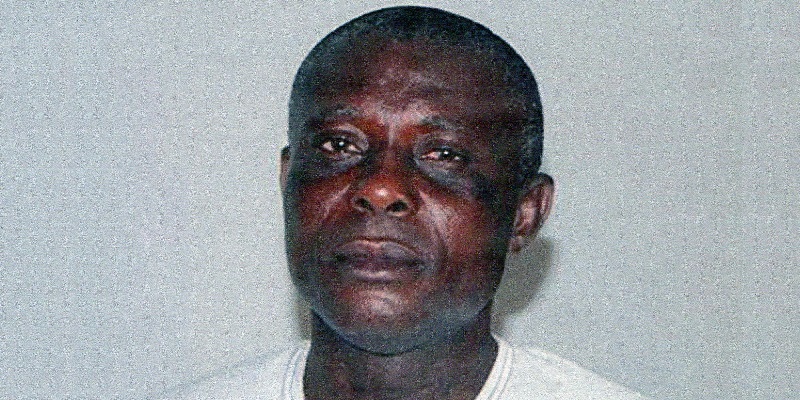
THIS DAWN — The taste of the pudding, we are told, is in the eating.

The surest way to know a man is not by the titles he adorns himself with, but by those who have eaten from his table, walked his road, funded his dreams, carried his burdens, or swallowed the bitter pills of his temperament.
Tony is not mad because he met me.
He was himself long before our paths ever crossed—and he has chosen, quite deliberately, to remain so.
To understand the man, one must listen to those who encountered him not in rhetoric, but in reality.
One such person is Dr. C. J. Odunukwe, a surgeon who met Tony at a point of utter vulnerability: a fractured femur, years of pain, immobility, and financial helplessness.
What followed was not activism but humanity—practical, sacrificial, costly humanity.

Dr. Odunukwe did not merely sympathize. He intervened. He gave financial support. He explored treatment options across borders.
When India was impossible due to statelessness, he found an alternative in the Philippines.
He paid out-of-pocket expenses. He funded surgery. He covered physical therapy. He sustained Tony materially even after recovery.
This was compassion without cameras, philanthropy without propaganda.
The slipped mask
Out of shared outrage over the atrocities in Southern Kaduna and Plateau, the two agreed to form an organization—the International Coalition Against Christian Genocide in Nigeria (ICAC-GEN).
Dr. Odunukwe funded the registration, secured U.S. 501(c) status, paid for the website, hosting, staffing, and content aggregation.
The organization bore his office address and exposed him legally. What he offered was not control, but credibility.
Then the mask slipped.
Letters began to emerge—bombastic, reckless, unsigned by consensus, yet bearing collective names. Allegations without evidence.
Sexually explicit insinuations against Nigeria’s UN representative. Unfounded accusations against American politicians.
Personal obsessions disguised as institutional positions. All issued without vetting, consultation, or board approval.
When caution was advised—not censorship, but responsibility—Tony responded not with reflection, but with rage. Meetings were boycotted. Threats were issued. Authority was usurped. Due process was mocked. Eventually, he wrote to the Secretary of State of Oklahoma, suspending the very man whose office hosted the organization and whose resources sustained it.
The irony was tragic.
The same man Tony later thanked profusely—the benefactor who refused to abandon him to pain—became, in his telling, an enemy of the cause. Not because of fraud. Not because of theft. But because he refused to subordinate truth, governance, and integrity to political idolatry and personal vendetta.
This episode reveals a pattern that must concern anyone serious about justice:
Activism without accountability
Righteous language without restraint
Moral outrage without moral discipline
Institutions reduced to megaphones for personal temperaments
Christian advocacy is not advanced by recklessness. Genocide is not fought with libel. Justice is not served by falsehood. And no cause—no matter how noble—survives the corruption of integrity.
This is not an attack on ideas; it is an examination of conduct. Not a denial of suffering, but a warning against turning pain into propaganda and organizations into personal fiefdoms.
History is unkind to those who weaponize causes while discarding character. And the Christian witness, already under siege, cannot afford leaders who confuse noise for truth and anger for anointing.
The question, therefore, is not who is Tony by title, but who is Tony by fruit.
And for those who have eaten the pudding—paid the bills, carried the risks, absorbed the insults—the aftertaste is unmistakable.
Watch out for; Nwankwo T. Nwaezeigwe; an unchristian Christian.