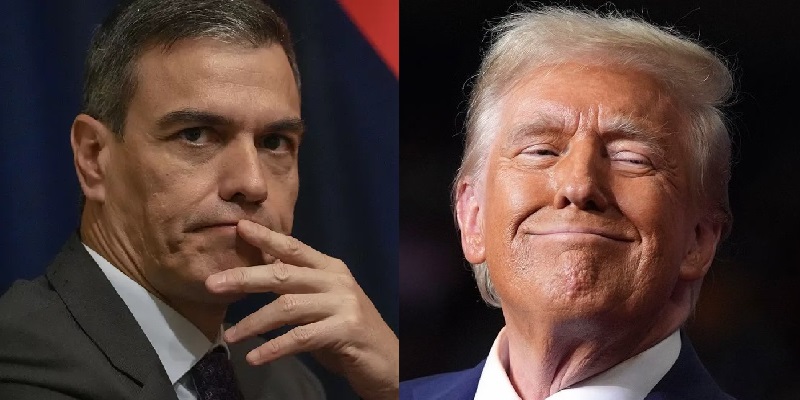
TDA diplomatic dispute has emerged between the White House and the government of Spain after U.S. officials announced that Madrid had agreed to cooperate with American military operations in Iran.

Spanish authorities, however, swiftly denied the claim as false.
White House Announces Cooperation
According to statements from Washington, Spain had agreed to work with the United States military.
The announcement followed high-level engagements between the two governments.
White House Press Secretary Karoline Leavitt indicated that Spain had responded positively to U.S. outreach regarding defense collaboration.
U.S. officials suggested that the development signaled alignment between the two NATO allies on security matters, particularly in relation to strategic military operations.
Spain Issues Immediate Denial
However, Spanish officials quickly contradicted the announcement, stating that no such agreement had been reached.
Spain’s Foreign Minister José Manuel Albares described the White House claim as inaccurate.
Albares emphasized that Madrid’s position on military cooperation remains unchanged.
He reaffirmed Spain’s commitment to its established foreign policy principles and rejected suggestions of any new operational agreements.
Prime Minister Pedro Sánchez has consistently maintained a cautious stance on expanded military involvement abroad.
He, rather, advocated for diplomacy and multilateral engagement over unilateral escalation.
Growing Diplomatic Tension
The conflicting statements have created uncertainty regarding the nature of communications between the two governments.
Washington maintained that cooperation discussions had yielded progress.
Meanwhile, Madrid insists that its policies and commitments remain consistent with previous positions.
Analysts note that such public contradictions between allied governments are rare.
Thel say it could reflect broader disagreements over military strategy, sovereignty, and the scope of alliance obligations.
Strategic Implications
Spain hosts key U.S. military facilities under longstanding bilateral defense agreements, making clarity on operational cooperation significant for transatlantic security dynamics.
Any misalignment between the two governments could have implications for NATO coordination and regional stability.
As of now, neither government has provided further clarification to reconcile the divergent accounts.
Diplomatic observers expect additional statements in the coming days as both sides seek to manage the fallout from the public disagreement.