


Politics often rewards strategy—but it punishes overreach. What unfolded this week in Nigeria’s shifting political landscape reads less like a coordinated masterplan and more like a cautionary tale in real time.
And if there is a single turning point in this unfolding drama, it is Wednesday’s alleged interference—item number five—that may ultimately define everything that follows.
Let’s be precise. Monday and Tuesday set the stage: the ADC’s momentum surged dramatically.
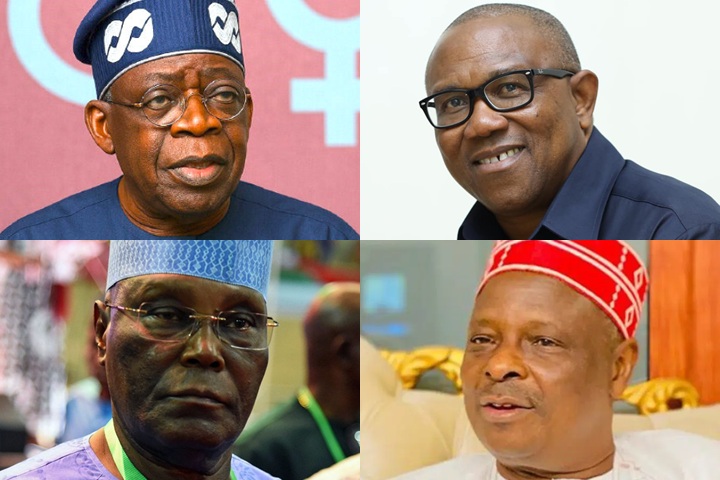
The entry of Rabiu Kwankwaso reportedly delivered over a million votes in Kano, followed closely by Dr. Nasiru Gawuna adding another 800,000.
These are not marginal gains; they represent structural shifts in voter allegiance.
By Tuesday evening, even Governor Bala Mohammed was signaling interest. The political ground was already trembling.
Then came Wednesday.

Allegations surfaced that Bola Tinubu and the APC, through Independent National Electoral Commission (INEC), attempted to manufacture internal confusion within the ADC’s leadership.
The objective, as widely interpreted, was clear: destabilize the party before it could consolidate its gains and deter further high-profile defections.
On paper, this is classic political containment strategy.
In practice, it may have been a catastrophic miscalculation.
Because what followed was not fragmentation—but ignition.
By Wednesday evening and into Thursday, Nigerians responded with overwhelming force—not through silence, but through amplification.
Online protests erupted. Party registrations surged by over 1,000%.
What was intended as suppression appeared instead to validate the ADC’s narrative: that the establishment felt threatened.
This is where strategy mutates into symbolism.
The alleged interference didn’t weaken the ADC; it legitimized it.
It transformed a rising opposition into a perceived victim of institutional manipulation—a position that historically galvanizes public sympathy.
By Thursday, physical protests at INEC headquarters reinforced that perception, while opposition figures began closing ranks with unusual unity.
And this is why number five matters most.
Not because of what it attempted—but because of what it triggered.
Political history offers parallels. When power appears to bend institutions for partisan ends, the backlash often exceeds the original threat.
One might even draw a transatlantic comparison: consider Donald Trump and the aftermath of the attempted assassination incident during the U.S. presidential campaign cycle.
Rather than diminishing his influence, the event intensified his base’s loyalty and reframed him as embattled—fueling momentum rather than extinguishing it.
The lesson is uncomfortable but consistent: perceived victimhood can be politically combustible.
Back in Nigeria, Thursday’s developments suggest the opposition is no longer fragmented. It is aligning.
Figures once operating in parallel are now converging, driven not just by ambition, but by a shared adversarial narrative.
Even the public mood—visible in protests and rhetoric—has shifted from passive dissatisfaction to active resistance.
And so we arrive at Friday, the unanswered question: “What happens next?”
If the trajectory holds, Friday may not bring de-escalation.
It may bring consolidation—formal defections, strategic alliances, or even a coordinated opposition front capable of mounting a serious electoral challenge.
Because here is the core reality: Wednesday was supposed to slow the ADC down.
Instead, it may have accelerated everything.
In politics, the most dangerous move is not the one that fails—it’s the one that backfires.