THIS DAWN — Open-source intelligence (OSINT) and commercial flight-tracking data over the past several days indicate a marked increase in United States military air activity moving into and toward the Middle East.

The bulk of this activity involves strategic airlift aircraft, particularly the C-17 Globemaster III, alongside aerial refueling tankers such as the KC-135 and KC-46.
Historically, these aircraft types are associated with rapid force projection, logistics build-up, and sustainment operations rather than routine patrols.
The current pattern closely resembles pre-strike logistics surges observed prior to U.S. and Israeli actions against Iranian nuclear facilities in mid-2025.
In those cases, a sharp rise in cargo and refueling sorties preceded kinetic operations by days to weeks.
While military movements alone do not confirm imminent war, the scale, tempo, and direction of the present deployments suggest preparation for contingencies far beyond deterrence signaling.
At the same time, Iran is facing its most serious internal unrest in years, creating a convergence of external military pressure and internal instability that significantly elevates regional risk.
Iran’s Protest Wave: A State Under Pressure
Nationwide demonstrations in Iran have persisted for more than a week, beginning around 28 December 2025 with a merchant strike in Tehran’s Grand Bazaar.
The immediate trigger was soaring prices, the collapse of the rial, and deepening inflation, estimated near or above 40 percent.
What started as economic protest has rapidly evolved into open political dissent, with chants increasingly targeting clerical rule and senior leadership.
According to rights groups and international media reporting, 25 to 35 people have been killed since the unrest began, with over 1,000 to 1,200 arrests nationwide.
Disturbingly, some of the fatalities reportedly include minors, underscoring the severity of the security response.
Protests have spread to 27 of Iran’s 31 provinces, encompassing major cities and smaller regional centers alike.
Iranian authorities have responded with tear gas, mass arrests, and in some cases live fire, while senior officials accuse foreign powers of exploiting the unrest.
President Masoud Pezeshkian has announced proposed economic reforms, including changes to subsidy structures and leadership adjustments at the Central Bank, but these measures have so far failed to calm the streets.
Strategic Convergence: Internal Crisis Meets External Pressure
The overlap between Iran’s domestic crisis and the intensified U.S. military posture is not lost on regional analysts.
From a strategic perspective, internal unrest weakens regime cohesion, strains security services, and complicates decision-making at the highest levels.
For external actors seeking leverage—or more ambitious objectives—this represents a window of opportunity.
Current indicators suggest that any future U.S. involvement would be deeper and more direct than in previous confrontations.
Regime change is increasingly discussed in analytical and policy circles rather than limited containment or deterrence.
While no official declarations support this conclusively, the logistics footprint being assembled exceeds what would be required for symbolic force projection alone.
A Narrow Window for Iran’s Leadership
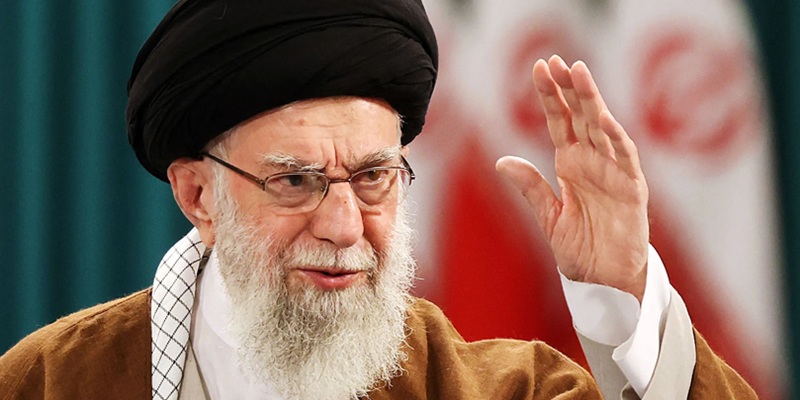
Within this context, some analysts assess that Supreme Leader Ayatollah Ali Khamenei faces an extremely narrow decision window.
Should unrest intensify while external pressure escalates, Iran’s leadership could confront simultaneous threats to internal control and national security.
Historically, regimes under such dual pressure either consolidate violently, fracture internally, or face external intervention.
Speculation that Khamenei may consider leaving the country reflects perceived regime vulnerability, not confirmed intelligence.
Nevertheless, the fact that such scenarios are being openly discussed underscores how precarious the situation has become.
Regional and Global Implications
International reaction has been swift but cautious.
The United Nations has expressed deep concern over civilian casualties and urged restraint, while countries such as India have advised citizens to avoid non-essential travel to Iran.
Meanwhile, global energy markets and neighboring states are closely monitoring developments, aware that any escalation could disrupt shipping lanes, oil supply, and regional stability.
The Middle East is entering a high-risk phase defined by converging crises.
Iran’s internal unrest is deepening, fatalities and arrests are rising, and the government’s response is hardening.
Simultaneously, U.S. military logistics activity points to preparation for serious contingencies rather than routine posture adjustments.
Whether this trajectory leads to open conflict remains uncertain.
However, the indicators suggest that the margin for de-escalation is rapidly shrinking, and the coming days may prove decisive for Iran, the region, and the broader international order.