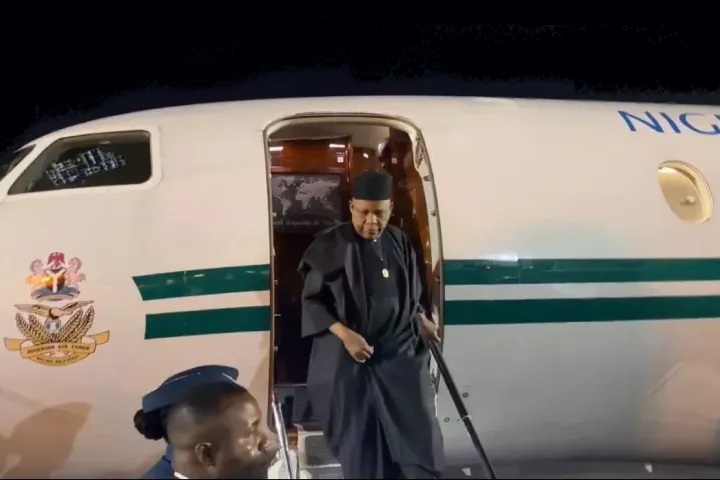
THIS DAWN — Nigeria’s Vice President, Kashim Shettima, has arrived in Luanda, the Angolan capital, to represent President Bola Ahmed Tinubu at the 7th African Union-European Union (AU-EU) Summit.

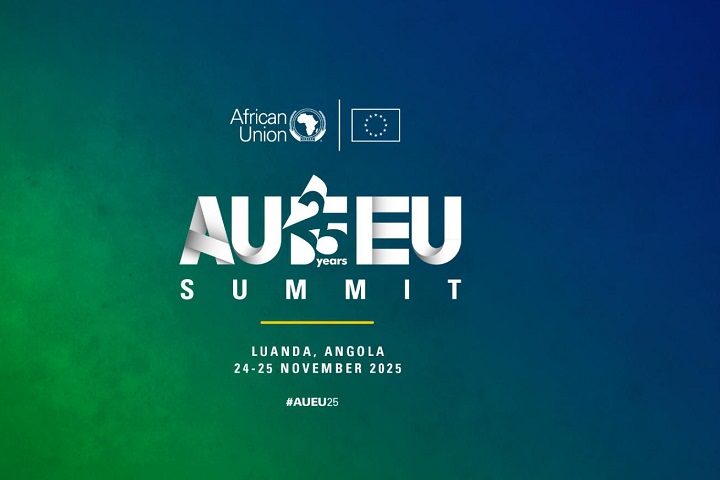
The high-level gathering, scheduled for November 24–25, 2025, will bring together Heads of State and Government from both unions, alongside young leaders, innovators, and civil society organizations.
The summit provides a platform for Africa and Europe to deliberate on shared challenges and opportunities for cooperation.
This year’s agenda is expected to focus on critical issues including climate change, inclusive development, infrastructure, the digital economy, the creative industry, manufacturing, and agribusiness.
Vice President Shettima’s participation underscores Nigeria’s commitment to strengthening multilateral partnerships and advancing regional integration.
His presence also highlights the Tinubu administration’s emphasis on leveraging international cooperation to address pressing domestic concerns such as economic diversification, youth employment, and sustainable development.
About AU-EU Summit
The AU-EU Summit has historically served as a forum for aligning priorities between the two continents.
Previous editions have produced joint declarations on peace and security, trade, and investment.
The 7th Summit is anticipated to build on these foundations, with particular attention to climate resilience and digital transformation—areas where both Africa and Europe seek deeper collaboration.
Nigeria, as Africa’s largest economy and a key diplomatic player, is expected to push for greater investment in infrastructure and manufacturing.
It will also be advocating for fairer trade terms and stronger support for agribusiness.
Shettima’s engagement will be crucial in positioning Nigeria as a bridge between African aspirations and European resources.
Beyond formal sessions, the summit will feature side events showcasing innovation and creativity, with young leaders and entrepreneurs presenting solutions to global challenges.
These engagements are designed to foster inclusive dialogue and ensure that the voices of Africa’s youth and civil society are integrated into policymaking.
As deliberations begin in Luanda, expectations are high that the AU-EU partnership will deliver actionable commitments to drive sustainable growth and deepen cooperation across both regions.
Nigeria’s Key Priorities at the AU-EU Summit
🏗️ Infrastructure
- Push for greater investment in transport, energy, and logistics networks to support regional trade.
- Advocate for public-private partnerships to accelerate road, rail, and port development.
- Emphasize infrastructure as the backbone for industrial growth and continental integration.
🌾 Agribusiness
- Call for expanded EU support for modern farming techniques and value-chain development.
- Promote Nigeria’s role as a regional hub for food security and agricultural exports.
- Seek collaboration on climate-smart agriculture to mitigate the impact of droughts and floods.
💻 Digital Economy
- Highlight Nigeria’s booming tech ecosystem, particularly fintech and e-commerce.
- Push for EU investment in broadband expansion and digital literacy programs.
- Advocate for data protection frameworks that balance innovation with security.
🎨 Creative Industry
- Showcase Nigeria’s music, film, and fashion sectors as drivers of soft power and economic growth.
- Seek EU partnerships to expand distribution channels and creative financing.
⚙️ Manufacturing
- Promote Nigeria’s ambition to become a manufacturing hub for West Africa.
- Encourage EU firms to invest in industrial parks and local production facilities.
Strategic Goal:
Nigeria aims to leverage AU-EU cooperation to diversify its economy, reduce reliance on oil, and create sustainable jobs for its growing youth population.