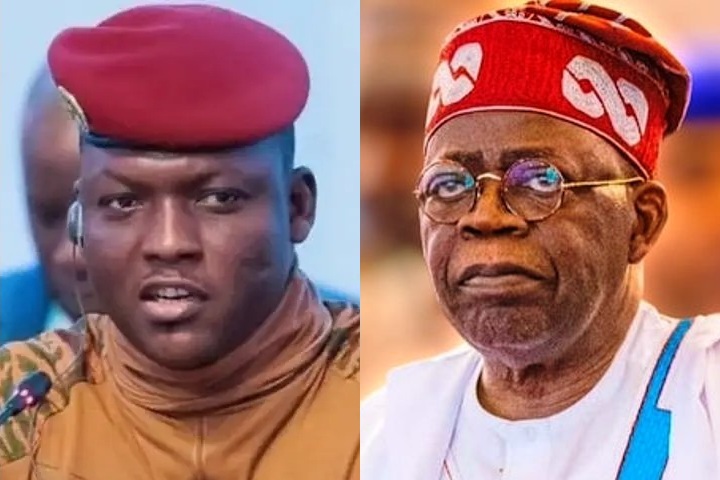
Nigeria’s President Bola Ahmed Tinubu has dispatched a diplomatic delegation to Burkina Faso following days of heightened tension over a Nigerian military aircraft that made an emergency landing in the West African country.

The incident had sparked intense political rhetoric, public controversy, and diplomatic strain between both governments.
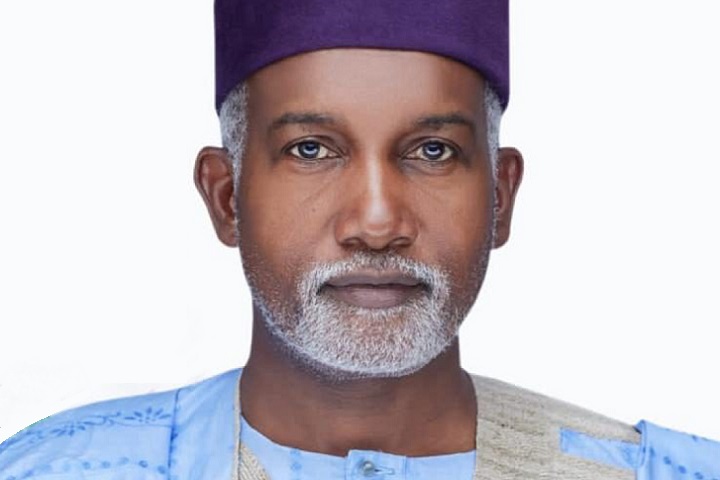
The delegation, led by Nigeria’s Minister of Foreign Affairs, Yusuf Tuggar, arrived in Ouagadougou to formally engage Burkina Faso’s leader, Captain Ibrahim Traoré, and to address concerns surrounding the aircraft, its crew, and broader regional security cooperation.
The move follows earlier public statements and counter-statements that generated confusion, including claims that the aircraft crew had been released, claims that were later contradicted by diplomatic developments.
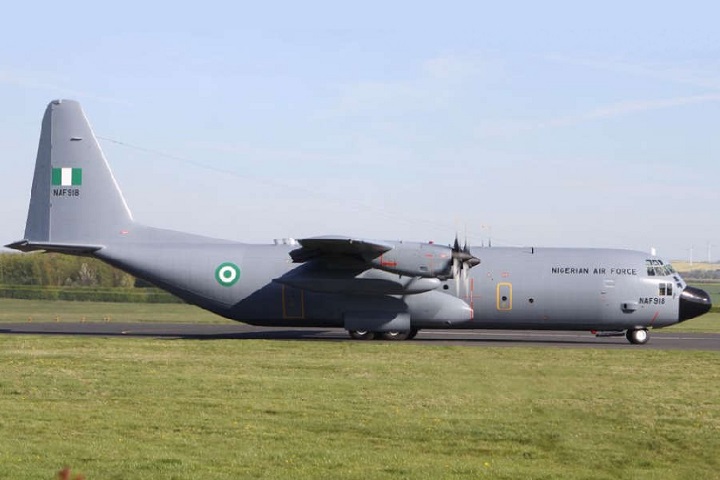
According to Nigerian officials, the aircraft — a C-130 military plane — made an emergency landing in Burkina Faso after experiencing technical difficulties.
Nigerian troops and the aircraft were subsequently held while authorities in Burkina Faso reviewed documentation related to overflight and operational authorization within their airspace.
Lapses Acknowledged
Addressing journalists after meetings with Burkinabé authorities, Minister Tuggar confirmed that Nigeria had acknowledged procedural lapses related to the flight.
“I’m leading a delegation sent here by President Bola Ahmed Tinubu, President of the Federal Republic of Nigeria, to deliver a message to President Ibrahim Traoré,” Tuggar said.
“We discussed issues related to the Nigerian plane that operated an emergency landing in Burkina Faso after having suffered an accident.
“It is deplorable that there have been irregularities in the documents, especially on the authorizations for the overflight of the Burkina Faso airspace.
“This is regrettable and we apologize for this unfortunate incident,” Tuggar added.
He noted that the Nigerian government also addressed comments made by a Nigerian political figure which, according to him, escalated misunderstanding around the situation.
“We also mentioned the subject of a Nigerian party leader who made unfortunate comments about this incident.
“This is undoubtedly linked to a misunderstanding of the situation,” Tuggar said.
Praises for Traore
The minister praised the reception accorded to the Nigerian delegation and personnel.
He stressed that relations between both countries remain cordial despite the controversy.
“President Traoré, the Burkina Faso government and the Burkinabé people have been very welcoming and willing to accompany us.
“The crew has been very well treated,” he noted.
“It is obvious that President Traoré was directly informed about the crew’s situation from the time it arrived in Burkina Faso.
“This highlights the level of fraternity and solidarity that exists between two African nations,” he emphasized.
The Nigerian delegation also used the opportunity to explore deeper regional cooperation, particularly in the fight against terrorism. This has continued to plague large parts of the Sahel and West Africa.
“Of course, we also discussed how we can collaborate with other countries in the region in the fight against terrorism.
“Burkina Faso has recorded significant successes in this regard.
“There are lessons to be learned, and there are also things we can share with each other,” Tuggar said.
The diplomatic mission comes after a wave of criticism from political commentators and activists, some of whom accused Nigeria’s leadership of initially adopting a confrontational posture before resorting to dialogue.
Moment Of Diplomatic Humility
Social media commentary framed the episode as a moment of diplomatic humility for Africa’s most populous nation, particularly in its dealings with a military-led Sahelian state that has distanced itself from traditional Western alliances.
While Nigerian authorities have not publicly detailed the timeline for the return of the aircraft and troops, officials indicated that arrangements were being finalized for their safe and prompt return to Nigeria.
The incident underscores the fragile nature of diplomatic relations in a region grappling with insecurity, military rule, and shifting geopolitical alignments.
Analysts say it also highlights the importance of strict adherence to international aviation and military protocols, especially in sensitive airspaces.
Despite the controversy, both Nigeria and Burkina Faso have emphasized continued cooperation, regional solidarity, and dialogue as the preferred path forward.
This signaled an effort to de-escalate tensions and refocus on shared security challenges in West Africa.
Watch the video clip below: