THIS DAWN — The night Nicolás Maduro’s defenses collapsed in Venezuela has already become the stuff of legend across Latin America, especially as told by a security personnel guarding the former president.

According to the unnamed security personnel, what unfolded was not a conventional battle, but a demonstration of overwhelming technological superiority.
The testimony of the security guard loyal to Maduro paints a harrowing picture of how quickly the tide turned—and why the region’s political tone shifted almost overnight.
The Silent Beginning
According to the guard, the operation began without warning.
Venezuela’s radar systems, the backbone of its defensive network, suddenly went dark.
No alarms, no signals, no explanation—just silence.
Within moments, the skies filled with drones.
The guard recalls the confusion among his comrades: “We didn’t know how to react.”
The drones were not merely surveillance tools; they were the first wave of psychological warfare, sowing panic before the real assault began.
The Arrival of Helicopters
After the drones came helicopters—only eight, by the guard’s count.
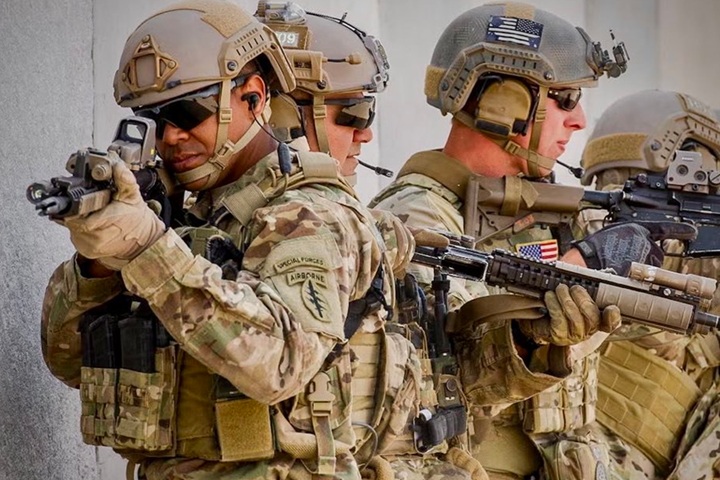
From them descended a mere twenty soldiers.
At first glance, the numbers seemed laughably small compared to the hundreds of Venezuelan defenders on the ground.
But these men were unlike anything the guard had ever seen.
“They didn’t look like anything we’ve fought against before,” he admitted.
Their gear, their precision, and their calm demeanor suggested training and technology far beyond the reach of Venezuela’s forces.
The Massacre
What followed was not a battle but a rout.
The guard describes the Americans’ rate of fire as almost superhuman: “It seemed like each soldier was firing 300 rounds per minute.”
Venezuelan troops, despite their numbers, were cut down with ruthless efficiency.
The defenders’ weapons proved useless against the attackers’ speed and accuracy.
Within minutes, the numerical advantage evaporated, replaced by sheer terror.
The Sonic Weapon
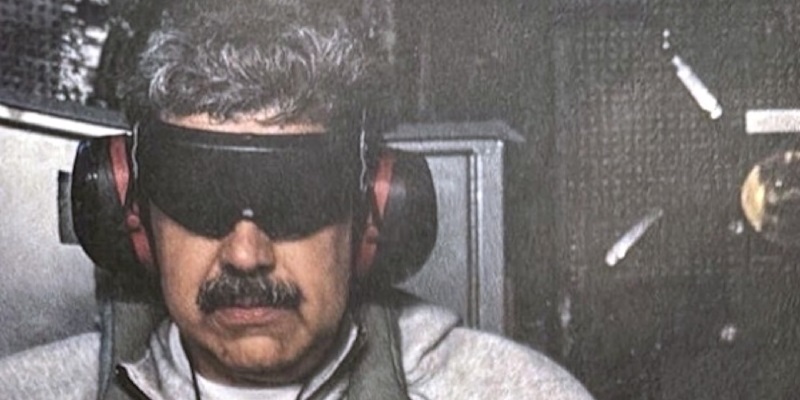
The most chilling detail of the account is the deployment of what the guard calls a “very intense sound wave.”
He struggled to describe it, but the effects were unmistakable.
Soldiers felt as though their heads were exploding from within. Blood poured from noses, some vomited, others collapsed in agony.
“We fell to the ground, unable to move,” he recalled.
This weapon neutralized resistance without traditional gunfire, leaving defenders incapacitated before they could even aim.
No Resistance, No Casualties
Despite facing hundreds of Venezuelan troops, the twenty American soldiers reportedly suffered no casualties.
The guard insists that his comrades had no chance: “Those twenty men, without a single casualty, killed hundreds of us.”
The imbalance was not just in firepower but in the very nature of warfare.
Venezuela’s forces were fighting a twentieth‑century battle against twenty‑first‑century technology.
A Warning to the Region
The guard’s testimony carries a clear warning: “Anyone who thinks they can fight the United States has no idea what they’re capable of.”
His words reflect a newfound fear spreading across Latin America.
The operation was not just about Maduro—it was a message to the entire region.
Resistance, in the face of such overwhelming technological dominance, seems futile.
The Trump Factor
The guard also referenced President Donald Trump’s statement that Mexico is “on the list.”
Whether rhetorical or strategic, the remark has already sent shockwaves through Latin America.
“Everyone is already talking about this.
“No one wants to go through what we went through.”,” the guard said.
The implication is clear: the operation in Venezuela was not an isolated event but a precedent.
Nations across the region are recalculating their positions, wary of provoking a similar fate.
The Regional Shift
In the aftermath, Latin America’s tone has changed dramatically.
Leaders who once spoke defiantly now weigh their words carefully.
The guard’s account explains why: the sheer scale of technological disparity has been laid bare.
Drones, precision fire, and sonic weapons represent a new era of warfare—one in which traditional armies stand little chance.
The psychological impact may be even greater than the physical destruction.
Fear, uncertainty, and caution now dominate regional politics.
Conclusion
The night America “took Maduro” was not just a military operation.
It was a demonstration of power designed to reshape Latin America’s strategic landscape.
Through the eyes of one Venezuelan guard, we glimpse the terror, the helplessness, and the inevitability of defeat.
His testimony is chilling not only for what it reveals about the battle itself but for what it portends: a future in which resistance to American intervention may be seen as suicidal.
For Venezuela, the night marked the end of an era.
For the rest of Latin America, it was a warning written in blood and silence.