THIS DAWN — In a bold and politically charged statement, the African Democratic Congress (ADC) has drawn a sharp parallel between the United States’ recent action in Venezuela and the political climate in Nigeria.

The ADC made the remarks in a commentary, titled “Trump’s Venezuela Action Is a Lesson to Nigeria; and Tinubu’s Silence Embarrassing, Reeks of Fear”.
It underscores the party’s growing concern over Nigeria’s democratic integrity and its waning influence on the global stage.
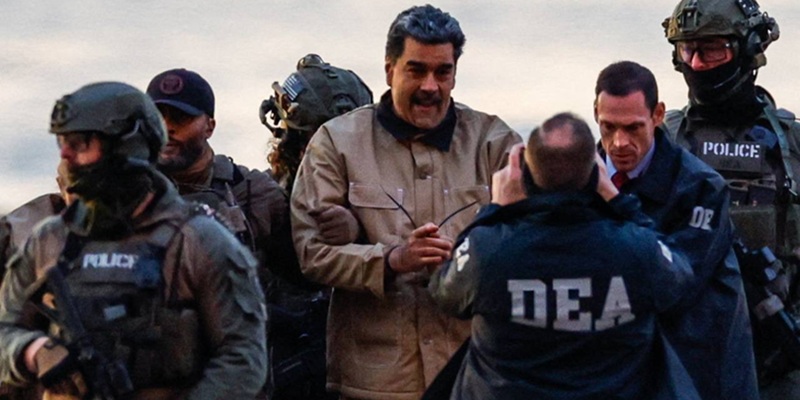
The ADC’s statement was triggered by the U.S. government’s decision to arrest Venezuelan President Nicolás Maduro and his wife.
The arrest followed allegations of electoral fraud and human rights abuses.
The ADC interprets this move not merely as a geopolitical maneuver, but as a symbolic warning to regimes that cling to power through illegitimate means.
According to the party, the action sends a clear message to governments worldwide—especially Nigeria’s—that sovereignty must be rooted in democratic legitimacy, not authoritarian survival.
ADC: Where We Stand
The ADC affirms its commitment to the principles of national sovereignty and non-interference, as enshrined in the United Nations Charter.
It argued that these doctrines should not be used to shield despots or enable electoral malpractice.
The party insists that international norms must evolve to protect citizens from regimes that weaponize state institutions against their own people.
The ADC’s critique of the Venezuelan elections is scathing.
It highlights widespread condemnation from Latin American governments, the European Union, and global democratic institutions.
All of them described the 2024 Venezuelan presidential elections as fraudulent and exclusionary.
The party points to the barring of opposition candidates, violent suppression of protests, and the manipulation of state apparatuses as evidence of a regime that has lost its moral and political legitimacy.
The resulting mass migration, the ADC notes, is a testament to the depth of Venezuela’s crisis and its destabilizing impact on the region.
What Is Tinubu Afraid Of?
However, the ADC’s most pointed criticism is reserved for Nigeria’s response—or lack thereof.
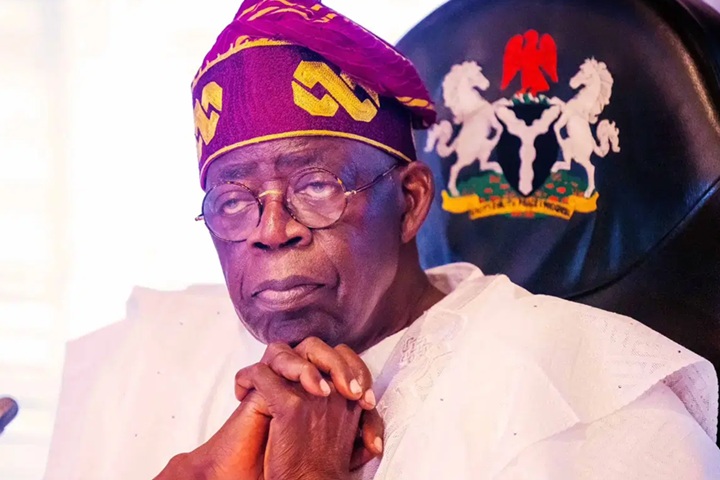
More than 48 hours after the U.S. action in Venezuela, the Nigerian government, led by President Bola Tinubu, had yet to issue any statement.
The ADC interprets this silence as a sign of fear and moral bankruptcy.
“This silence reflects the government’s moral crisis, which removes its legitimacy to take a principled stand on anything,” the statement reads.
The ADC argues that Nigeria’s failure to respond is not an act of neutrality but a symptom of a government that lacks confidence and integrity.
In its view, Tinubu’s administration has forfeited Nigeria’s voice and standing on the international stage, reducing the country to a passive observer in global affairs.
This, the party warns, is dangerous for a nation that once played a leading role in shaping African and global democratic discourse.
Call to Action
Mallam Bolaji Abdullahi, the ADC’s National Publicity Secretary, emphasized that sovereignty must reflect the will of the people, not the entrenchment of power.
He called for a redefinition of democracy—one that goes beyond ballots and electoral rituals to encompass freedom, fairness, and the pursuit of happiness for all citizens.
Abdullahi warned that the Venezuelan situation should serve as a cautionary tale for all dictators and election riggers.
This includes those who claim electoral legitimacy without moral authority.
Abdullahi noted that the ADC’s statement is not merely a critique; it is a call to action.
He urged Nigerians to demand accountability from their leaders and to resist the normalization of silence in the face of global injustice.
He also called on the international community to hold governments accountable not just for their actions, but for their inaction when democratic values are under threat.
In conclusion, the ADC’s response to the U.S. intervention in Venezuela is a powerful indictment of Nigeria’s current political trajectory.
It challenges the Tinubu administration to reclaim Nigeria’s moral voice and to stand firmly on the side of democracy, both at home and abroad.
The party’s message is clear: the world is watching, and silence is no longer a safe refuge for illegitimate power.