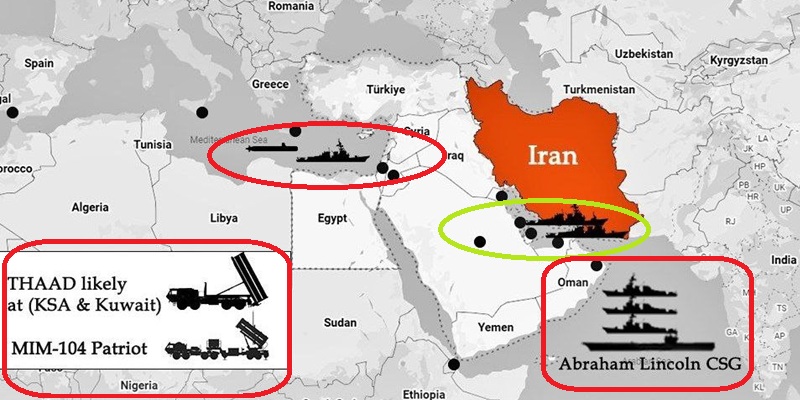
THIS DAWN — Tensions in the Persian Gulf escalated sharply this week after the United States Navy confirmed a major fleet deployment near Iran, prompting warnings from China and raising fears of imminent conflict.

In a post on its official account, the U.S. Navy announced that Carrier Air Wing 8 conducted a ceremonial flyover above the USS Gerald R. Ford during a change of command event.
The Navy emphasized that its forces are deployed in support of U.S. Southern Command missions and presidential directives to combat illicit trafficking and protect the homeland.
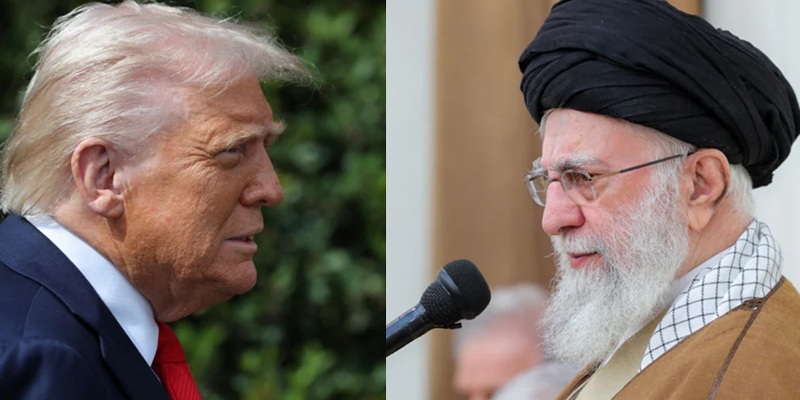
While the statement highlighted operational readiness, defense analysts noted that the deployment coincides with President Donald Trump’s recent warning that a “massive armada” led by the USS Abraham Lincoln was heading toward Iran.
Trump had earlier declared that any future strike would be “far worse” than Operation Midnight Hammer, the 2025 attack on Iranian nuclear facilities.
China Issues Warning
China Pulse (@Eng_china5), a Beijing-linked outlet, posted that the U.S. military buildup near Iran signals Washington has “decided upon the military option” and is preparing to execute it.
The message, widely shared on Chinese social media, framed the deployment as a dangerous escalation that could destabilize the region.
Chinese officials have consistently urged restraint, warning that unilateral U.S. military action could ignite a wider conflict.
Beijing has positioned itself as a potential mediator, calling for renewed dialogue between Washington and Tehran.
Iran’s Response
Iranian Foreign Minister Seyed Abbas Araghchi responded defiantly, declaring that Iran’s armed forces are “prepared—with their fingers on the trigger—to immediately and powerfully respond to ANY aggression.”
He referenced lessons from the “12-Day War” in 2025, suggesting Iran’s military has strengthened its capacity for rapid retaliation.
At the same time, Araghchi reiterated Iran’s openness to a fair nuclear deal.
He stressed that Tehran has “never sought to acquire nuclear weapons” and continues to pursue peaceful nuclear technology.
Regional Complications
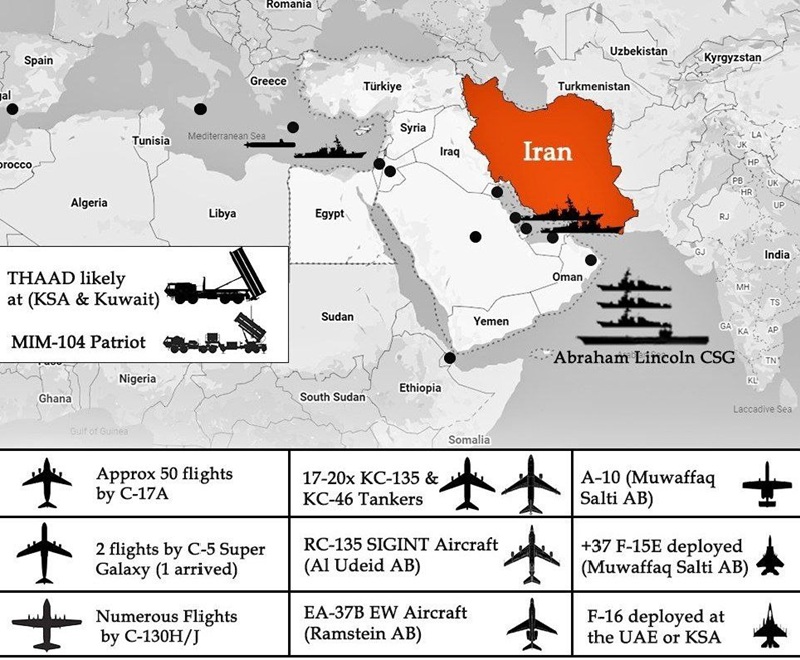
Saudi Arabia and the United Arab Emirates have reportedly refused to allow their airspace or territory to be used for offensive operations against Iran.
This refusal presents a significant logistical challenge for U.S. forces, potentially limiting strike options and complicating supply chains.
Military analysts caution that Iran’s capabilities—including missile systems and underground facilities—make it a formidable opponent.
“Carrier groups don’t negate hypersonics.
“Iran isn’t Iraq. Iran isn’t Libya. Any strike here doesn’t stay local—it detonates,” one expert noted.
Global Reactions
- Europe: EU officials urged restraint, calling for renewed diplomacy to prevent escalation.
- Russia & China: Both condemned the U.S. buildup, warning of destabilization and pledging support for Iran’s sovereignty.
- Middle East Allies: Israel and Saudi Arabia expressed support for Trump’s hardline stance, citing Iran’s regional ambitions as a direct threat.
The United Nations Secretary-General appealed for “urgent de-escalation,” offering to mediate talks on nuclear non-proliferation.
Strategic Outlook
The situation remains volatile. With U.S. forces mobilized and Iran vowing retaliation, the risk of miscalculation is high.
Analysts warn that even a minor incident in the Persian Gulf could trigger a broader conflict.
Yet, both sides continue to signal—albeit cautiously—that diplomacy remains possible.
The U.S. Navy’s deployment near Iran, coupled with China’s warning and Iran’s defiant response, underscores the fragile state of global security.
Whether this buildup leads to war or renewed negotiations will depend on decisions made in Washington, Tehran, and Beijing in the coming days.
Timeline: From Operation Midnight Hammer to U.S. Fleet Buildup Near Iran
June 22, 2025 — Operation Midnight Hammer
- The U.S. launched precision strikes on Iranian nuclear facilities at Natanz, Fordow, and Isfahan.
- Pentagon officials claimed the operation set back Iran’s nuclear program by two years.
- Iran retaliated with missile attacks on Al Udeid Air Base in Qatar, escalating regional tensions.
July 2025 — The 12-Day War
- A brief but intense conflict erupted in the Strait of Hormuz between U.S. and Iranian forces.
- Iran demonstrated new missile and drone capabilities, surprising U.S. analysts.
- The war ended without a decisive victory, but Iran claimed it had “reshaped its defense doctrine.”
Late 2025 — Diplomatic Breakdown
- Efforts to revive the Joint Comprehensive Plan of Action (JCPOA) collapsed.
- Iran expanded uranium enrichment, while the U.S. imposed new sanctions targeting oil exports.
- European Union officials warned of “dangerous escalation” and urged renewed talks.
January 2026 — Trump’s Threat
- President Donald Trump announced a “massive armada” heading to Iran, led by the USS Abraham Lincoln.
- He warned that any future strike would be “far worse” than Midnight Hammer.
- Trump urged Iran to “make a deal” and abandon nuclear ambitions.
January 27, 2026 — Iran’s Response
- Foreign Minister Seyed Abbas Araghchi declared Iran’s armed forces were “prepared—with their fingers on the trigger.”
- He referenced lessons from the 12-Day War, promising rapid and powerful retaliation.
- Iran reiterated its commitment to peaceful nuclear technology, rejecting nuclear weapons.
January 28, 2026 — U.S. Navy Deployment Confirmed
- The U.S. Navy posted images of Carrier Air Wing 8 flying over the USS Gerald R. Ford, confirming readiness.
- Analysts linked the deployment to Trump’s directive, suggesting imminent military action.
- China Pulse reported that Washington had “decided upon the military option” against Iran.
Regional Reactions
- Saudi Arabia and the UAE refused to allow their airspace or territory for offensive operations.
- Israel and Saudi Arabia backed Trump’s hardline stance, citing Iran’s regional ambitions.
- Russia and China condemned the buildup, warning of destabilization.
- The UN Secretary-General called for “urgent de-escalation.”
Strategic Outlook
The timeline shows a steady escalation:
- Operation Midnight Hammer demonstrated U.S. military reach.
- The 12-Day War revealed Iran’s resilience.
- Trump’s threats and U.S. deployments now set the stage for possible confrontation.
Analysts warn that any miscalculation could trigger a broader conflict, but both sides continue to signal—however cautiously—that diplomacy remains possible.