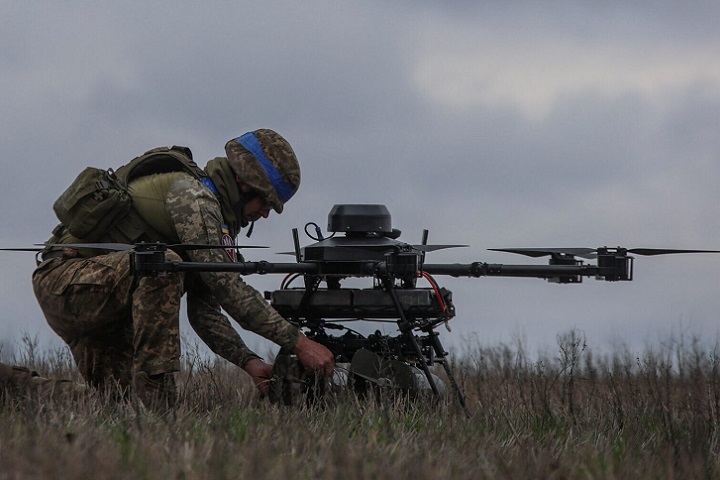
THIS DAWN — Ukrainian forces have intensified drone attacks on Russian targets, including Moscow and strategic military assets, even as President Volodymyr Zelenskyy signals readiness for a peace agreement.

The dual-track approach—military pressure alongside diplomatic overtures—marks a critical phase in the nearly two-year-long war.
Drone Attacks on Moscow and Russian Infrastructure
Russia’s Defense Ministry reported that its air defenses intercepted at least 195 Ukrainian drones overnight, including five targeting the Moscow region. Two of those drones were reportedly flying directly toward the capital.
The attacks prompted temporary flight restrictions at Domodedovo and Vnukovo airports, as well as in Volgograd, Yaroslavl, Orenburg, Ufa, and Orsk.
Ukraine’s air force confirmed that Russia retaliated with 116 drones, 60 of which were intercepted or suppressed. However, 48 drones impacted 19 locations across Ukraine, causing widespread damage and power outages.
President Zelenskyy said repair crews were working around the clock to restore electricity, especially ahead of Christmas celebrations.
“Of course, the Russians are trying to ruin this holiday, this sacred day, as well. No surprise there,” he remarked.
Strategic Strike on Russian Submarine
In a separate operation, Ukraine’s Security Service (SBU) revealed details of a bold strike on a Russian Kilo-class submarine stationed at the Novorossiysk port.
The attack was preceded by a targeted drone strike on Russia’s only Il-38N Sea Dragon maritime reconnaissance aircraft, which had been actively countering Ukraine’s underwater drone operations.
The drone used in the precursor strike carried an airburst warhead capable of dispersing over 2,000 fragments, damaging the aircraft’s radar and engine.
The SBU said this neutralized Russia’s ability to detect Ukraine’s Sub Sea Baby underwater drone, which later struck the submarine.
While Russia’s Black Sea Fleet denied significant damage, Ukraine estimated the submarine’s value at $400 million and emphasized its capacity to carry Kalibr cruise missiles, often used in attacks on Ukrainian cities.
Peace Talks Gain Momentum
Despite the military escalation, Zelenskyy expressed optimism about a potential peace deal.
Speaking to journalists in Kyiv, he said Ukraine and the U.S. had finalized a 20-point peace framework, which is now under review by Moscow.
“We sense that America wants to reach a final agreement, and from our side, there is full cooperation,” Zelenskyy said.
The proposed deal includes Article-5-style security guarantees from NATO and Western allies, even without Ukraine’s formal membership.
Zelenskyy reiterated that Kyiv would not accept any ban on joining NATO—a key Russian demand—but emphasized Ukraine’s commitment to peace.
Russian officials acknowledged ongoing contacts.
Kremlin spokesperson Dmitry Peskov confirmed that President Vladimir Putin had been briefed on the U.S. proposal and that Moscow would formulate its response soon.
Deputy Foreign Minister Sergei Ryabkov noted “significant similarities” between Russian and American positions on a possible settlement.
Tactical and Diplomatic Balancing Act
Ukraine’s strategy appears to hinge on maintaining military pressure while advancing diplomatic negotiations.
The drone strikes serve both tactical and symbolic purposes—disrupting Russian operations and demonstrating Ukraine’s resilience.
At the same time, the peace framework suggests a shift toward resolution, with both sides exploring terms that could end hostilities.
However, unresolved issues like territorial control and NATO membership remain major hurdles.
As Ukraine ramps up drone warfare and Russia responds with counterattacks, the prospect of peace remains fragile but tangible.
Zelenskyy’s dual message—military defiance and diplomatic openness—reflects the complexity of ending a war that has reshaped global geopolitics.
With Moscow under threat and Kyiv pushing for guarantees, the coming weeks may determine whether the battlefield gives way to the negotiating table.