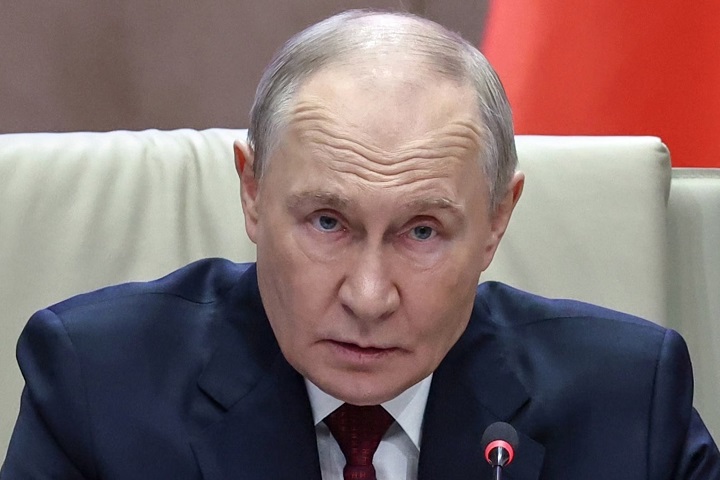
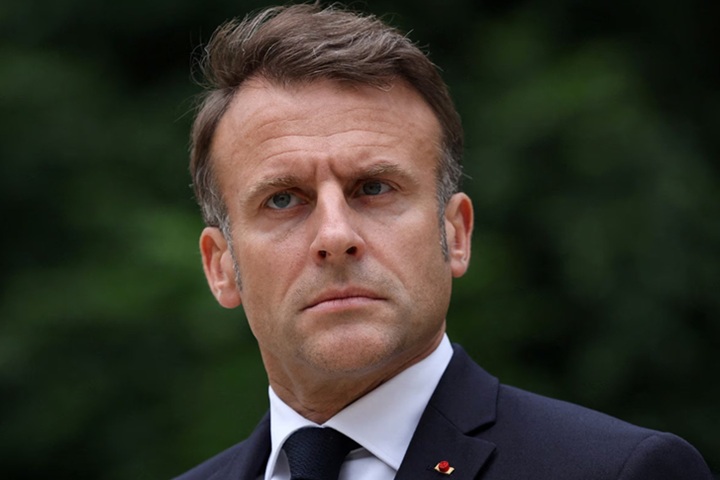
THIS DAWN — Amidst the ongoing Ukraine War, Russia has formally terminated decades‑old military cooperation agreements with France, Portugal, and Canada, in a sweeping move that underscores its deepening estrangement from Western nations.

The decision was confirmed in a decree signed by Prime Minister Mikhail Mishustin on Friday, marking another step in Moscow’s progressive disengagement from NATO‑aligned states.
The dissolved accords date back to the immediate post‑Cold War era.
The Canadian pact on military visits was signed by the Soviet Union on 20 November 1989.
The Franco‑Russian defense cooperation agreement on 4 February 1994, while the Russian‑Portuguese military cooperation treaty on 4 August 2000.
At the time, these agreements symbolized cautious optimism about building bridges between Russia and Western capitals.
This Dawn learnt that Russia’s decision may be partly because of the position of both European countries respecting using frozen Russian resources to help Ukraine.
Portugal’s foreign-affairs leadership recently said that the proposal by European Commission gives the “right legal form” to use frozen Russian resources to help Ukraine.
Effectively, Portugal supported using frozen Russian assets — at least under a framework that respects legal constraints and EU norms.
On its part, France explicitly opposed “seizing” frozen Russian assets outright.
France argued that such confiscation would violate international agreements and threaten legal and financial norms.
Nonetheless, the French government accepted the use of interest or proceeds generated from those frozen assets to support Ukraine.
Russian officials now argue that the accords are “no longer strategically relevant” given current geopolitical realities.
They emphasized that the agreements will not be replaced or succeeded by new arrangements.
The Ministry of Foreign Affairs has been instructed to formally notify Ottawa, Paris, and Lisbon to complete the diplomatic procedures.
Global perception
Analysts interpret the move as part of a broader realignment.
Since Russia’s full‑scale invasion of Ukraine in February 2022, Moscow has steadily dismantled military‑technical cooperation frameworks with Western partners.
The latest decision mirrors a similar cancellation in July 2025, when Russia terminated its military‑technical cooperation agreement with Germany.
Critics in the West view the terminations as further evidence of Russia’s growing isolation and hostility toward NATO‑aligned nations.
Observers also note the timing: both Portugal and France recently supported European Commission proposals to divert frozen Russian assets to Ukraine — a measure Moscow strongly opposes.
For Russian authorities, however, the cancellations are presented as pragmatic adjustments to “changed strategic realities.”
Officials insist the decision reflects a recalibration of priorities rather than a provocation.
Yet with no replacement framework announced, the move effectively closes a chapter of post‑Cold War rapprochement between Russia and some of its former Western partners.
The development highlights the accelerating breakdown of military and diplomatic ties between Moscow and Western capitals.
As Russia continues to pivot away from traditional alliances, the decision signals a hardening of positions that could reshape European security dynamics for years to come.
Russia’s Treaty Cancellations Since 2022
The following table outlines key military and defense cooperation agreements that Russia has terminated since the escalation of its conflict with Ukraine in 2022.
These cancellations highlight Moscow’s progressive disengagement from Western military frameworks and its pivot away from NATO-aligned nations.
This timeline below provides a structured view of Russia’s treaty cancellations, illustrating the broader trend of severed military cooperation with Western nations since 2022:
| Year | Country | Agreement | Date Signed | Date Terminated | Notes |
| 1989 | Canada | Military Visits Pact (signed by USSR) | 20 Nov 1989 | Dec 2025 | Terminated as “no longer strategically relevant.” |
| 1994 | France | Franco-Russian Defence Cooperation Agreement | 4 Feb 1994 | Dec 2025 | Ended amid tensions over Ukraine and EU asset diversion proposals. |
| 2000 | Portugal | Russian-Portuguese Military Cooperation Treaty | 4 Aug 2000 | Dec 2025 | Cancelled alongside France and Canada agreements. |
| 2003 | Germany | Military-Technical Cooperation Agreement | Early 2000s (exact date not specified) | Jul 2025 | Termination mirrored current cancellations. |
Analysis
- Pattern of disengagement: Russia has consistently withdrawn from agreements with NATO-aligned countries since 2022.
- Strategic rationale: Officials claim these accords are outdated and irrelevant under current geopolitical realities.
- Western reaction: Critics interpret the moves as evidence of Russia’s deepening isolation and hostility toward NATO.
- Timing: Some cancellations coincide with Western initiatives to redirect frozen Russian assets to Ukraine.
Implications
- Marks the end of post-Cold War rapprochement between Russia and Western capitals.
- Reinforces the geopolitical divide in Europe.
- Signals Russia’s pivot toward alternative alliances and frameworks outside NATO influence.