THIS DAWN — Recent investigations and media reports have reignited concerns over Turkey’s alleged involvement in supplying weapons to terrorist groups operating in Nigeria, including Boko Haram and Fulani militants.

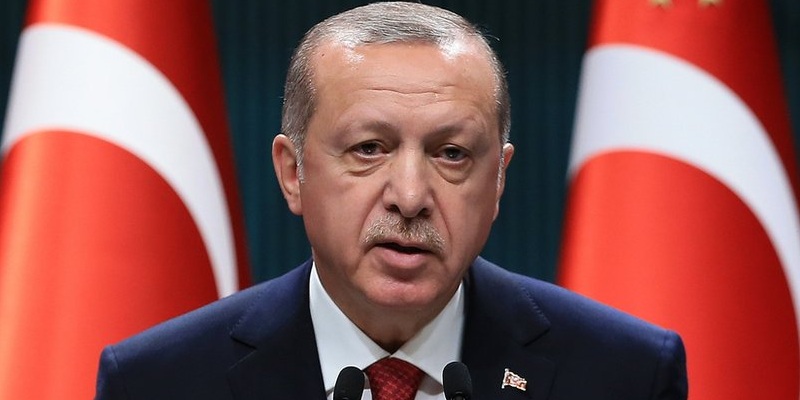
A televised exposé by Egyptian broadcaster Nishat Al-Delhi and commentary from Middle East expert Raymond Ibrahim have drawn attention to claims that Turkey, under President Recep Tayyip Erdoğan, has played a covert role in arming Islamist factions across Africa.
Allegations of Turkish Arms Transfers to Boko Haram
According to the Egyptian news segment, a leaked intercepted phone call from 2014 or 2015 allegedly confirms that the Turkish government facilitated weapons transfers to Boko Haram.
The report described Turkey as a “terrorist state with a broad reach,” citing the leak as evidence of direct involvement in arming one of Africa’s most notorious extremist groups.
Raymond Ibrahim, a journalism fellow at the David Horowitz Freedom Center, supported the claim, noting that while the tape was known in some Western circles, it did not receive widespread attention at the time.
Ibrahim emphasized that Boko Haram’s access to sophisticated weaponry has long puzzled international observers.
He argued that the group’s arsenal, which includes advanced firearms and explosives, is inconsistent with its rural and decentralized structure.
This discrepancy, he suggested, lends credibility to the theory that foreign state actors—such as Turkey—may be supplying arms to bolster Islamist movements.
Fulani Militants and the Spread of Sophisticated Weaponry
The discussion also extended to Fulani militants in Nigeria and neighboring countries like Burkina Faso.
Ibrahim noted that these groups, often portrayed as nomadic herders, have increasingly carried out brutal attacks on Christian communities using advanced weapons.
He described incidents where victims were targeted based on religious identity, including checks for crosses or recitations of Islamic creeds before being executed.
The presence of such weaponry among Fulani tribesmen, who traditionally lack access to modern arms, raises serious questions.
Ibrahim suggested that the spillover of arms from Boko Haram into Fulani networks may be part of a broader Islamist coalition supported by Turkey.
This theory aligns with growing concerns among Nigerian citizens and international observers about the escalation of violence in the Middle Belt and northern regions.
Sheikh Gumi’s Call for Turkish Mediation
In light of these revelations, Nigerians are revisiting the controversial appeal by Islamic cleric Sheikh Ahmad Gumi, who previously urged the Nigerian government to seek Turkey’s help in negotiating with Fulani militants.
At the time, Gumi’s suggestion was met with skepticism, but recent reports have prompted a reevaluation of his motives and the implications of Turkish involvement.
Critics argue that if Turkey is indeed supplying arms to Fulani groups, any mediation role would be compromised by conflict of interest.
Others suggest that Gumi’s proposal may have been informed by undisclosed knowledge of Turkey’s influence over these factions.
Broader Geopolitical Implications
The alleged Turkish support for Boko Haram and Fulani militants fits into a larger pattern of Erdoğan’s foreign policy, which has increasingly aligned with Islamist movements.
Ibrahim pointed to Turkey’s ties with the Muslim Brotherhood, its alliance with Qatar, and its support for anti-secular uprisings across the Middle East and Africa.
He also referenced the discovery of ISIS leader Abu Bakr al-Baghdadi near the Turkish border, suggesting that Turkey has become a haven for jihadist elements.
In Nigeria, former President Muhammadu Buhari has faced accusations of complicity in the violence against Christians, with some international groups labeling the crisis as genocide.
Ibrahim speculated that Buhari’s administration may have quietly aligned with Erdoğan’s Islamist agenda, further complicating the security landscape.
The resurfacing of evidence implicating Turkey in the arming of Boko Haram and Fulani militants has sparked renewed debate about foreign interference in Nigeria’s internal conflicts.
While definitive proof remains elusive, the convergence of leaked intelligence, expert analysis, and on-the-ground realities paints a troubling picture.
As Nigeria continues to grapple with terrorism and sectarian violence, the role of external actors like Turkey must be scrutinized with urgency and transparency.