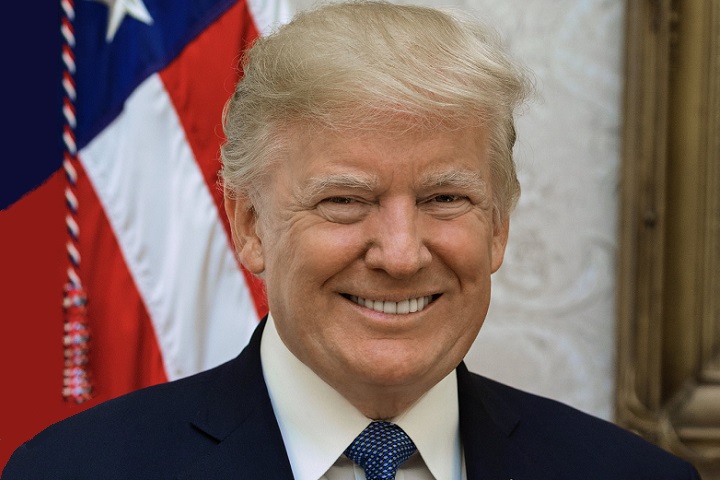
THIS DAWN — United States President Donald Trump has ignited a fresh political firestorm after reportedly ordering federal authorities to release the full list of names contained in government-held files linked to the late financier Jeffrey Epstein, with explicit instructions that Democratic figures named in the records should be publicly exposed.

Trump, who has repeatedly accused his political opponents of shielding powerful elites connected to Epstein, said the move was intended to “embarrass” Democrats and, in his words, expose what he described as years of institutional cover-ups. Speaking to supporters, Trump warned that the disclosure would have far-reaching political consequences, adding ominously: “Enjoy what may be your last Merry Christmas.”
The remarks come amid renewed public scrutiny of Epstein’s network following recent court-ordered releases of sealed documents tied to civil litigation involving Epstein and his associates. While many of the names referenced in such documents have not been formally accused of crimes, their appearance has nonetheless triggered intense political and media debate.
Trump has long argued that the Epstein affair implicates influential figures aligned with the Democratic Party and the political establishment. Earlier this week, he stated that “the names of Democrats will soon be released,” suggesting that the public has been deliberately kept in the dark to protect powerful interests. His latest directive appears to escalate that rhetoric into a direct confrontation with political opponents.
According to individuals familiar with the matter, Trump has instructed relevant agencies to cooperate fully in making available all remaining unredacted Epstein-related materials in federal custody, subject to what he described as “minimal interference.” Critics, however, warn that such an approach risks politicizing sensitive legal records and undermining due process.
Democratic leaders swiftly condemned Trump’s statements, describing them as reckless, threatening, and designed to intimidate political rivals. Several senior Democrats stressed that the existence of a name in Epstein-related files does not constitute evidence of wrongdoing and cautioned against using unproven associations as political weapons.
“This is not transparency; it is political intimidation,” one Democratic lawmaker said. “Any credible investigation must be conducted by the courts, not weaponized by a former president seeking revenge.”
Legal experts also urged caution, noting that Epstein files include a wide range of references, including witnesses, accusers, social acquaintances, and individuals mentioned without context. “Public release without careful legal framing risks defamation and misinformation,” a constitutional law scholar explained. “The law draws a sharp distinction between being named in a document and being guilty of a crime.”
Trump allies, however, defended the move, arguing that full disclosure is necessary to restore public trust. They contend that selective redactions and delayed releases have fueled suspicion and that sunlight is the only remedy. “If people did nothing wrong, they have nothing to fear,” a Trump campaign surrogate said.
The reference to “your last Merry Christmas” has drawn particular attention, with critics interpreting it as a veiled threat. Trump supporters counter that the remark was rhetorical, aimed at signaling a political reckoning rather than physical harm. Nonetheless, advocacy groups have called on federal authorities to monitor political rhetoric closely, citing heightened polarization and concerns over political violence.
Jeffrey Epstein, who died in a New York jail in 2019 while awaiting trial on federal sex trafficking charges, maintained connections with prominent figures across business, politics, and entertainment. His death and the handling of his case have continued to fuel conspiracy theories and public mistrust in institutions.
As the controversy unfolds, the key question remains whether additional disclosures will produce substantiated evidence of criminal conduct or simply intensify partisan warfare. For now, Trump’s directive has ensured that the Epstein files, once again, sit at the center of American political conflict—where demands for transparency collide with the imperatives of law, fairness, and democratic stability.