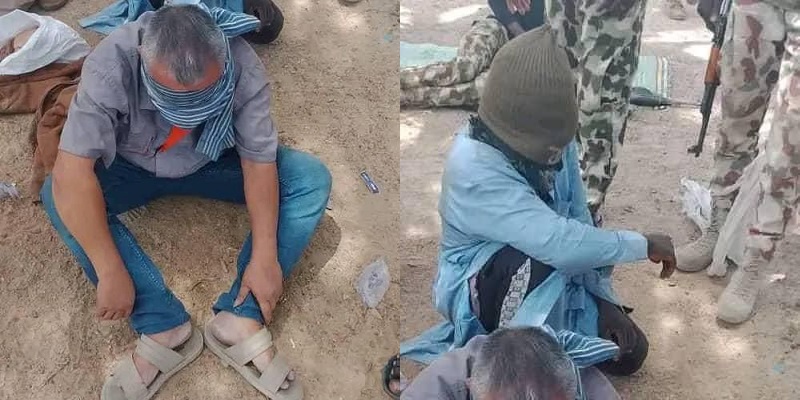
TDNigeria’s fight against Boko Haram has taken a disturbing turn with the capture of a Chinese national reportedly working alongside insurgents to operate drones used in attacks against the Nigerian military.

The incident underscores how foreign actors and local elites are deepening insecurity in the country.
Such activities, This Dawn News understood, are driven by both geopolitical interests and Nigeria’s vast natural resources.
Foreign Involvement in Boko Haram Operations
Security sources revealed that the captured foreigner was aiding Boko Haram in drone operations, enhancing the group’s ability to strike military positions with precision.
This development highlights the growing sophistication of insurgent tactics and raises questions about external sponsorship.
Analysts argue that Boko Haram’s resilience is not solely a product of local grievances but is increasingly tied to foreign interests seeking to exploit Nigeria’s instability.
The involvement of foreign nationals in operational roles suggests a deliberate strategy to strengthen insurgent capabilities.
Such actors provide them with advanced technology and tactical knowledge that goes beyond what local fighters could achieve alone.
Natural Resources as a Driver of Boko Haram Conflict
Nigeria’s rich deposits of oil, gas, and solid minerals are believed to be a major factor fueling insecurity.
Insurgents and their sponsors exploit instability to gain access to resource-rich territories, undermining state control and profiting from illicit trade.
Experts warn that the Boko Haram crisis is not just ideological but also economic.
Nigerian elites and foreign interests are allegedly backing the insurgency to secure influence over natural wealth.
This creates a vicious cycle: insecurity weakens state authority.
Such weakness, in turn, allows insurgents and their sponsors to entrench themselves further in resource exploitation.
Implications for National Security
- Drone Warfare: The use of drones by Boko Haram represents a dangerous escalation.
It makes insurgent attacks more effective, coordinated, and harder to counter.
- Foreign Sponsorship: The capture of a foreign national confirms suspicions that Boko Haram benefits from external technical support.
It raises fears of a broader international network behind the insurgency.
- Elite Complicity: Allegations of Nigerian elites sponsoring insurgents for personal gain raise serious concerns about governance, corruption, and accountability.
The combination of foreign expertise and domestic complicity has transformed Boko Haram from a ragtag insurgency into a formidable force.
Analysts note that they are presently capable of challenging Nigeria’s military in new and alarming ways.
Government Response
Authorities have vowed to investigate the captured foreigner’s links to Boko Haram and to strengthen surveillance against external actors aiding insurgents.
Security experts urge Nigeria to tighten border controls, enhance intelligence cooperation with allies, and address the economic drivers of conflict.
The Nigerian government faces a dual challenge: confronting the insurgency militarily while dismantling the networks of corruption and foreign influence that sustain it.
Without tackling both dimensions, experts warn, the crisis will continue to spiral.
Regional and Global Dimensions
The incident also has regional and global implications.
Boko Haram’s ability to attract foreign operatives suggests that Nigeria’s insurgency is part of a wider geopolitical contest.
Foreign powers may see instability in Nigeria as an opportunity to gain leverage over its vast natural resources, while weakening its role as a regional leader in West Africa.
International observers stress that Nigeria’s allies must recognize the insurgency as more than a domestic problem.
It is a transnational threat that requires coordinated intelligence-sharing, economic sanctions against sponsors, and stronger regional security frameworks.
Nigeria’s Future with Foreigners Aiding Boko Haram
The capture of a Chinese national working with Boko Haram exposes the complex web of foreign and domestic interests sustaining Nigeria’s insurgency.
With natural resources at the heart of the crisis, and foreign expertise bolstering insurgent capabilities, Nigeria’s battle against Boko Haram is far bigger than many citizens realize.
In short, Boko Haram’s war is not just local — it is fueled by foreign actors and Nigerian elites, with natural resources as the prize.
The insurgency is both a security crisis and an economic struggle.
Experts warn that unless Nigeria confronts the external and internal forces behind it, the conflict will remain entrenched.