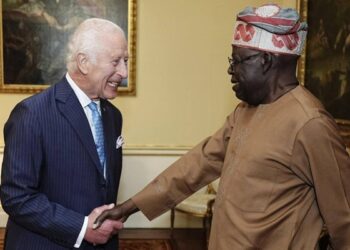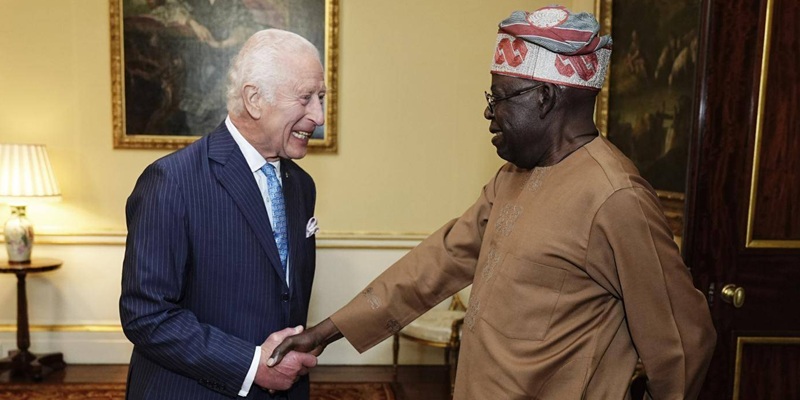
TDPresident Bola Ahmed Tinubu’s state visit to the United Kingdom — the first by a Nigerian leader since General Ibrahim Babangida in 1989 — was hosted by King Charles III and celebrated as a reaffirmation of the “unique bond” between the two nations.

The visit was steeped in royal ceremony, underscoring the UK’s highest level of diplomatic recognition.
The trip builds on two recent frameworks: the Nigeria-UK Strategic Partnership (November 2024) and the Enhanced Trade and Investment Partnership (ETIP, February 2024). Both agreements aim to deepen cooperation in trade, investment, and security, while positioning Nigeria as a key Commonwealth state and regional power.
Tinubu’s foreign policy has leaned heavily on visibility and symbolic diplomacy, projecting Nigeria’s profile internationally. Yet, the question remains: does this visibility translate into real improvements for Nigerians at home?
Diplomacy vs. Domestic Reality
Nearly three years into Tinubu’s presidency, the gap between international optics and domestic outcomes is stark:
- Frequent foreign trips have drawn criticism for their cost, especially amid rising poverty, hunger, and declining purchasing power.
- The administration’s “4D Foreign Policy” — democracy, development, demography, diaspora — has been undermined by slow and politicized ambassadorial appointments, weakening Nigeria’s diplomatic machinery.
- Economic reforms (fuel subsidy removal, naira devaluation, tax tightening) have stabilized macroeconomic indicators: inflation has fallen to ~15%, the naira has steadied, Nigeria exited the FATF grey list, and S&P raised its outlook to “positive.”
- Yet, social costs remain severe: food insecurity has worsened, household spending power is weak, credit remains expensive, and poverty persists.
For many Nigerians, these reforms recall the “shock therapy” of the late 1980s under Babangida, which produced lasting social dislocation.
Trade and Investment Patterns
Tinubu’s London visit is expected to highlight investment opportunities in energy, infrastructure, technology, and services. But deeper trade realities reveal structural weaknesses:
- UK-Nigeria trade reached £8.1 billion in 2025, making Nigeria the UK’s 36th largest trading partner.
- Nigeria’s trade with China far exceeds this, topping $22 billion in 2025.
- Nigeria’s commerce remains dominated by hydrocarbons and imported manufactured goods, leaving the economy vulnerable to global price swings.
- Intra-African trade is underdeveloped: exports to ECOWAS markets stood at just $478 million in 2025, despite Abuja’s vocal support for the African Continental Free Trade Agreement.
Structural bottlenecks — unreliable electricity (85 million Nigerians lack grid access), weak education, and poor health systems — continue to constrain growth and limit the benefits of foreign investment.
Security Cooperation
Nigeria’s security challenges remain acute:
- The jihadist insurgency in the northeast continues.
- Kidnappings and organized crime plague the northwest and central regions.
- Nigeria ranked 6th on the 2025 Global Terrorism Index.
Defence cooperation with the UK has expanded in training, intelligence, and maritime security. Yet, daily insecurity persists: ACLED data recorded 12,860 deaths from political violence in 2025.
Tinubu’s regional diplomacy is further complicated by Nigeria’s growing ties with France, which clash with anti-French sentiment in the Sahel and complicate relations with the Alliance of Sahel States (AES).
Linking Foreign Policy to Domestic Impact
With Nigeria’s general elections due in 2027, the domestic stakes of Tinubu’s UK visit are high. Abuja will likely present new UK investments and security agreements as evidence of success.
But the real test lies in whether Nigerians feel safer, less poor, and more hopeful.
So far, the dividends of Tinubu’s foreign policy have been marginal.
Without parallel progress in electricity, education, health, and governance reform, Nigeria risks continuing a foreign policy that dazzles abroad but fails to deliver at home.
Conclusion
Tinubu’s UK state visit is an opportunity not just for ceremony, but for substantive outcomes. To make diplomacy meaningful, Nigeria must prioritize reforms that strengthen domestic resilience:
- Electricity access to power industry and households.
- Education and health investments to build human capital.
- Security sector reform to restore public safety.
Otherwise, Nigeria’s foreign policy risks remaining a spectacle of international visibility, impressive abroad but hollow at home.
This visit may be remembered as a turning point — but only if it delivers more than optics.